


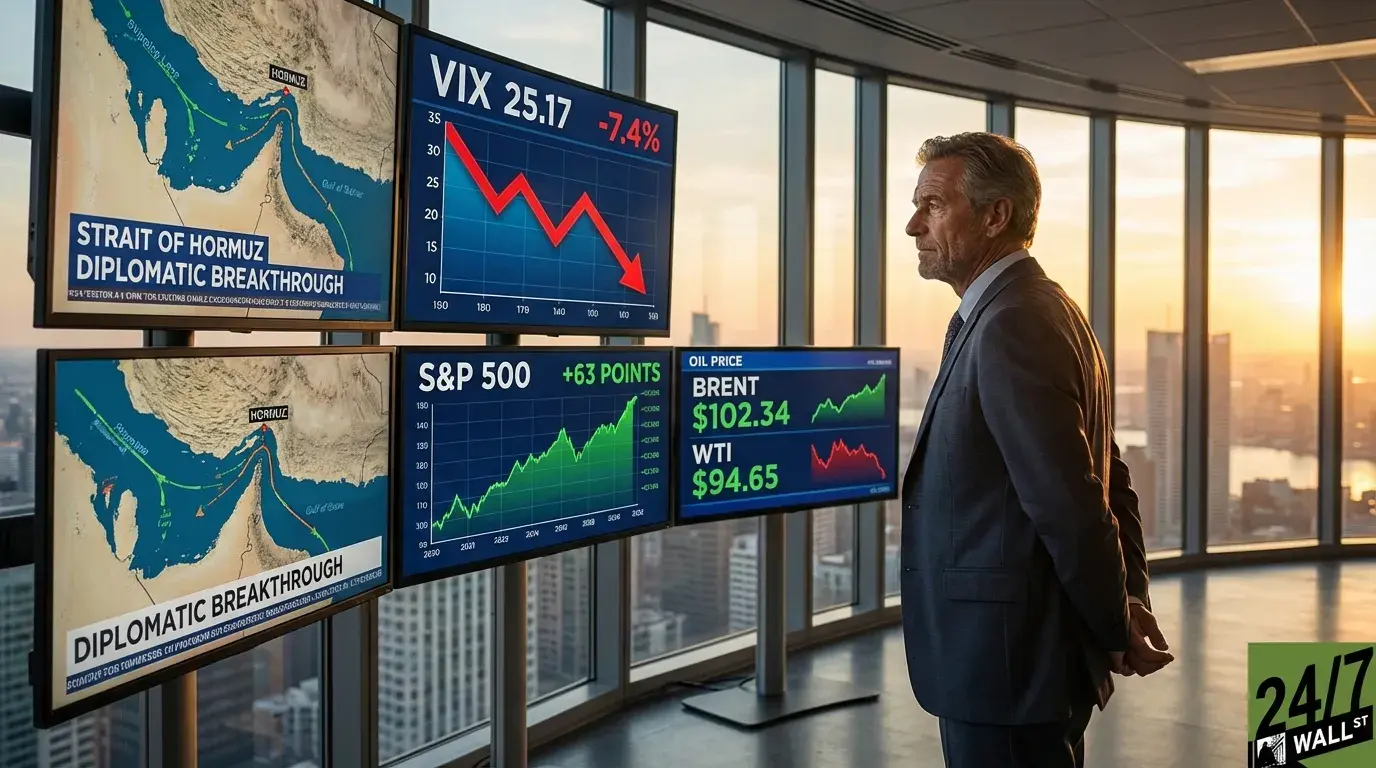
U.S. equity markets opened sharply higher Monday as diplomatic efforts to reopen the Strait of Hormuz gained traction, easing fears of a prolonged energy supply shock. The CBOE Volatility Index fell 7.4% to 25.17, reflecting a meaningful drop in near-term fear. All three major indices surged, with the S&P 500 climbing 63 points to 6,695 and the Nasdaq adding 265 points to 22,370, suggesting the relief was broad-based rather than confined to a single sector.
Oil Above $100 Is the Story Driving Everything Else
Brent crude hovered around $102 a barrel Monday morning after briefly topping $105 earlier in the session. WTI crude surged from $71 on March 2 to over $100 recently, putting crude at the 99.6th percentile of its trailing 12-month range. The catalyst was Iran’s blockade of the Strait of Hormuz, which choked off a critical artery for global oil exports.
The relief rally came as President Trump threatened to reconsider sparing Iranian oil facilities unless the strait reopened, and his administration moved toward announcing a coalition to escort ships through the waterway. Iraq also began efforts to restore the Kirkuk-Turkey pipeline. Goldman Sachs analysts noted that “the supply shock today appears narrowly concentrated in the energy sector,”, distinguishing this episode from the broad inflation surge that followed Covid. That framing matters because it signals central banks may not need to respond as aggressively, giving equities room to recover.
The VIX in Context
Even with Monday’s pullback, the VIX at 25 remains well above its one-year average of 19, sitting at the 93.8th percentile of the past year’s readings. The index had swung dramatically over the past year, spiking to 52.33 in April 2025 during the tariff panic before compressing to 13.47 in late December. Monday’s decline is meaningful, but it does not erase the sharp move higher that geopolitical shock triggered in recent weeks.
Tech Names Adding Fuel
Nvidia (NVDA)
Nvidia (NASDAQ:NVDA | NVDA Price Prediction) gained 2.6% as CEO Jensen Huang prepares to take the stage at GTC 2026 in San Jose, the company’s flagship AI conference, with his keynote scheduled for Monday. Retail investors on Reddit have been debating what Nvidia needs to deliver to justify its current valuation. The U.S. Commerce Department also recently withdrew a planned rule on AI chip exports, removing a regulatory overhang that had weighed on the stock.
Meta Platforms (META)
Meta Platforms (NASDAQ:META) rose 3% premarket after Reuters reported the company signed a $27 billion AI infrastructure deal with Nebius, signaling continued commitment to its AI buildout even as layoff reports circulated.
Micron Technology (MU)
Micron Technology (NASDAQ:MU) added 5.7%, extending a run that has pushed the stock up 49% year to date. Micron reports earnings later this week, and the results will test whether the stock’s year-to-date run is justified.
Three Events That Could Shift the Market Before Friday
Three events will define how this week closes. First, any update on Strait of Hormuz diplomacy: analysts have noted that a prolonged blockade could pressure corporate margins broadly and complicate the Fed’s rate path, according to market commentary. Second, Jensen Huang’s GTC keynote Monday afternoon could move Nvidia and the broader Nasdaq depending on what he announces. Third, the Federal Reserve meets this week, and with Goldman’s assessment that energy inflation looks contained, if the Fed signals the oil shock is not changing its rate path, that removes one more uncertainty from the equity recovery.













 Top Gaining Stocks
 Top Losing Stocks