


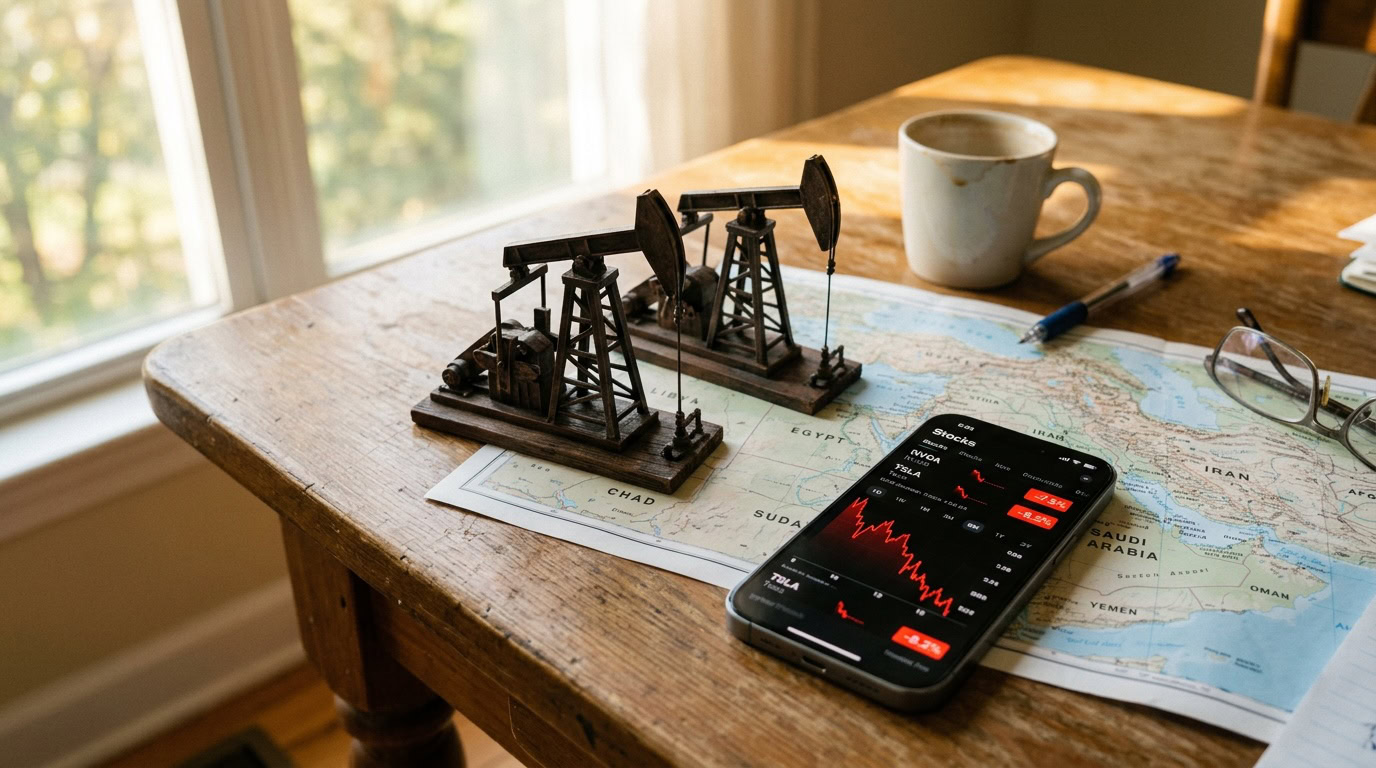
The S&P 500 Index (^GSPC)opened Monday under pressure, sliding roughly 0.6% in early trading after President Trump ordered a naval blockade of the Strait of Hormuz. Weekend peace talks between the U.S. and Iran collapsed, Trump announced the blockade effective 10 a.m. ET Monday, April 13, 2026, and crude oil surged back above $100 a barrel within hours.
The Blockade That Broke the Ceasefire Rally
VP Vance’s 21-hour weekend peace talks with Iran collapsed over irreconcilable differences: the U.S. demanded Iran relinquish its nuclear program while Iran insisted on controlling Strait of Hormuz traffic. Trump responded immediately. The blockade targets all vessels entering or exiting Iranian ports, and Iran countered that no port in the Persian Gulf or Sea of Oman would be safe if its ports were threatened. Global shippers are already refusing transit through the strait without safety guarantees from both sides.
The supply math is severe. OPEC’s crude output fell by 7.89 million barrels a day to 20.79 million barrels a day in March, with Iraq absorbing the steepest decline as the near-closure of Hormuz forced members to divert exports. Saudi crude sales to China are expected to halve next month due to war disruptions. That volume displacement does not resolve quickly.
Oil Above $100 and What It Flows Through
West Texas Intermediate crude has climbed 26% over the past month, reaching about $114 per barrel recently, with WTI hovering above $104 following the blockade announcement following the blockade announcement. That places WTI at the 99th percentile of its 12-month range, a level the data describes as high and inflationary. WTI rose 7.6% following the failed negotiations and blockade announcement.
Energy was the only outperforming sector in European equity markets Monday, with travel, autos, and retail leading declines. Money is moving toward energy producers and away from anything dependent on consumer spending or cheap transportation costs.
How the Broader Indices Are Absorbing the Shock
Despite Monday’s opening weakness, all four major U.S. indices recovered meaningfully through last week. The S&P 500, tracked via SPDR S&P 500 ETF Trust (NYSEARCA:SPY | SPY Price Prediction), gained about 4% over the prior week and sits roughly flat year-to-date. The Nasdaq-100, via Invesco QQQ Trust (NASDAQ:QQQ), added about 4% last week but is also slightly negative year-to-date. The Dow, via SPDR Dow Jones Industrial Average ETF Trust (NYSEARCA:DIA), rose 3% last week. Small caps, tracked by iShares Russell 2000 ETF (NYSEARCA:IWM), gained about 4% last week and are up 6% year-to-date, the strongest performer among the four.
The VIX spiked to about 31 during the initial escalation during the initial Hormuz escalation, then fell back to nearly 19, a 19% weekly decline that placed it back in the normal range. Monday’s blockade announcement puts that calm at risk.
What This Means for Portfolios This Week
Oil above $100 acts as a tax on every consumer-facing business. Airlines, trucking, retail, and discretionary spending all face margin compression when energy costs stay elevated. The 10-year Treasury yield at 4.29% has not surged into crisis territory, which suggests bond markets are not yet pricing a full recession scenario, but the IMF is expected to downgrade its global economic outlook next week citing rising Iran war costs.
Q1 earnings season begins this week, with major bank results from Goldman Sachs, JPMorgan, Citigroup, Wells Fargo, Morgan Stanley, and Bank of America on the calendar. Expectations call for double-digit earnings growth, but those numbers were set before a blockade on one of the world’s most critical shipping lanes. Bank executive commentary on energy cost exposure and Middle East risk in forward guidance will reveal how the corporate sector is pricing this escalation.











 Top Gaining Stocks
 Top Losing Stocks