


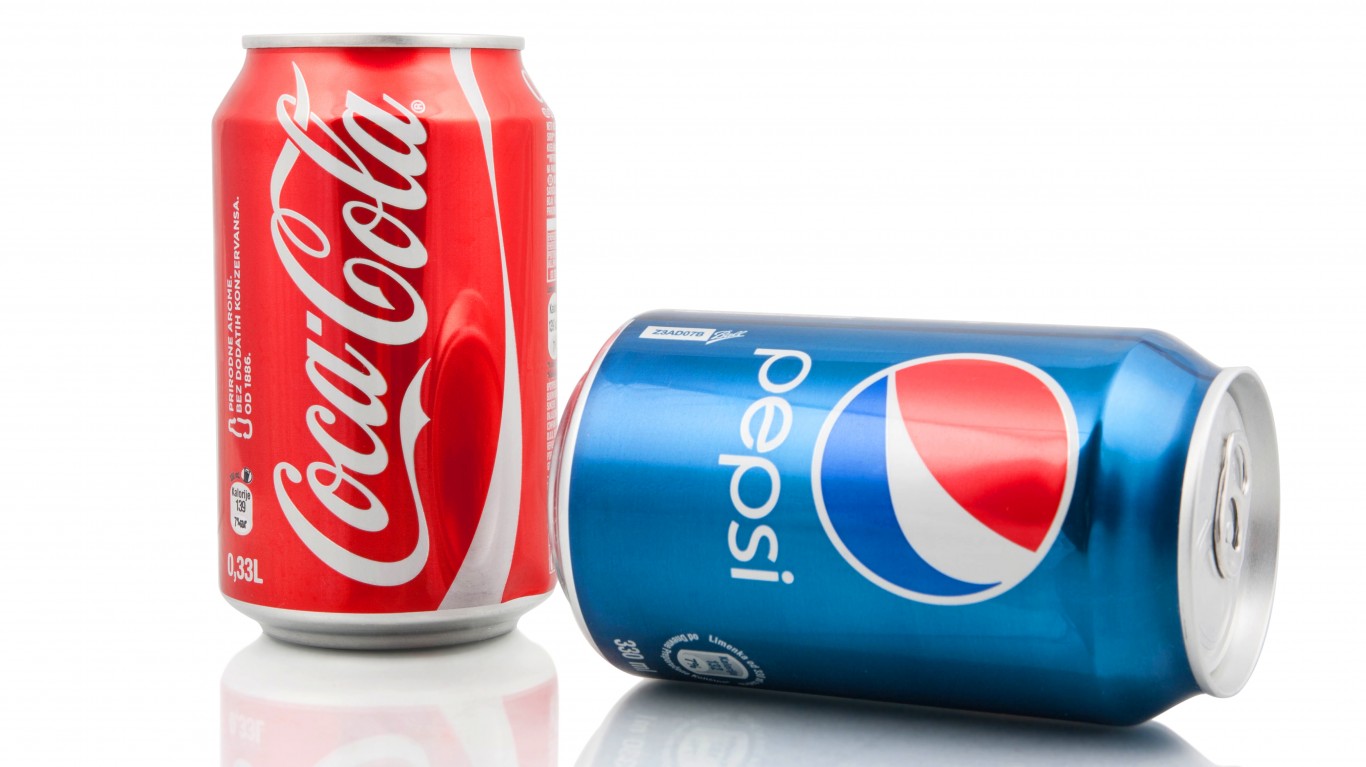
Warren Buffett long favored PepsiCo (NASDAQ:PEP | PEP Price Prediction) in Berkshire Hathaway’s (NYSE:BRK-A)(NYSE:BRK-B) portfolio, viewing the snack-and-beverage powerhouse as a reliable compounder. That changed dramatically in 1988, when Buffett sold down his Pepsi stake and pivoted aggressively into Coca-Cola (NYSE:KO).
Today Berkshire owns 400 million Coca-Cola shares — roughly 9.3% of the company. The position now accounts for 9.8% of Berkshire’s equity portfolio, ranking it as Buffett’s third-largest holding after he trimmed his positions in stocks like Apple (NASDAQ:AAPL) and Bank of America (NYSE:BAC). Each year those shares deliver more than $200 million in dividend checks straight to Omaha. Yet, would Buffett have been better off staying with Pepsi instead of switching to Coke?
Massive Gains, Different Winners
PepsiCo officially went public on June 8, 1965, at a split-adjusted price of around $0.75. Through last Friday, March 20, 2026, Pepsi has delivered total returns (price appreciation plus dividends reinvested) of approximately 39,953%. A hypothetical $10,000 invested at the IPO would have grown to more than $4 million today.
Coca-Cola, already public but trading at a split-adjusted price of around $0.09 in June 1965, produced even stronger results over the identical span. Reliable long-term total-return data show a $10,000 investment in Coke at that time would be worth roughly $13.9 million today.
The edge comes from Coke’s status as a true Dividend King with uninterrupted payouts and raises stretching back over a century — decades of reinvestment that compounded faster than Pepsi’s earlier post-merger phase.
Buffett’s Real-World Timing
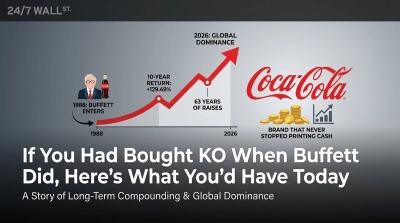
Of course, Buffett did not buy Coca-Cola in the 1960s. His famous accumulation began in 1988-89, right after he exited Pepsi. From that exact entry point, Coke still outperforms its rival. Total-return data since 1988 show Coca-Cola up 7,830% versus PepsiCo’s 6,485%. A $10,000 stake placed when Buffett switched would now be worth about $883,000 in Coke versus roughly $749,000 in Pepsi. In both the ultra-long 1965 horizon and Buffett’s actual 1988 purchase window, Coca-Cola has been the superior holding.
Why Ultra-Long Comparisons Hinge on a Single Year
These headline-grabbing multiples illustrate a deeper truth: over six decades, the winner is almost entirely determined by the starting date. Investing in Pepsi just three years after its IPO — starting in 1968 — would have made Pepsi a dramatically better investment because it skips the strong 1965 to 1967 window that favored Coke.
Shift the clock forward again to 1994 and Pepsi becomes the clear victor once more, outpacing Coke by a wide margin for the next 32 years. Even using Buffett’s precise 1988 accumulation date, Coca-Cola only began to pull ahead of PepsiCo starting in 2024.
That recent crossover is exactly why the investment was never a mistake. Buffett bought KO when its valuation was reasonable, its brand moat unmatched, and its dividend machine just hitting its stride. He has held through every market cycle, collecting rising dividend checks and watching the position compound inside Berkshire’s tax-deferred structure. The fact that Pepsi looked better for stretches does not erase KO’s outperformance from the actual purchase date or from the true 1965 IPO baseline.
Key Takeaway
In the end, Warren Buffett’s Coca-Cola investment stands as a master class in patience and brand investing. Whether measured from 1965 or 1988, Coke delivered higher total returns than Pepsi.
The headline debate dissolves once you accept that a six-decade performance always comes down to the exact day you stepped in — and Buffett chose his moment wisely. Coca-Cola was not a mistake; it was classic Buffett: buy the enduring consumer monopoly, reinvest the dividends, and let time do the heavy lifting.






 Top Gaining Stocks
 Top Losing Stocks