


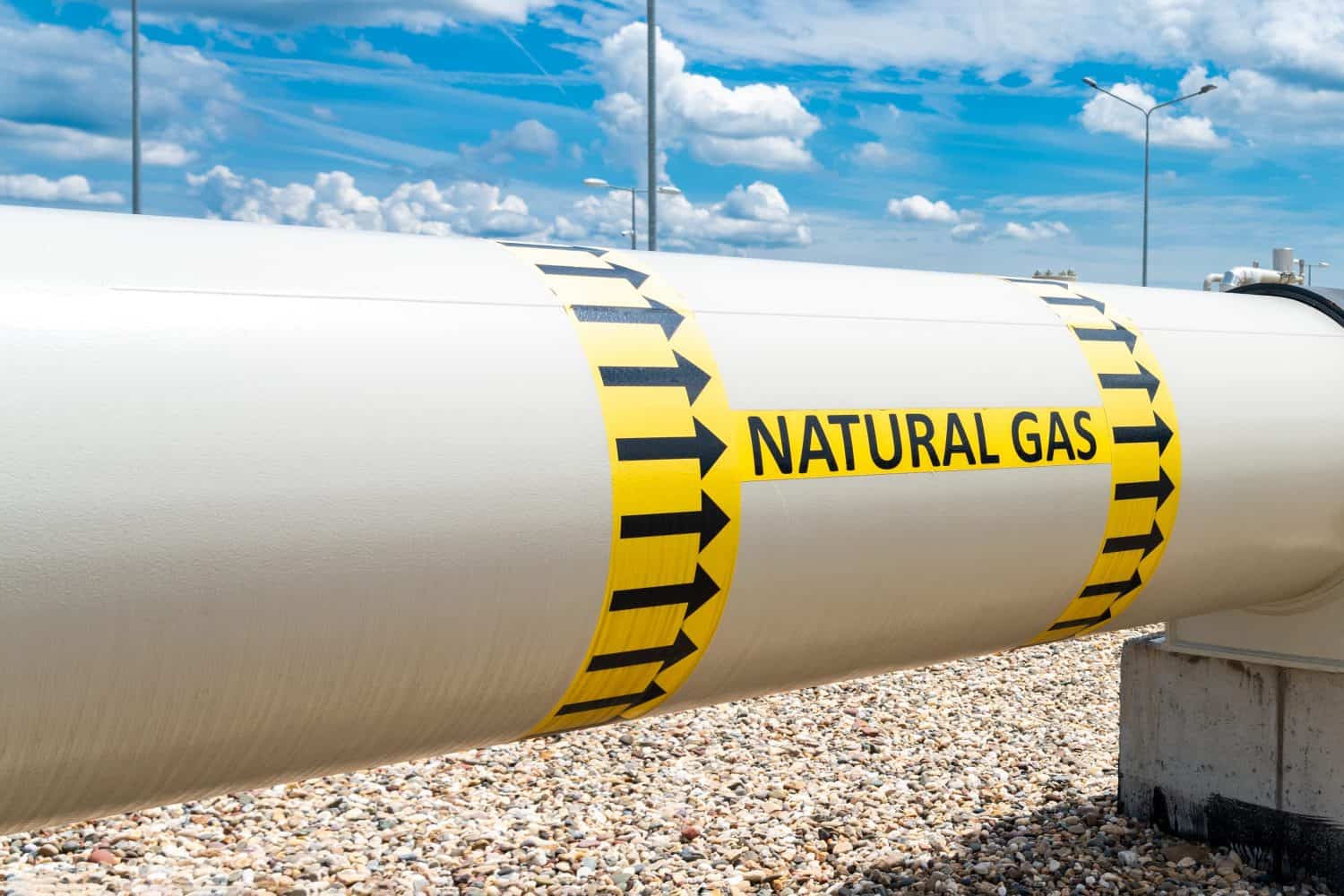
Natural gas has proven itself one of the most volatile commodities in recent memory. Henry Hub spot prices spiked to $7.72 per million BTU in January 2026, then collapsed to $3.62 in February, a swing that rewarded traders who were positioned correctly and punished those who were not. For investors trying to capture these moves through exchange-traded products, two funds offer very different approaches: one tracks the commodity itself, the other bets on weather.
Why Natural Gas Demands Specialized Tools
Generic energy ETFs fall short for investors targeting natural gas specifically, and the commodity’s price history explains why. Prices ranged from $1.49 to $3.18 per million BTU across all of 2024, then climbed into a $2.91 to $4.26 range throughout 2025 before the sharp January 2026 spike. That kind of movement requires direct commodity exposure or a derivative-based strategy to capture meaningfully. Broad energy ETFs dilute this with oil, refiners, and pipelines, smoothing out the very volatility that creates opportunity.
Weather is the primary demand driver for natural gas. Cold winters and hot summers push consumption higher, tightening supply and lifting prices. This relationship between temperature and commodity price is the foundation for both funds covered here, though they exploit it through completely different mechanisms.
United States Natural Gas Fund: Direct Commodity Exposure
United States Natural Gas Fund (NYSEARCA:UNG) is the most direct way for a retail investor to access natural gas prices without a futures trading account. The fund holds near-month natural gas futures contracts and rolls them forward as expiration approaches, maintaining continuous exposure to the commodity’s spot price movements.
UNG launched in April 2007 and has grown into the dominant retail vehicle for this trade, with net assets near $423 million. The fund carries a net expense ratio of 1.24%, which is meaningful but reflects the operational complexity of managing a rolling futures book.
Recent performance illustrates the fund’s tight linkage to the underlying commodity. UNG is down about 4% year to date, consistent with the February pullback in Henry Hub prices after January’s spike. Over the past year, UNG has lost roughly 44%, which reflects how much the fund gave back after the January spike proved unsustainable through the winter season.
The structural caveat here is contango. When futures markets are in contango, meaning later-dated contracts are priced higher than near-term ones, the fund continuously sells cheaper contracts and buys more expensive ones as it rolls. This erodes returns over time even when spot prices are flat. UNG’s five-year return is approximately -69%, which reflects both commodity price weakness and the compounding drag of rolling in contango markets. Investors treating this as a long-term hold rather than a tactical trade should understand that dynamic clearly.
Amplify Weather ETF: Betting on Temperature Itself
Amplify Weather ETF (NYSEARCA:BWET) takes a fundamentally different approach. Rather than holding natural gas futures directly, BWET tracks weather derivatives tied to temperature deviations from seasonal norms. The fund is designed to profit when temperatures diverge meaningfully from historical averages, since those deviations drive commodity demand and create pricing dislocations across energy markets.
BWET launched in May 2023, making it a relatively young fund with net assets of approximately $21.7 million. The fund carries a net expense ratio of 3.5%, which is high by any standard and reflects the niche, complex nature of weather derivatives as an asset class. The fund holds a portion of its assets in short-term government money market instruments as collateral, as is typical for derivatives-based commodity funds.
The performance numbers are striking. BWET is up roughly 382% year to date, driven by the extreme temperature volatility that characterized early 2026. Over the past year, the fund has returned approximately 758%. These are not numbers associated with conventional ETFs, and they carry an important asterisk: weather derivatives can move just as violently in the other direction when temperatures normalize. One month ago, BWET was priced near $49, meaning investors who bought at the wrong moment within that same month experienced a very different outcome than those who caught the move early.
The fund’s small asset base also warrants attention. At roughly $21.7 million in assets, BWET is thinly capitalized compared to most ETFs investors encounter. That creates potential liquidity concerns during periods of market stress, when bid-ask spreads can widen and large trades can move the price. This is a fund built for investors who understand the mechanics of weather derivatives and are sizing positions accordingly, not a core portfolio holding.
Two Very Different Approaches to the Same Underlying Force
Both funds are ultimately expressions of the same thesis: temperature drives natural gas demand, and natural gas demand drives price. But the mechanism differs in ways that matter for how each fund behaves.
UNG moves with Henry Hub prices in near real-time, making it the cleaner tool for investors who have a directional view on natural gas itself. It is liquid, well-established, and relatively straightforward to understand. The cost is the rolling drag in contango environments and the long track record of value erosion for buy-and-hold investors.
BWET captures temperature deviation directly, which means it can generate returns even when natural gas prices do not move dramatically, provided temperatures diverge from norms in ways the derivatives market did not anticipate. The tradeoff is a high expense ratio, a small asset base, and performance that can be explosive in both directions within a single month.
UNG suits investors who want a direct, liquid proxy for Henry Hub prices and can manage the rolling drag that comes with a futures-based structure. BWET suits investors who want exposure to temperature deviation as its own return driver, provided they understand the fee structure, the liquidity constraints, and the potential for equally sharp moves in either direction.










 Top Gaining Stocks
 Top Losing Stocks