


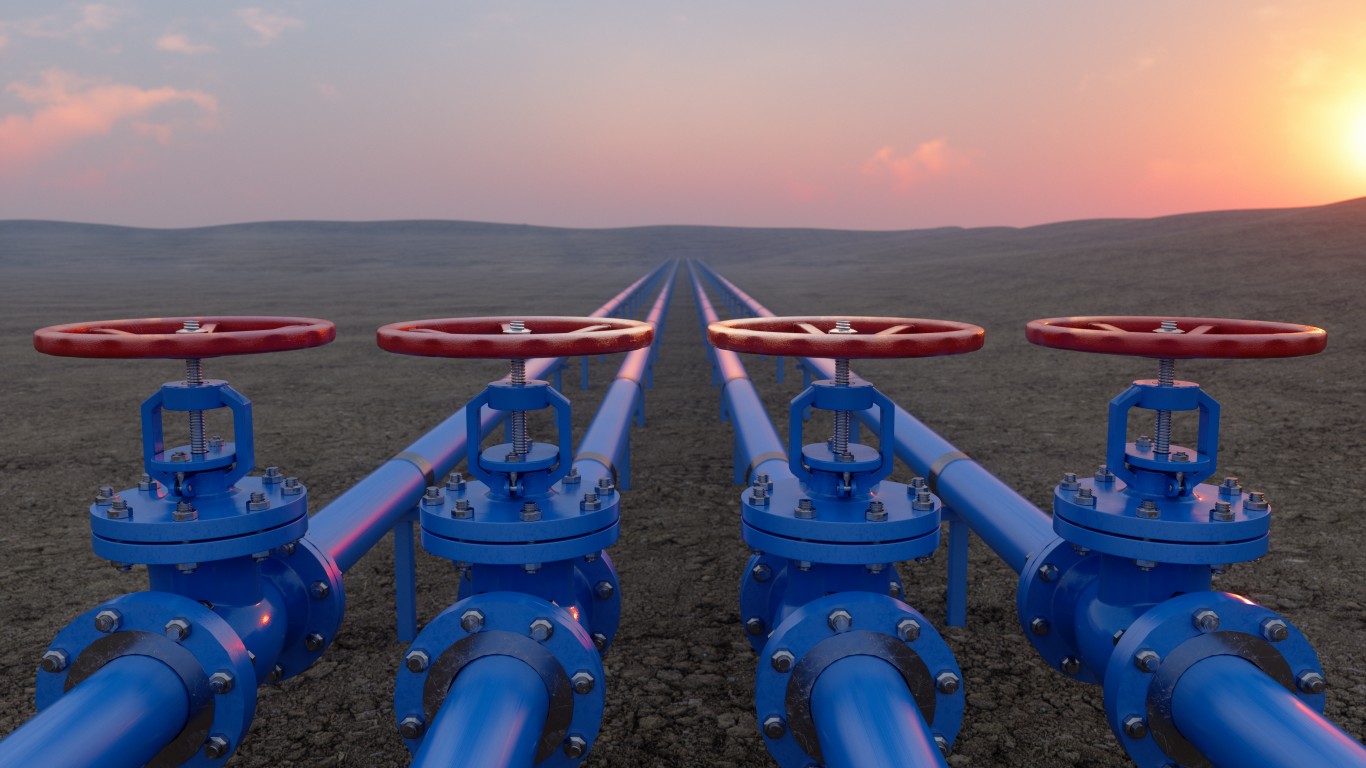
Most energy investors want exposure to oil and gas demand without riding the full volatility of crude prices. A barrel of WTI swung from around $76 to $56 over the course of 2025 before recovering to around $65 heading into 2026. Crude oil futures are now at nearly $96 today and could go higher the longer the Strait of Hormuz remains closed. But there is a corner of the energy market that benefits from it, and the USCF Midstream Energy Income Fund (NYSEARCA:UMI) is built to give investors access to exactly that corner.
Why pipelines play by different rules
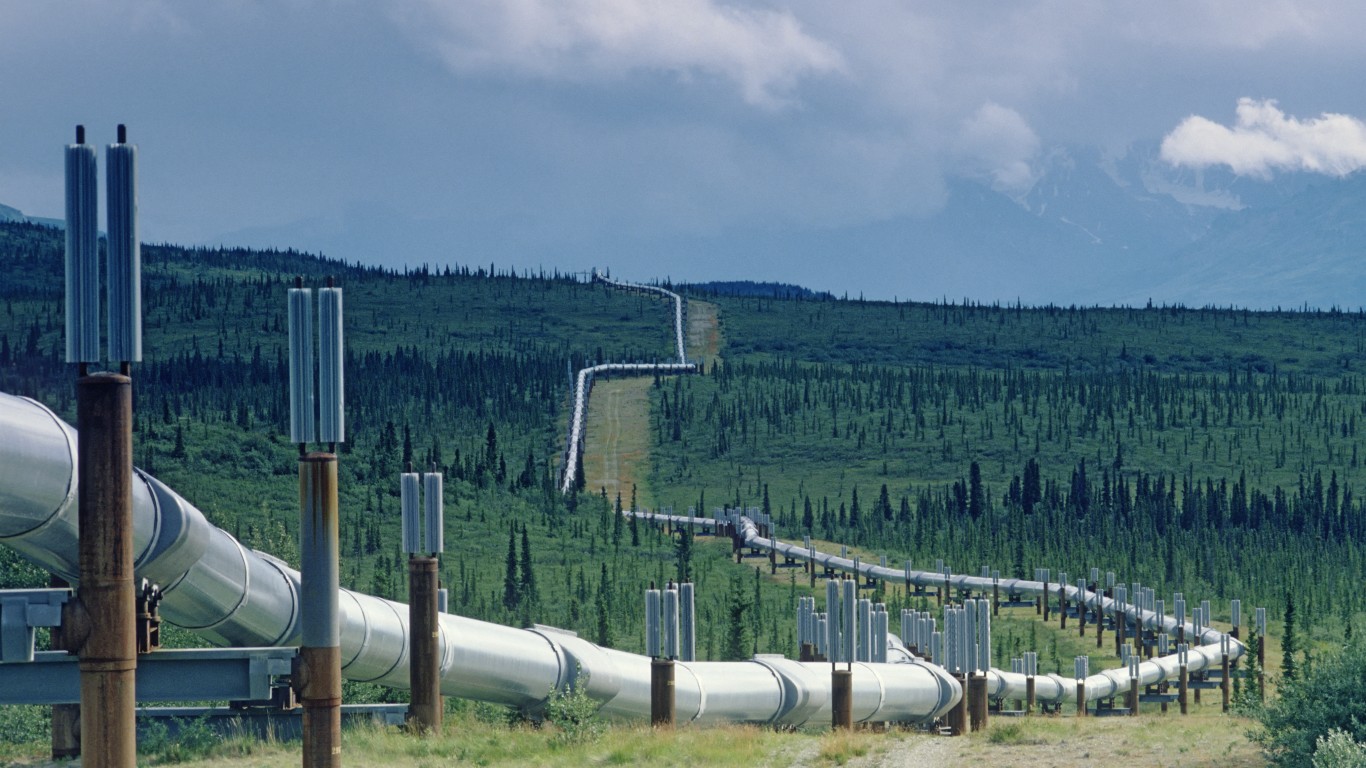
Midstream companies sit between the wellhead and the end consumer. They own and operate the pipelines, storage terminals, and processing facilities that move oil, natural gas, and liquids from production to market. Their revenue comes primarily from long-term, fee-based contracts. Think of them as toll roads: whether oil is at $60 or $90 per barrel, oil still needs to be transported. The pipeline company still collects its fee. Industry research consistently shows that 85% to 90% of midstream revenues come from these fee-based arrangements, which makes their cash flows structurally more predictable than those of upstream drillers.
This structure enables midstream companies to return a high proportion of earnings directly to shareholders. Many are organized as Master Limited Partnerships (MLPs), a legal structure designed to pass through cash flow with minimal taxation at the corporate level. The result is a category that behaves more like a utility than an oil stock, with yields that income investors find genuinely competitive.
North American pipelines are running hot
The demand picture for midstream infrastructure is unusually strong. North American pipelines face pressure from two directions. Europe’s effort to reduce dependence on Russian gas has made U.S. LNG exports a geopolitical priority, and U.S. LNG export capacity utilization averaged over 90% between 2021 and 2025. That throughput has to move through domestic gathering systems and pipelines before reaching a liquefaction terminal.
Domestic demand remains firm as well. The U.S. government has been actively releasing and replenishing its Strategic Petroleum Reserve, with a planned release of 172 million barrels announced in early 2026, creating additional pipeline movement on both ends of that cycle. Every barrel released and every barrel replenished flows through midstream infrastructure, translating into higher utilization rates and stronger cash generation for pipeline operators.
What UMI is made of
UMI has approximately $520 million in assets under management and an expense ratio of 0.69%. Its 24 holdings are concentrated almost entirely in midstream infrastructure, with 68.7% of the portfolio in the energy sector. Almost all of these holdings are related to pipelines.
The fee-based model insulates these companies from commodity price swings, but it does not eliminate risk entirely. That said, the risk is substantially lower than most traditional energy ETFs.
Does the performance bear out the promise?
UMI has returned almost 20% year-to-date, and that is without factoring in the 5.91% dividend yield. These dividends are distributed monthly.
The comparable midstream benchmark, the Alerian MLP ETF (NYSEARCA:AMLP | AMLP Price Prediction), returned 13% year-to-date.
The contrast with broad energy is more nuanced. When oil rallies sharply, pure upstream exposure can outperform.
But when you go over five years, though, UMI’s cumulative return compares favorably to the broad energy ETFs, with considerably less commodity price exposure along the way.
The income component matters here, too. Pure upstream oil companies can’t guarantee you dividends this high, and they cannot increase them as reliably.
The tradeoffs with UMI
You get capped upside during oil rallies, which does require you to bite the bullet in this environment. When crude prices spike, upstream producers and integrated majors benefit directly from margin expansion. Midstream operators collect their contracted fees regardless, so UMI will lag the broad energy fund in a genuine oil bull market. Investors who want full commodity exposure should look elsewhere.
Moreover, it has most of its assets in energy and several Canadian names in the top holdings, the fund carries sector concentration and some exposure to the Canadian dollar and Canadian regulatory environment, even if the currency drag has been minimal historically.
Where UMI belongs in a portfolio
UMI fits best as a core income sleeve for investors who want energy participation without full commodity-price volatility. Its five-year total return competes with broad energy while delivering a yield most equity funds cannot match, making it a fund that income-focused investors have used to gain energy participation with less commodity-price volatility and a higher yield than most equity alternatives.











 Top Gaining Stocks
 Top Losing Stocks