


Sensor Tower’s “Top Charts” for downloads from the Apple App Store shows OpenAI in first place, followed by Google’s Gemini and Anthropic’s Claude. xAI’s Grok doesn’t make the top 25. The Apple App Store ranks the downloads in the same order, but Grok is in 22nd place.
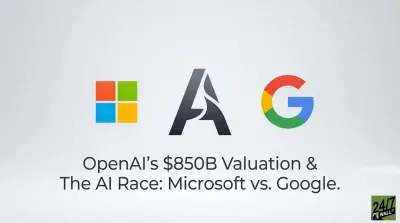
While the list does not show the popularity of these apps across all platforms, it is at least a sign of the heated competition among OpenAI, Google, and Anthropic. It also shows that Grok and Microsoft’s (NASDAQ: MSFT | MSFT Price Prediction) Copilot have little to show. The ranking, if it stays roughly the same, should help OpenAI and Anthropic go public. OpenAI hopes to price its IPO at $850 billion or more. Anthropic’s IPO value has been set at $380 million.
One important factor in the order is the ability to raise capital, which, over the next few years, is absolutely essential. It is too early to say what each company will raise in the public markets. The consensus seems to be that the Anthropic number will be $60 billion. The OpenAI IPO is pegged at double that.
The two private companies desperately need the cash. The Wall Street Journal reports, “OpenAI expects to spend $121 billion on computing power for AI research in 2028. That means the company anticipates burning $85 billion that year, even after almost doubling sales from the prior year. “ The newspaper reports that no company in history has had a burn rate that high. The Anthropic burn expectation is about half that. The numbers are misleading. The other factor is whether the two companies spend the money wisely on products with very, very broad appeal.
Another telling point is: where will Google and xAI get the money to compete? Alphabet (NASDAQ: GOOG), owner of Google, is a money machine. At the end of the most recently reported quarter, Alphabet had cash, cash equivalents, and marketable securities of $126 billion. It added about $30 billion to that figure last year. Alphabet, presumably, would be to spend all or most of that money to keep pace with its primary competitors.
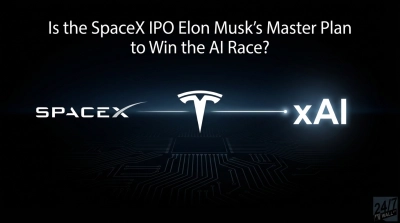
xAI would need to rely on money raised by SpaceX. The two companies were merged just weeks ago. If the IPO values SpaceX at $1.8 trillion, SpaceX could raise $75 billion. How much of that could go to xAI growth? How much would it cost to go to SpaceX?
The wild card in the road to raising enough money to lead the AI industry is how much capital would come from outside the companies. That is complicated because of how much money has been invested so far. NVIDIA (NASDAQ: NVDA), for example, has made investments in the sector. Financial firms may build the AI data centers each company needs. That means that the risk goes onto other companies’ balance sheets.
For now, it appears that OpenAI, Google, and Antropic are in the lead for AI market share. How much money each raises could change that.






 Top Gaining Stocks
 Top Losing Stocks