


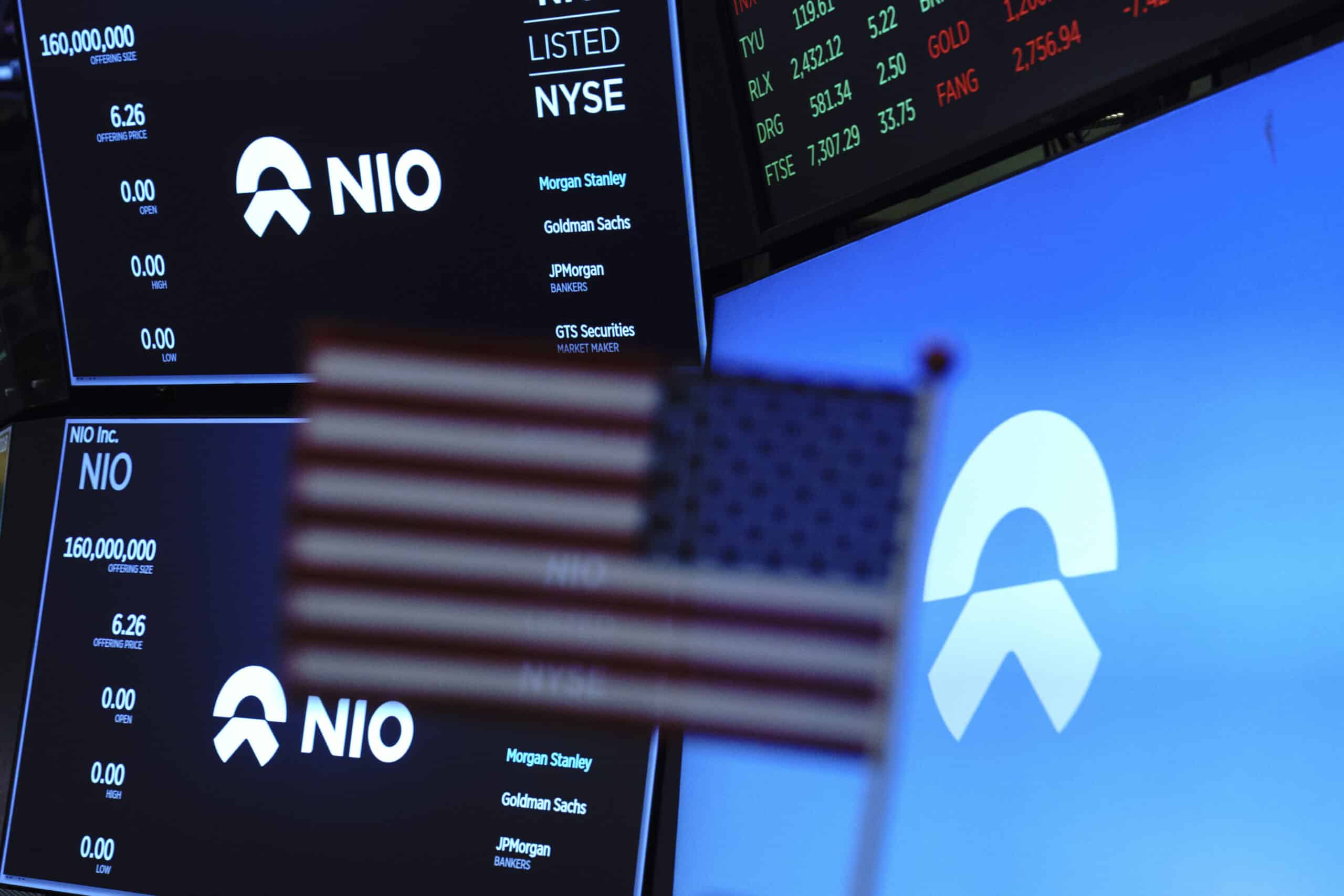
Nio (NYSE:NIO | NIO Price Prediction) stock rose 6% in Friday’s session, climbing from a prior close of $6.07 to $6.45, as investors cheered a pair of milestones that bulls have been waiting years to see. The company posted its first-ever quarterly GAAP profit and nearly doubled its deliveries in a quarter when the broader Chinese auto market actually fell.
The timing matters. The broader Chinese auto market fell 17% in Q1 2026, making Nio’s performance look even more remarkable by comparison. That’s the kind of market-share-taking story that gets institutional investors’ attention, and it’s reflected in today’s move.
Deliveries Nearly Double While the Market Falls
Nio delivered 83,465 vehicles in Q1 2026, a 98% year-over-year increase. March alone saw deliveries surge 136% year-over-year. These aren’t incremental gains built on easy comparisons; they’re coming against a market backdrop where most Chinese automakers are struggling.
This builds on momentum that was already visible heading into the quarter. Nio’s battery swap technology has been a key differentiator, allowing drivers to exchange a depleted battery for a fully charged one in minutes rather than waiting at a charger. That convenience factor, combined with a broadening brand portfolio across the Nio, Onvo, and Firefly brands, is clearly resonating with buyers even as the broader market softens.
For Q4 2025, Nio had already set the standard with 124,807 vehicle deliveries, up 72% year-over-year, with record quarterly deliveries across all three brands. The Onvo brand alone delivered 38,290 vehicles in Q4, while Firefly contributed 19,084 deliveries in its first full quarter.
A Historic Profit Milestone
The headline number that’s driving the stock today is a simple one: $40.4 million in GAAP net income for Q1 2026. That’s Nio’s first-ever quarterly GAAP profit, and it represents a genuine inflection point after years of deep losses. For context, Nio posted a net loss of $7.11 billion in Q4 2024 alone.
The profitability story isn’t just about revenue growth. Nio’s vehicle margin expanded to 18% in Q4 2025, up from 13% in Q4 2024, and gross margin rose to 18% from 12%. That margin expansion signals Nio is improving the underlying economics of each car it sells, not just chasing volume. Meanwhile, R&D expenses fell 44% year-over-year and SG&A dropped 28%, showing meaningful cost discipline alongside the revenue surge.
Nio’s in-house chip initiative through its Shenji (GeniTech) subsidiary is part of the cost story. GeniTech received RMB 2.257 billion in external investment, and Nio is targeting domestic semiconductor sourcing of 35% to 40% by 2027. Reducing reliance on imported chips should continue to compress per-vehicle costs over time.
The Analyst Divide and the Bear Case
Wall Street isn’t uniformly convinced. JPMorgan holds a Buy rating on Nio shares with a price target of $8, while Barclays sits at the opposite end with a $4 target. Macquarie recently downgraded the stock, adding to the skeptic camp. At $6.44, NIO stock sits squarely in the middle of that range, meaning the market is essentially pricing in a “wait and see” verdict.
The bear case deserves honest treatment. NIO shares are down 83% over the past five years, and the stock has a long history of surging on positive news only to give back gains as competitive pressures mount. BYD and other Chinese NEV makers remain formidable rivals, and Nio’s full-year 2025 net loss was $2.14 billion despite the strong Q4 finish. Current liabilities also exceed current assets, and going concern considerations haven’t fully disappeared despite the improved quarterly results.
For investors thinking longer-term, our 2030 price prediction piece lays out the range of scenarios in detail. The bull case hinges on whether today’s profitability and delivery momentum can be sustained as competition intensifies. The analyst consensus for NIO stock sits at a $6.59 price target with 16 buy ratings, 7 holds, and 2 sells, suggesting the Street leans cautiously constructive.
Watch for whether Nio shares hold above the $6.44 level into the close and whether today’s volume confirms genuine institutional conviction behind the move. The next delivery update will be the key data point to watch.













 Top Gaining Stocks
 Top Losing Stocks