


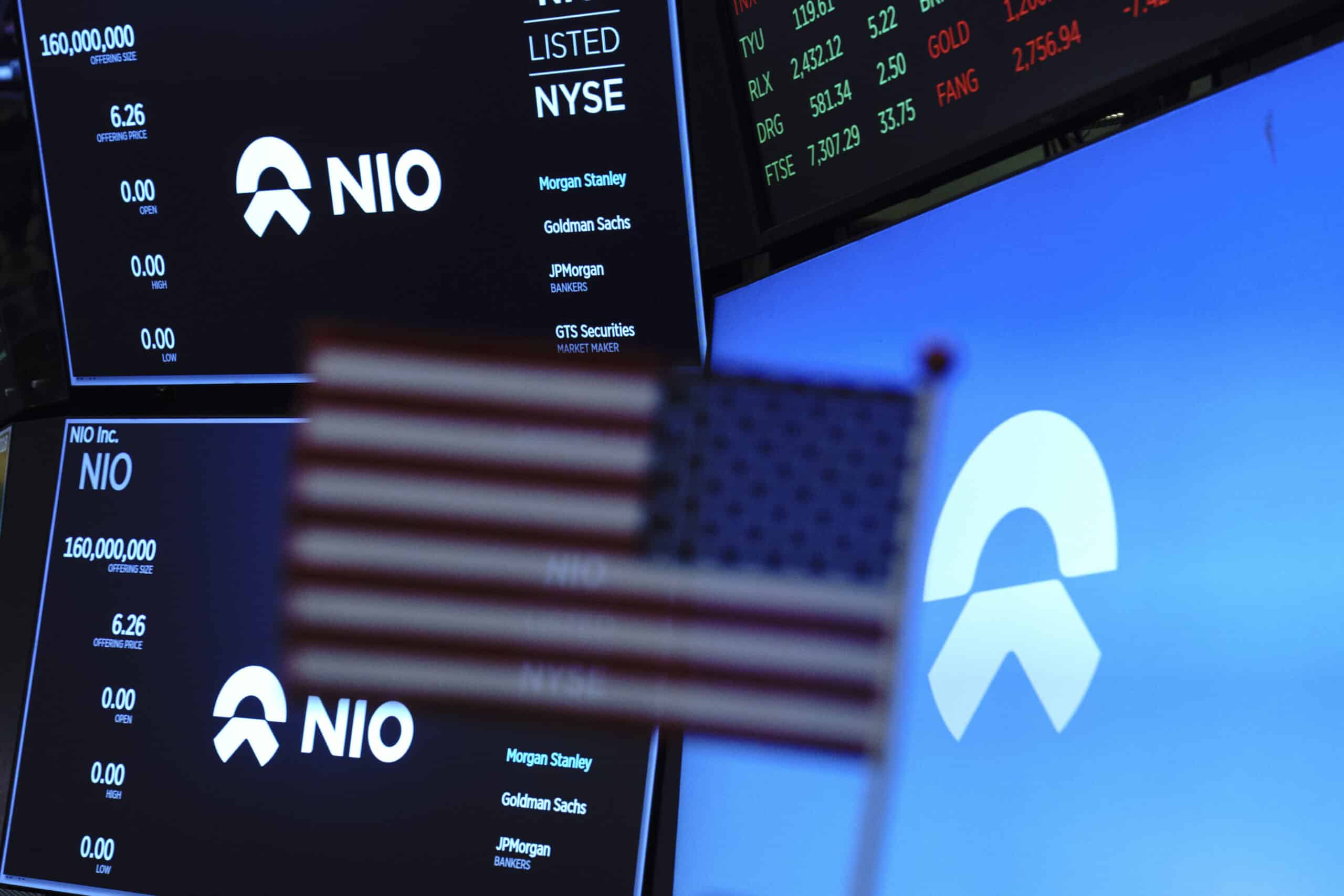
Nio (NYSE:NIO | NIO Price Prediction) stock is jumping roughly 5% in Friday trading, pushing shares toward $5.90 as investors digest the company’s landmark Q4 2025 earnings report filed earlier this week. The move adds to what has already been a strong stretch for the stock.
NIO stock has gained more than 20% over the past week, fueled by a series of positive catalysts stacking on top of each other. For a stock that has spent years frustrating bulls with its inability to convert delivery growth into profit, this week marks a notable shift.
First-Ever Quarterly Profit Drives the Move
The core catalyst is straightforward: Nio reported its first-ever quarterly GAAP operating profit of $115.4 million in Q4 2025, driven by record vehicle deliveries and the high-margin ES8 SUV pulling its weight at the top of the lineup. Furthermore, Nio’s Q4 2025 revenue surged 76% year-over-year, with vehicle volume up 72% year-over-year.
Record quarterly deliveries came in at 124,807 vehicles across the Nio, Onvo, and Firefly brands. Nio’s vehicle margin expanded to 18.1%, up from 13.1% a year earlier, which is the number that really matters here. Wider margins on more vehicles is the operating leverage story investors have been waiting for since Nio went public.
Morningstar analyst Vincent Sun raised his fair value estimate for Nio to $6.10 per ADS, citing “strong vehicle volume and operating leverage.” The consensus analyst target for Nio shares sits at $6.825, with 14 analysts rated Buy and 10 rated Hold heading into today’s session.
Momentum Built All Week
Today’s move did not come out of nowhere. On March 7, 2026, NIO stock surged 19% after Deutsche Bank (NYSE:DB) flagged strong early-March EV order demand, marking the stock’s best single day in a month. That spike pulled the RSI to 67.19 on March 10 before settling back to 62.16 on March 12, which is healthy consolidation territory rather than a warning sign.
Options traders were already positioning aggressively. On March 9, 158,380 contracts traded on NIO, with 80.64% of that volume in call options and open interest of approximately 3.28 million contracts, exceeding the 30-day average by 100.32%. That kind of call-heavy activity ahead of the earnings reaction suggests the market was anticipating good news, not just reacting to it.
For a deeper look at how Nio stacks up against its closest rival in the premium segment, this breakdown of Nio vs. Li Auto published earlier this week puts the competitive picture in sharp context.
The Case for and Against a Real Breakout
Bulls have more ammunition than usual. The ES8 SUV led China’s large SUV segment above RMB 400,000 for three consecutive months through February 2026. Nio reached 100 million cumulative battery swaps on February 6, 2026, a milestone that reinforces the company’s differentiated infrastructure moat in a market where competitors are still building out charging networks.
Nio’s Q1 2026 guidance is where the skeptics find their footing. Management guided for deliveries of 80,000 to 83,000 units in Q1 2026, a sequential step down from Q4’s record pace due to seasonal factors and fading subsidies. Nio also expects EV production costs to rise by nearly 10,000 yuan per premium vehicle in 2026 due to memory chip shortages and rising raw material prices.
CEO William Li’s incentive structure at least aligns his interests with shareholders. Li received 248 million restricted share units tied to stringent market capitalization and net profit targets, vesting across ten tranches. He only gets paid if the stock and the business both perform.
What to Watch
The ES9 flagship SUV technology launch is scheduled for April 9, which gives the market a near-term catalyst to focus on beyond today’s earnings reaction. The $6 and $6.50 levels will be watched by traders next week, no doubt as a gauge of institutional participation.
With NIO stock’s RSI sitting at 62, it hasn’t yet reached overbought territory and there’s still room for further momentum if the buying pressure continues. As for the company itself, Nio’s lost headwinds in Q1 mean the next earnings print will be a key test of whether this profitability inflection is durable or a one-quarter event.












 Top Gaining Stocks
 Top Losing Stocks