



The monthly deposits arrive like clockwork, as a retiree receives 8% annually, paid in 12 equal installments, backed by a fund with institutional credibility.
For retirees who spent decades watching savings accounts pay next to nothing, a covered call ETF like the JPMorgan Premium Equity Income ETF (NYSE:JEPI) that generates between 7% and 9% in monthly income feels like the answer they have been waiting for. Best of all, the deposits every 30 days confirm that they are on the right track.
This said, what the deposits don’t know about what is happening to their account balance is what really needs to be discussed.
The 2022 Problem Nobody Talks About Enough
During the 2022 bear market, covered call ETFs declined 20% to 30% in net asset value even as they continued paying their monthly distributions. The income kept coming, but account values kept falling. Now, consider a retiree who entered 2022 with $500,000 in a high-yield covered call fund, collecting $3,000 per month in distributions. By the end of that year, the NAV had declined to roughly $380,000, so the retiree received approximately $36,000 in distributions over the course of the year.
Meanwhile, the account lost $120,000 in principal, so the net result was an $84,000 loss in total wealth. Said another way, this retiree lost a negative total return of roughly 17% on a fund that never stopped paying income. The distributions did not compensate for the principal erosion, they merely masked what was really happening.
Yield and Total Return Are Not the Same Thing
This is the distinction that every retiree who owns a high-yield income fund needs to understand clearly. A fund yielding 8% that declines 15% in NAV over the same period has a total return of approximately negative 7%. The challenge is that while the income is real, the loss is also real, so the net position for a retiree is worse than if they had simply held everything in cash.
The problem is compounded for retirees who are spending distributions rather than reinvesting them. When a fund declines in NAV and withdrawals continue at the same time, the recovery math gets pretty tricky. The portfolio is smaller, so it’s generating less income going forward, with fewer shares remaining to benefit from any eventual price recovery. The sequence of returns risk, the danger of experiencing losses early in retirement when withdrawals are ongoing, is most damaging in exactly this scenario.
A retiree who loses $120,000 in principal during year one of retirement and continues withdrawing income from a reduced base is not in the same position as someone who experienced the same loss during accumulation. The time to recover is the variable that changes everything.
Where the Risk Actually Lives
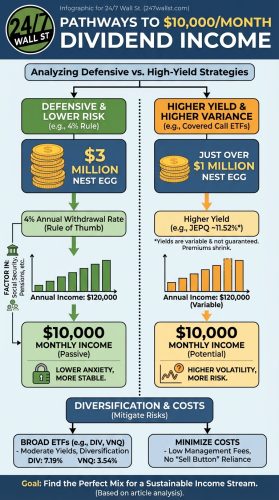
None of this means that covered call ETFs are bad, on the contrary as the honest analysis has to be more nuanced. The thing is, the risk is specific, and a retiree with a diversified income plan with Social Security covering basic expenses, a pension or Roth IRA providing additional stability, a covered call ETF generating supplemental income in a taxable account, is in a fundamentally different position than someone treating the covered call ETF as the primary or sole income source.
In the first scenario, you have a 25% NAV decline in the income sleeve, which is uncomfortable, but survivable. The second scenario can permanently impair your plan. When high-yield income funds complement a diversified retirement income base, the monthly cash flow is additive and the volatility is manageable. When they replace a diversified base, every market downturn becomes a structural threat.
The Question Worth Asking Before the Next Deposit Arrives
Before making a covered call ETF a significant portion of any income plan, one question deserves an honest answer: if this fund’s value dropped 25% tomorrow and stayed there for 18 months, would the monthly distributions still cover essential expenses without forcing a sale of shares at a loss?
If the answer is yes, the income sleeve is appropriately sized, but if the answer is anything other than yes, the position is larger than the risk tolerance actually supports, regardless of how reassuring the monthly deposits have felt up to this point. Ultimately, the monthly income is not the story, the total return across a full market cycle is the story (and the focus), and both numbers deserve equal attention.












 Top Gaining Stocks
 Top Losing Stocks