


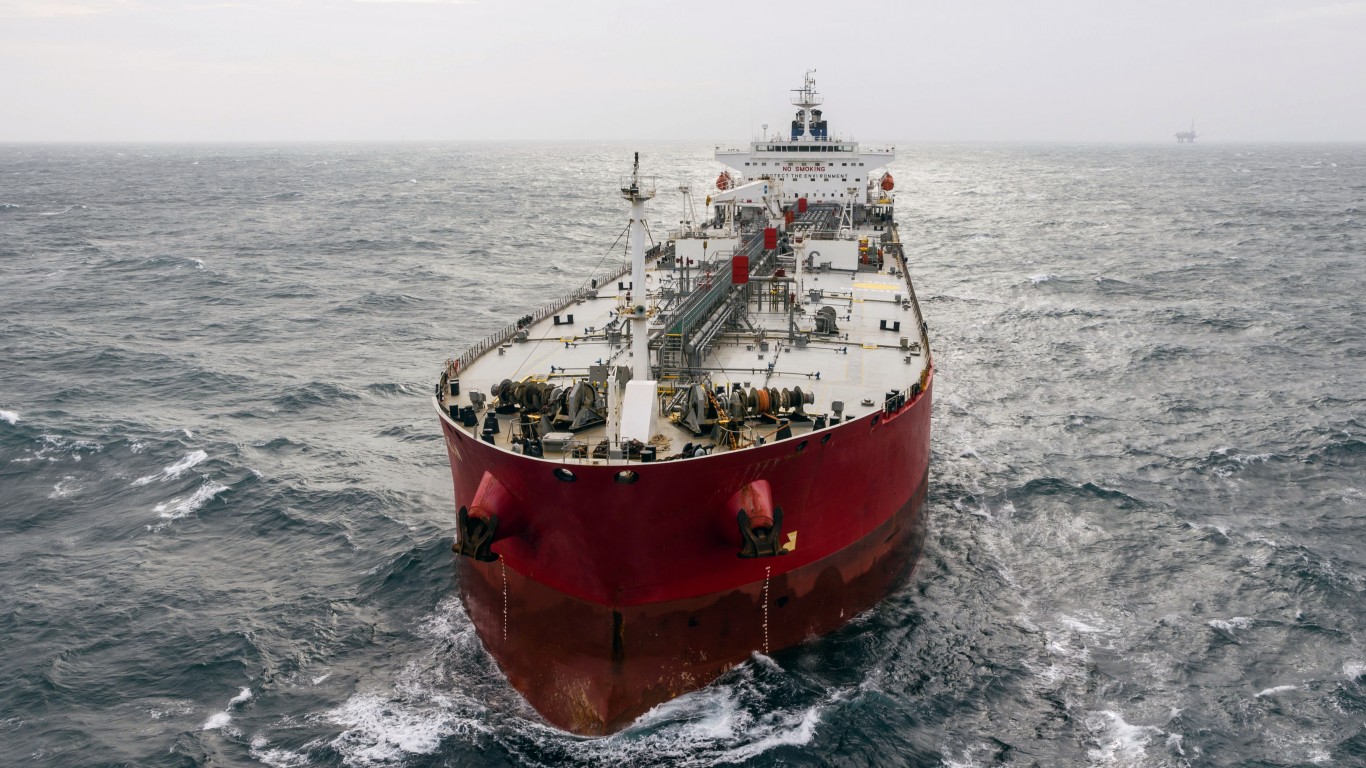
Shy of two full weeks ago at the time of this writing, the US launched Operation Epic Fury to destroy the #1 state sponsor of Islamic terrorism’s military capabilities and its capacity to manufacture nuclear weapons. Iran’s response to this infrastructure devastation was to shut down the Strait of Hormuz, the primary conduit for maritime transport of oil from the Middle East. The resulting tumult in the oil markets leading up to when the news hit the wires catapulted oil futures prices to over $112 per barrel.
Unsurprisingly, oil tanker stock prices have followed a similar trajectory. The Breakwave Tanker Shipping ETF (NYSE: BWET) is an ETF designed to track freight futures, thus giving investors exposure to the overall oil shipping market and its pricing trends without the compounded risk of the particular financial, operational, and logistic challenges that might be faced by individual shipping firms. Although relatively new, it has returned over 1,200% in the past year, although it is probably set to fall just as quickly, in light of recent events.
Breakwave Tanker Shipping ETF

Oil tanker fuel, logistics, rerouting, insurance, and other factors can affect VLCC transpoirt prices irrespective of crude oil prices.
Using TD3C Very Large Crude Carrier (VLCC) contract prices as the basis for 90% of its index pricing calculations, BWET is a high-risk, actively managed ETF. Since oil transport pricing is sensitive to supply-chain or geopolitical event disruptions, BWET’s fortunes reflect the overall daily fluctuations of oil shipping prices.
|
Net Assets |
$52.11 million |
Expense Ratio |
3.50% |
|
NAV |
$143.69 |
Inception Date |
5-1-2023 |
|
52-Wk. Range |
$9.60-$179.90 |
YTD Return |
671.52% |
|
Avg. Daily Volume |
104,956 shares |
1-Year Return |
1,206.64% |
While BWET has a pricey expense ratio, its price remained at roughly $10 since inception only until Q3 2025, when it started creeping up as winter months approached.
The steep price buildup started during March negotiations over Iran’s threats to build as many as 11 nuclear weapons. Iran boasted that it had enriched uranium procured in blatant violation of their previous pact with President Obama, which had cost the US $150 billion in “incentive” money.
In much the same way oil prices jumped roughly 98% from the $50-$60 per barrel level to over $112 during Operation Epic Fury’s apex, oil transport prices ballooned from an average $3-$4 a barrel to over $14 – although this may be a false correlation for the long term (see below). BWET’s pricing ascended accordingly.
Clearly, the blockade of the Strait of Hormut, through which approximately 25% or daily global oil is shipped, had the biggest influence on maritime tanker transport prices. Additional logistics costs for rerouting, additional fuel for detoured or delayed vessels, and insurance changes all factor into these higher overall transport costs.
A 1,200% Gain Is The Anomaly Exception

President Trump launched Operation Epic Fury to eradicate Iran’s ability to threaen the world with nuclear weapons and to continue to promote Islamic terrorism through its proxies, resulting in disruptions to oil shipping through the Strait of Hormuz.
When the SEC came up with the disclaimer, “past performance does not guarantee future results”, BWET may have been the kind of stock they had in mind. By almost any metric, a 1,200% 1-year gain is an anomaly, and in the case of BWET, almost exclusively due to geopolitical events. The fact that the US decimated the formidable Iranian military in approximately 12 days debunked all of the experts who claimed that it would be another “forever” war that could drag out for years.
Oil prices plummeted from triple digits to the mid-80s in 48 hours from announcement of the ceasefire and President Trump’s reopening of the Strait of Hormuz under US military purview. The volatility of the oil supply chain and maritime tanker shipping industry fell commensurately.
At the time of this writing, Iran has reportedly tried to once again shut down the Strait. It is very likely that further US bombing will follow that will likely hasten the fall of its theocracy and return governing power to the Shah, as demanded by the majority of Iranian citizens. The Strait will probably undergo another US naval blockade, albeit a temporary one. While BWET may spike again for a brief period, sustained appreciation is very unlikely.
False Correlation/New Paradigm?
President Trump has reset the global energy game board with his strategic moves regarding Venezuela, Iran, and Russia.
While the price of oil has had a correlation with tanker transport contract prices that has been relatively consistent in the past, the geopolitical energy landscape has changed dramatically in just the past few weeks, due to strategic moves from President Trump:
- President Trump has drastically cut red tape and drilling permit logjams previously put into place by the Biden administration.
- Since the US apprehended dictator Nicholas Maduro and liberated Venezuela, the US now controls Venezuelan oil exports, which, combined with the US, equate to over one-third of world production.
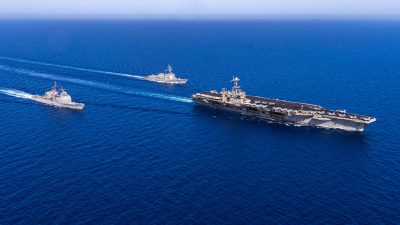
- The US naval blockade of the Strait of Hormuz led to nearly 120 tankers rerouting away from the Middle East to buy US oil from Texas.
- Any sustained blockade that prevents Iran from exporting oil for longer than 3 weeks will likely put it at full storage capacity and in danger of overproduction. Shutting down Iranian production will devastate its oil industry, since restarting it would be prohibitively expensive without considerable financial assistance from other nations.
- Bloomberg reported that the Kremlin is proposing a major economic partnership for bilateral trade in energy, critical materials,and other areas – including a return to US dollar settlements.
When factoring the above new paradigm into the equation, future TD3C VLCC contract prices may soon be set to buy from US-controlled sources in the future and prices will settle down. Since the costs of shipping are what determines the BWET index, oil prices may fluctuate or spike if Iran production has to drastically reduce, but rerouted shipping contracts may already be in play that effectively discount ships with contracts to move product from the Strait of Hormuz. BWET will thus see far less volatility under this scenario.









 Top Gaining Stocks
 Top Losing Stocks