


Tensions in the Middle East have tightened the global oil spigot once more. The U.S. maintains its naval blockade of Iranian ports, Iran fired on two tankers in the Strait of Hormuz over the weekend, and the U.S. Navy seized an Iranian-flagged cargo ship on Sunday in the first such interception since the blockade began.
A fragile two-week truce expires tomorrow, and Iran has stayed defiant. President Trump posted on Truth Social that without a deal, the U.S. will target every bridge and gas plant in the country. Brent crude has already climbed past $100 a barrel, and analysts warn U.S. gasoline could hit $6 to $7 a gallon if disruptions stretch into June. Higher pump prices hit wallets fast. That pain is already shifting buying habits toward electric vehicles (EVs) again.
The Geopolitical Spark Lifting EV Demand
When fuel costs spike, drivers hunt for cheaper miles. The current crisis has done exactly that. European battery-electric vehicle registrations surged 29.4% in the first quarter, with a 51.4% gain in March alone, according to the European Automobile Manufacturers’ Association. Germany, France, Spain, Italy, and Poland recorded greater than 40% growth in BEV sales. These sales represented 22% of all new passenger car sales across the key European markets. In Asia, where 80% of Strait of Hormuz crude lands, South Korea saw EV registrations more than double in March.
Chinese EV makers captured much of the early wave. BYD saw European registrations surge by 162.7% in the first two months of 2026, with a 327% surge in German registrations in March. Leapmotor recorded a massive 677% increase in registrations in Q1 compared to last year. Yet the broader market is expanding fast enough that even slower-moving players can gain ground.
Tesla’s Rebound Begins
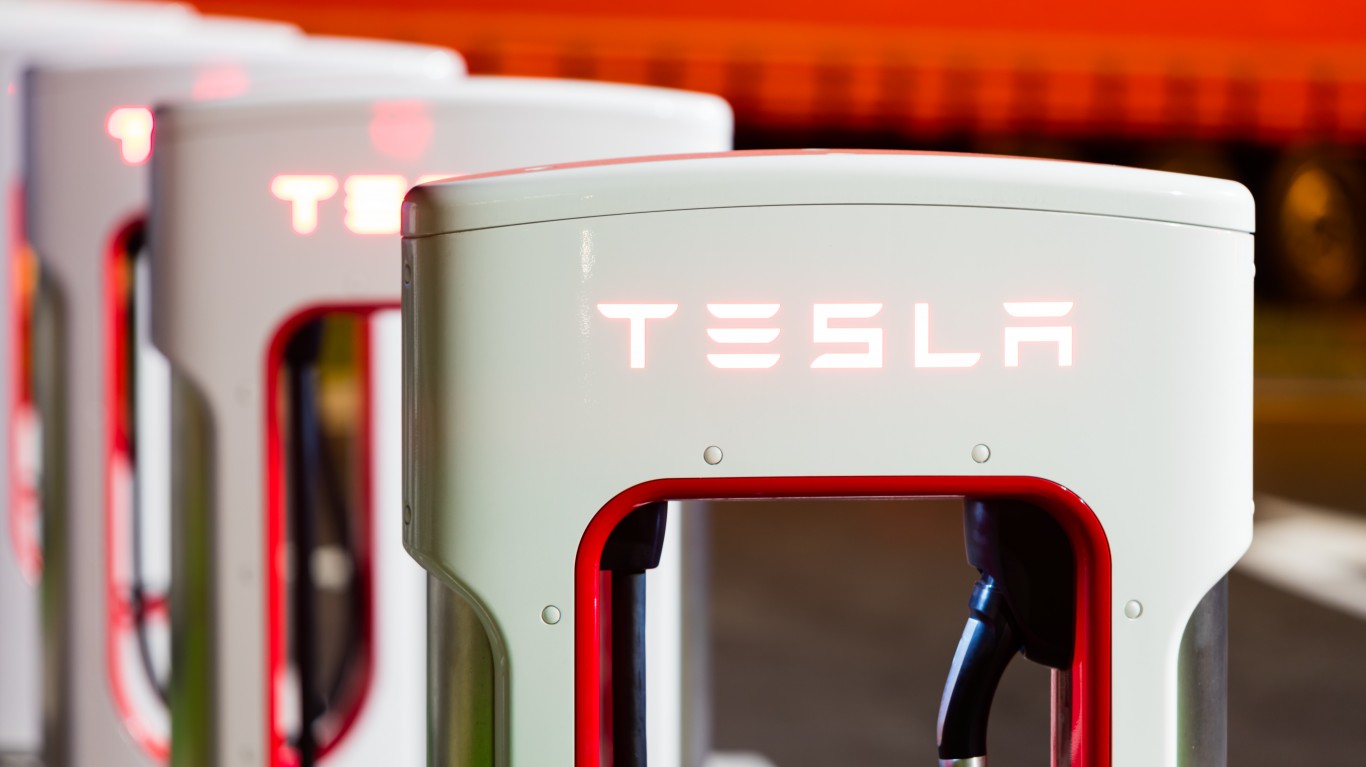
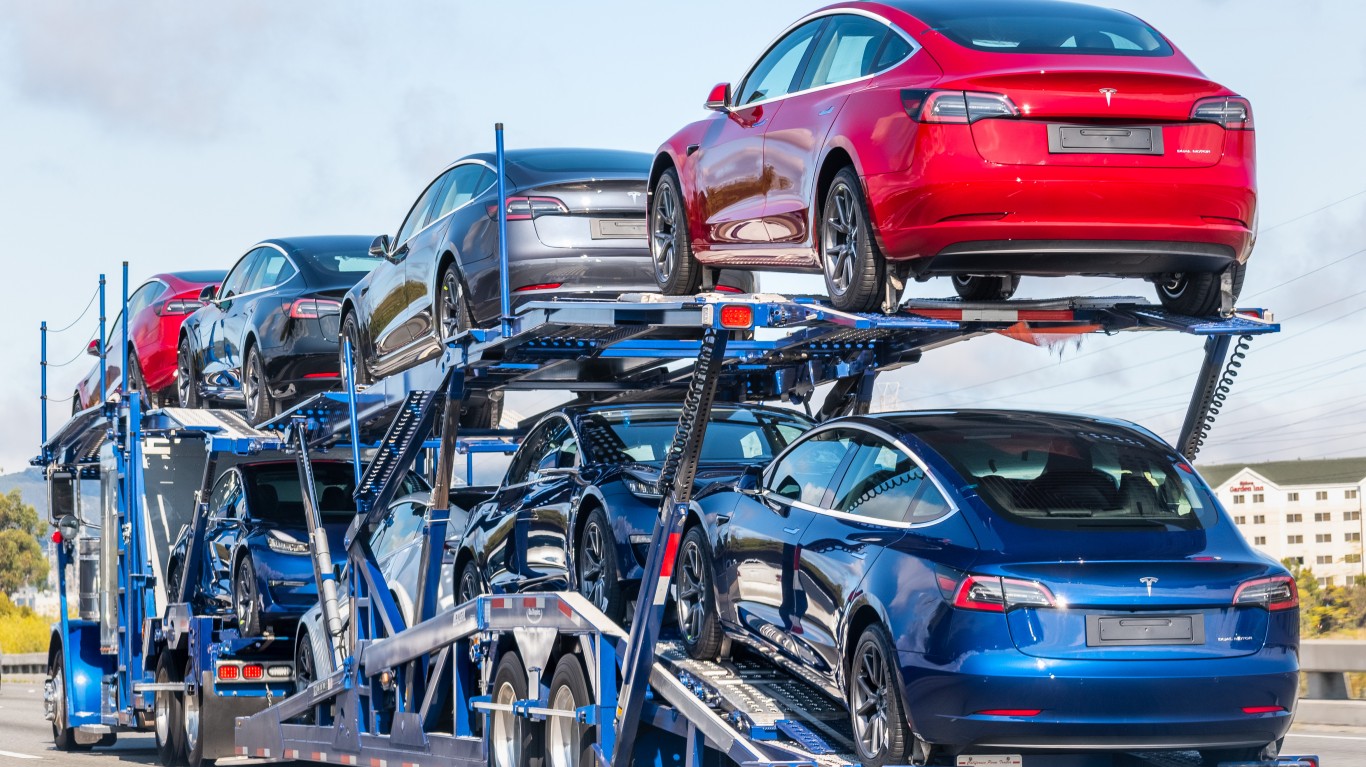
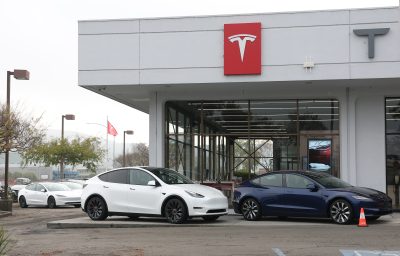
Tesla (NASDAQ:TSLA | TSLA Price Prediction) delivered 358,023 vehicles globally in the first quarter of 2026, a 6% increase from 336,681 units a year ago. That trailed Wall Street expectations and left roughly 50,000 extra cars in inventory. While February looked like a disaster in Europe, March flipped the script. Registrations tripled in France, quadrupled in Germany, and jumped sharply across the Nordics, according to national transport authority data compiled by Reuters.
The numbers tell a clear story: when gas prices climb, Tesla’s order book responds. A return to full hostilities would likely push prices higher still, giving the company a fresh demand lift exactly when it needs one.
Beyond the Car Business
Tesla does not live or die by EV cycles alone. The company is scaling Full Self-Driving software, preparing Cybercab production for 2026, and targeting robotaxi operations in eight to 10 metro areas by year-end (it just announced the rollout of its robotaxi self-driving service in Dallas and Houston). Optimus humanoid robots enter limited production this year as well.
These bets turn every Tesla on the road into a potential revenue generator and open entirely new markets insulated from oil-price swings. Investors who focus only on quarterly deliveries miss the bigger picture: Tesla is building an AI and robotics platform on top of its auto base.
That said, risks remain plain. Trailing P/E stands at 371, with the stock trading near $400 per share. Its forward P/E sits at 192. Competition from BYD and legacy automakers is also real. A quick truce that drops oil back toward $70 would cool EV urgency overnight, while execution on robotaxis and Optimus is still unproven at scale.
Key Takeaway
If the truce collapses and gas prices keep rising, Tesla’s EV sales should accelerate and its stock will likely follow. The March rebound already shows the mechanism at work. Add the company’s AI and robotics pipeline, and the setup looks compelling for patient investors.
Yet the valuation leaves little room for error. Smart money will watch this week’s developments in the Strait of Hormuz and Tesla’s April 22 earnings call for concrete guidance on margins and robotaxi timelines. In short, the Iran conflict hands Tesla a genuine near-term catalyst. Whether it becomes a lasting tailwind depends on how quickly the company converts higher demand into higher profits.










 Top Gaining Stocks
 Top Losing Stocks