



Amplify Energy & Natural Resources Covered Call ETF (NYSE:NDIV) targets income-hungry investors who want exposure to oil, gas, and chemicals without sacrificing yield. The fund aims for 10% or greater total annualized income. It combines dividends from energy and natural resource stocks with premiums from a monthly covered call strategy. That dual-engine approach sounds compelling, but the income stream is more complicated than the headline suggests.
How the Strategy Works
NDIV holds dividend-paying energy and natural resource companies, then systematically sells covered call options on those positions. Selling a covered call means the fund agrees to sell shares at a fixed price in exchange for an upfront cash premium. That premium becomes income The covered call strategy targets a 6% annualized option premium, on top of whatever dividends the underlying stocks pay.
The trade-off is capped upside. If energy stocks surge, the fund cannot fully participate because shares may get called away at the strike price. In a flat or mildly rising market, the strategy works well. In a strong bull run, it leaves money on the table.
The fund tracks the VettaFi Energy and Natural Resources Covered Call Index and carries an expense ratio of 0.59%. Assets under management stand at about $26 million, making this a small fund by institutional standards, which can limit liquidity.
Where the Dividend Comes From
The portfolio concentrates in three sectors: oil, gas, and consumable fuels at 65%, chemicals at 22%, and energy equipment and services at 13%. Geographically, nearly 70% is in the United States, with Canada at 13% and Brazil at 7% round out the top three.
Three holdings deserve scrutiny because they collectively represent almost 19% of the fund and sit in industries under genuine financial stress.
| Holding | Weight | Key Risk |
|---|---|---|
| Petrobras (NYSE:PBR | PBR Price Prediction) | 6.52% | Government control, FX exposure, new dividend withholding tax |
| LyondellBasell Industries (NYSE:LYB) | 6.51% | Full-year net loss, prolonged chemicals downcycle |
| Dow (NYSE:DOW) | 5.97% | Dividend cut in 2025, negative free cash flow |
| CVR Partners (NYSE:UAN) | 4.98% | Variable distribution MLP tied to fertilizer prices |
| Atlas Energy Solutions (NYSE:AESI) | 4.71% | Oilfield services sensitivity to E&P spending cycles |
Petrobras: High Yield, Political Risk
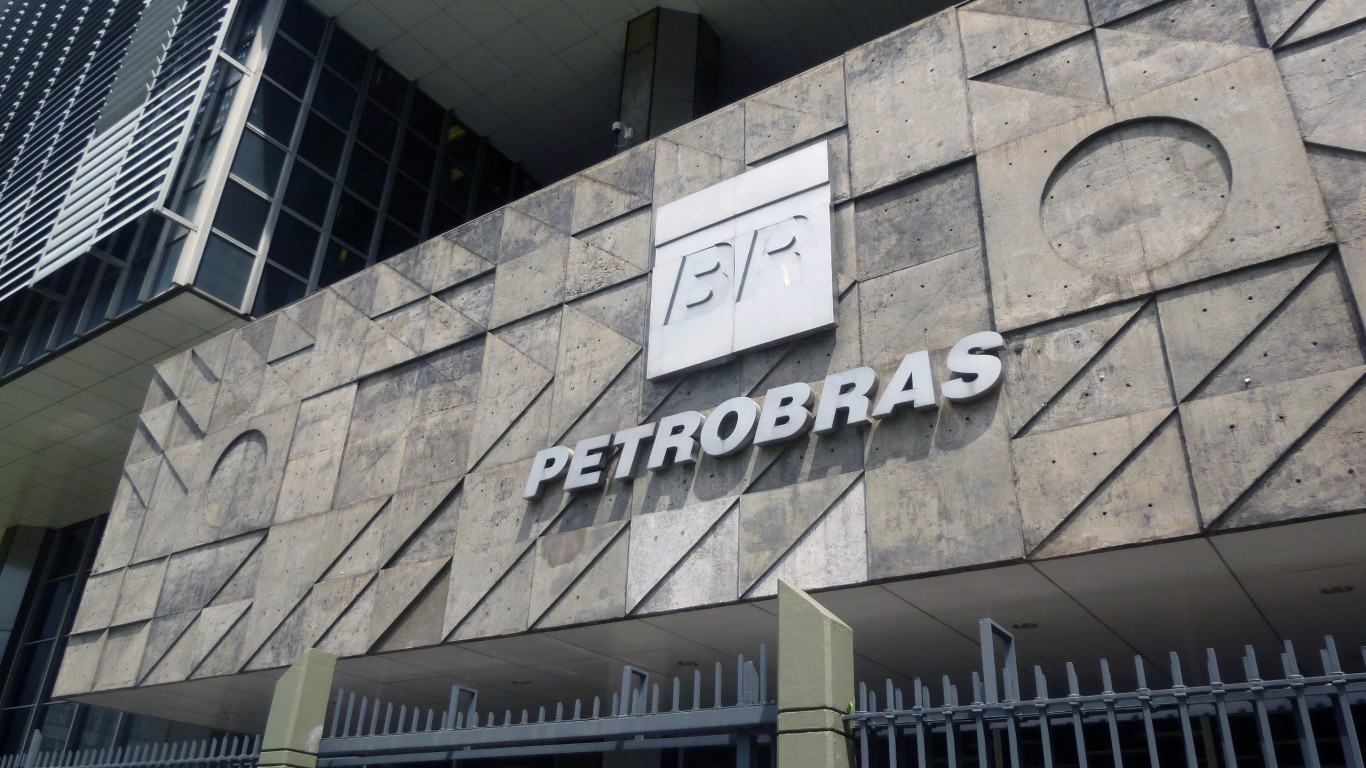
Petrobras is the Brazilian national oil company and a top holding of NDIV.
Petrobras carries a dividend yield of nearly 15%, which anchors NDIV’s income. The Brazilian oil giant reported full-year net income of $19.6 billion in 2025 on revenues of $89.2 billion, with operating cash flow of $36 billion. Cash generation is substantial.
The risk is structural. As a Brazilian state-controlled company, Petrobras distributes dividends based on government policy as much as business performance. New Brazilian dividend withholding tax legislation effective January 2026 may impact shareholder returns. Currency swings also matter: the 11% appreciation of the Brazilian real against the dollar in 2025 improved reported financials, but that tailwind can reverse. The dividend is real for now, politically sensitive, and subject to exchange rate volatility.
LyondellBasell and Dow: Chemicals Downcycle
These two holdings combined represent nearly 13% of NDIV, and both navigate a prolonged global chemicals downcycle. LyondellBasell posted a full-year GAAP net loss of $738 million in 2025, weighed down by $1.3 billion in non-cash asset write-downs. Its Q4 adjusted EPS of -$0.26 badly missed expectations. The company pays dividends while losing money, which is unsustainable without cycle recovery.
Dow already acted. The company sliced its dividend by 50% in mid-2025 after generating negative free cash flow of $1.4 billion for the full year. CEO Jim Fitterling described the cut as preserving financial flexibility, framing “Transform to Outperform” initiative as targeting at least $2 billion in additional near-term earnings. The restructuring plan is credible, but Dow’s dividend is now half what it was and still not covered by free cash flow.
The Covered Call Overlay
When WTI crude oil is elevated and energy stocks are volatile, option premiums are richer, generating more income. WTI recently traded near $101 per barrel, near the top of its 12-month range, which supports premium income. But oil saw a 12-month low of $55 per barrel as recently as December 2025, a reminder of how quickly that environment can shift.
When volatility collapses or energy stocks decline, option premiums shrink. The strategy converts some upside potential into current income. In a falling energy market, investors get a smaller cushion, not protection.
Distribution Trend
NDIV pays monthly, appealing to income investors seeking regular cash flow. But per-payment amounts have declined meaningfully. The 2023 full-year total was $1.99, which fell to $1.58 in 2024 and $1.50 in 2025. The 2026 payments have been larger so far, with a March 2026 payment of $0.30 standing out, but it is too early to call that a reversal.
The declining distribution pattern reflects both lower option premiums during reduced volatility and dividend pressure at holdings like Dow. When the underlying dividend stream contracts, the monthly payment shrinks regardless of option activity.
Total Return Context
Price performance is strong. NDIV shares have gained nearly 37% over the past year and almost 29% year-to-date through mid-April 2026. Since inception in August 2022, the fund has risen about 66% from its starting price of $20.56. Investors who bought and held received both meaningful income and capital appreciation.
The caveat is that much of the recent price gain tracks the WTI spike to $114 in early April 2026. If oil mean-reverts toward 12-month average of $67, NAV erosion could offset a significant portion of the income collected.
Bottom Line
NDIV’s covered call income is mechanically reliable as long as energy volatility persists, The covered call premium income is mechanically reliable as long as energy volatility persists, but not guaranteed. The underlying dividend income faces real headwinds: Dow cut its dividend, LyondellBasell pays dividends through a loss cycle, and Petrobras carries political and currency risk. The declining annual distribution totals from 2023 through 2025 are a concrete warning sign.
This fund makes sense for investors who want energy sector exposure with an income tilt and understand the yield is partly a function of current commodity volatility rather than durable business cash flows. Those comfortable with commodity cycles and variable monthly payments will find the total return case more compelling than the yield alone suggests.










 Top Gaining Stocks
 Top Losing Stocks