


The national average savings account rate sits well below 1% according to FDIC data, and even the best high-yield savings accounts available right now are paying around 4.00% according to Bankrate, with one-year CDs coming in at roughly 4.03% for a top payer. These ultra-short bond ETFs are beating both of those numbers, paying monthly income, and doing it with a level of NAV stability that most investors associate only with cash.
Rest assured that the iShares 0-1 Treasury Bond ETF (NYSE:SHV | SHV Price Prediction), JPMorgan Ultra-Short Income ETF (NYSE:JPST), and iShares Short Duration Bond Active ETF (CBOE:NEAR) are not flashy funds. Their share prices barely move, and that is the point.
Why Ultra-Short Duration Changes the Risk Conversation
The reason bond funds frighten some investors is interest rate risk: when rates rise, bond prices fall, and duration measures that sensitivity. A fund with a duration of one year loses roughly in 1% in price for every one-percentage-point rise in rates.
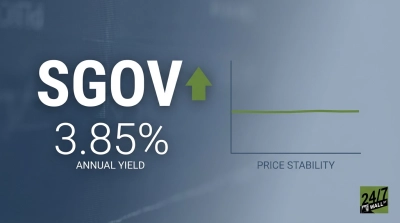
As it stands today, the iShares 0-1 Year Treasury Bond ETF has a beta of 0.01 and a 52-week range of $110.02 to $110.50, a total price swing of 48 cents on a $110 fund over an entire year. The JPMorgan Ultra-Short Income ETFs’ 52-week range runs from $50.41 to $50.79, the iShares Short Duration Bond Active ETF shows a bit more movement from $50.58 to $51.37, reflecting its slightly longer duration and active management mandate.
The thing is, none of these behaves like bond funds in any conventional sense. Instead, they tend to behave more like cash that pays more.
What Each Fund Pays and What It Costs
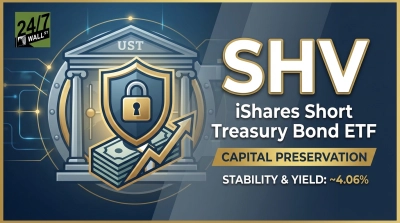
The iShares 0-1 Treasury Bond ETF yields 3.98%, holds only Treasury securities maturing within one year, charges 0.15%, and manages $20.94 billion in assets. Because the underlying holdings are Treasuries, the income is exempt from state and local income tax, which improves the after-tax yield meaningfully for investors in high-tax states.
The JPMorgan Ultra-Short Income ETF yields 4.36%, holds a mix of investment-grade corporate bonds, asset-backed securities, and other short-duration credit, charges 0.18%, and manages $37.52 billion in assets. It has returned 4.54% over the past year against a category average of 4.34%, consistently outpacing its peers.
The iShares Short Duration Bond Active ETF yields 4.51%, is actively managed across short-duration investment-grade bonds, charges 0.25%, and manages $4.21 billion. Its one-year return of 4.99% leads the group, and its three-year return of 5.79% beats its category average of 5.05%.
The $250K Comparison Table
| Annual Income | After-Tax (24% Bracket) | |
| High-Yield Savings (4.00%) | $10,000 | $7,600 |
| 1-Year CD (4.03%) | $10,075 | $7,657 |
| iShares 0-1 Treasury Bond ETF (3.98%) | $9,950 | $7,562* |
| JPMorgan Ultra-Short Income ETF (4.36%) | $10,900 | $8,284 |
| iShares Short Duration Bond Active ETF (4.51%) | $11,275 | $8,569 |
*Federal tax only. State tax exemption on Treasury income improves this figure meaningfully, depending on the investor’s state.
The FDIC Question
On the other hand, you have savings accounts and CDs that carry up to $250,000 carry in FDIC insurance, but these ETFs do not. This is a real difference worth acknowledging, considering these funds offer daily liquidity with no penalty for early withdrawal, no rate resets to Fed policy decisions on a specific date, and in the case of the iShares 0-1 Treasury Bond ETF, underlying holdings backed by the full faith and credit of the US government.
For investors with balances above the FDIC limit, or those who want to avoid the lock-up of a CD, that trade-off is often straightforward.
Which Fund Fits Which Need
The iShares 0-1 Treasury Bond ETF belongs to investors who want the closest possible cash equivalent with government backing and a state tax advantage on the income. The JPMorgan Ultra-Short Income ETF is the right choice for investors who want a yield pickup over Treasuries without meaningfully increasing volatility, backed by one of the largest institutional fixed income teams in the world.
The iShares Short Duration Bond Active ETF suits investors willing to accept modest additional price movement in exchange for the highest yield in the group and active management that has demonstrably added value over its category average across multiple time periods.









 Top Gaining Stocks
 Top Losing Stocks