



The AI trade looks to be back on after taking several months of well-earned time off. And while not every AI play is heating up enough to hit new all-time highs, it does seem like the semiconductor names are right back in the driver’s seat as AI demand stays hot and the promise of agentic and physical AI gets closer.
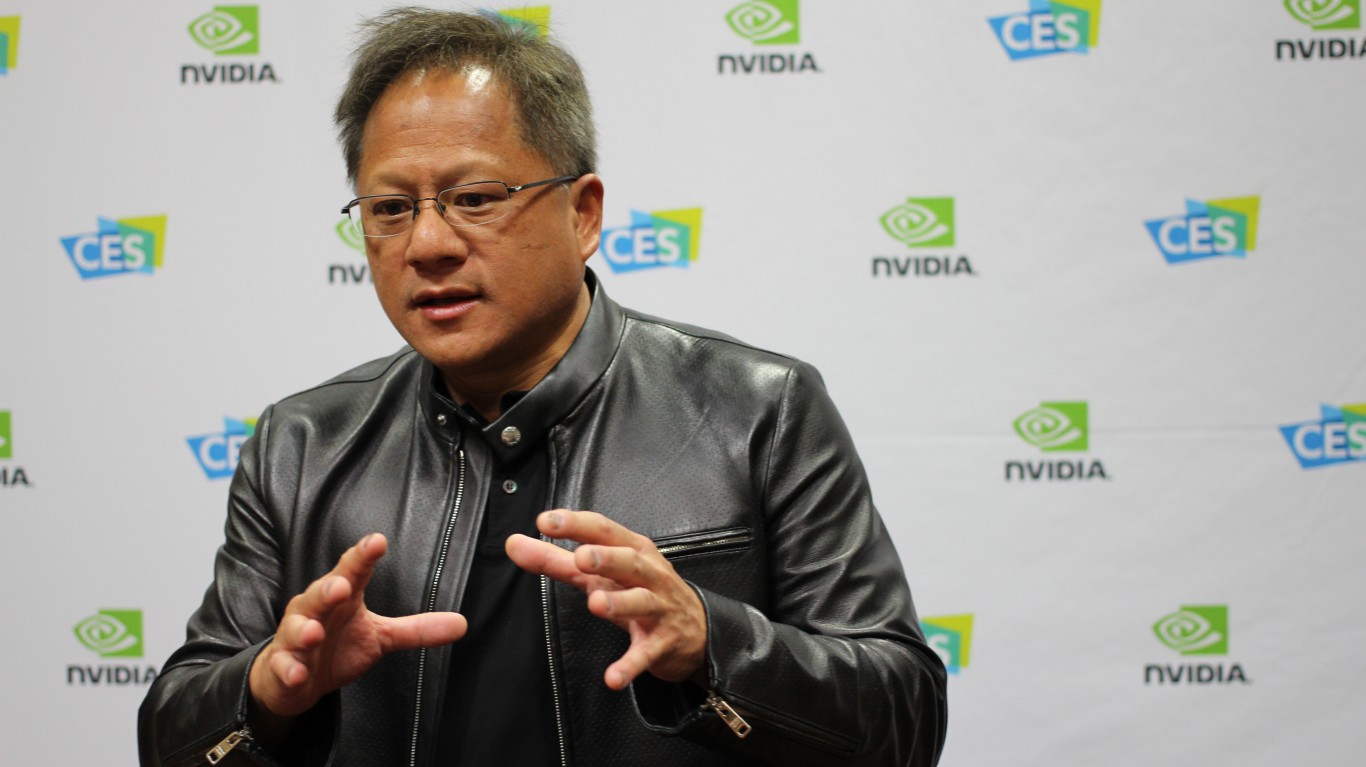
Undoubtedly, it’s becoming tough to tell whether the same winners of yesteryear will keep doing the heavy lifting for markets and what the fate of the Magnificent Seven will be as they look to make new highs after the S&P 500 already has. With more enthusiasm surrounding the energy and AI chip layers of the stack (or the “five-layer cake” to borrow from the analogy of Nvidia (NASDAQ:NVDA | NVDA Price Prediction) CEO Jensen Huang), questions linger as to what could come next as the next chapters of the AI revolution unfold.
Indeed, eventually, the AI benefits are going to spread more broadly, perhaps concentrating in some areas over others. For now, it’s easy to discount software for AI model makers and chip plays. However, as time goes on and AI monetization starts to become a reality, I think it’s time to consider the drivers that could mint certain firms as AI winners, perhaps lower-risk AI winners.
It’s time to think about a new set of moats when evaluating the AI plays
Of course, it’s hard to pick winners in the application layer, especially given that pivoting from SaaS to an agentic-first model isn’t guaranteed to be a smooth transition. So, this begs the question, which firms have what it takes to win at the application layer, a layer of the cake that some visionaries, including the great Jensen Huang, view as incredibly important?
In my view, it all comes down to the kinds of AI moats that firms have. Indeed, when it comes to betting on the AI revolution, I believe that a new set of rules will be needed to evaluate economic moats. Perhaps some of the pre-AI era moats aren’t as durable in the age of agents, while some of the AI era moats might act as more of a launch pad as we move into the next phase of the AI race.
So, what drivers and moats to look for as the AI boom matures and profits begin to justify CapEx?
In my view, it’s less about which firms have the buzziest AI models at any given time. After all, there’s a new hit model that steals headlines in any given quarter, and the leaderboard is sure to change rapidly. The three big pillars that I’m personally looking for are the data moat, the physical asset moat, and the potential for automation.
The data moat
You’re probably well aware of this one: the firm that has the proprietary datasets has a durable competitive edge. Data is the new oil in the AI age, and if you don’t have the fuel, you won’t have the power. To take things a step further, though, I think it’ll start becoming more about big datasets and more about firms that have the means to generate new, high-quality (synthetic) data as we hit a “data wall,” so to speak. There’s only so much data out there, after all.
Finally, what’s just as important, in my opinion, is the data’s ontology. How is that data digested and leveraged, ultimately to make an agent useful? What’s the context? The ground truth, so to speak? Even great datasets aren’t enough to become a force if they can’t be harnessed effectively.
Palantir (NASDAQ:PLTR) is one of the firms that has a ridiculously wide ontology moat. And that’s a major reason why it’s enjoyed early success in the AI boom. If Palantir brings such a moat to the enterprise, the firm may very well end up as the AI-driven operating system for many firms.
The physical moat and automation prospects
Next up, we have the physical asset moats, which include power assets (it’s hard to get past physical bottlenecks holding back the AI boom), manufacturing, rockets (to get the satellites and AI data centers into orbit), and all the things that go into an AI factory. SpaceX and Tesla (NASDAQ:TSLA) score top grades here for a massively wide physical moat. Optimus, rockets, and EVs are real assets that are moat sources that will be quite powerful in the AI age.
Finally, automation could become a big AI monetizer earlier on. Whether it’s warehouse automation or supercharging engineers so that fewer are needed, there’s the potential to do less with more. And as the focus becomes more about revenue-per-employee, I do think investors will become more willing to forgive higher CapEx if it means lower OpEx.












 Top Gaining Stocks
 Top Losing Stocks