


Wells Fargo (NYSE: WFC | WFC Price Prediction) stock was last seen changing hands at $80.56 per share, with Wall Street’s average price target up at $96.65. That leaves nearly 20% implied upside between where the bank trades and where analysts think it belongs.
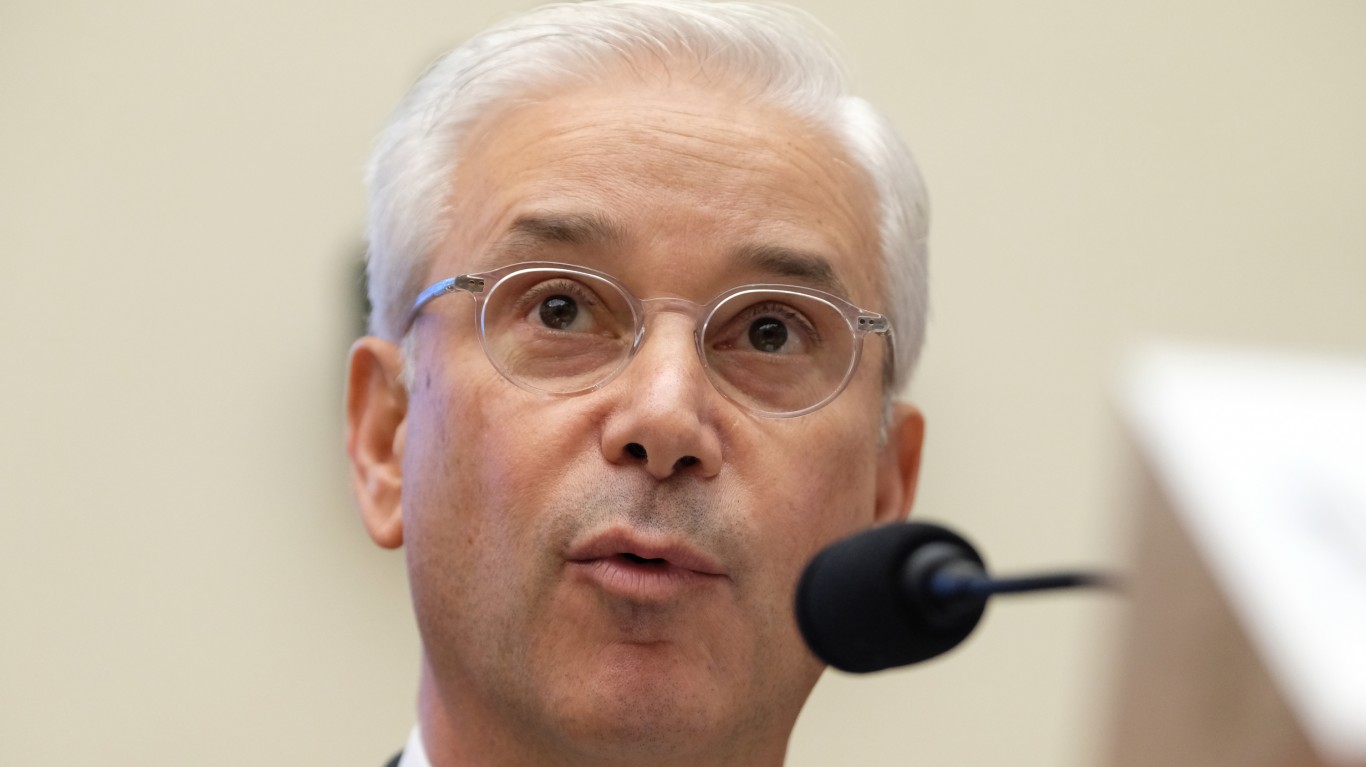
The country’s fourth-largest bank has spent the past year as one of the more interesting rehabilitation stories in financials. The Federal Reserve lifted Wells Fargo’s asset cap in Q2 2025, removing a multi-year handcuff on the loan book and freeing CEO Charlie Scharf to grow the corporate and investment bank without regulatory friction. The bank has now resolved all 14 major consent orders that were part of its multi-year regulatory overhaul, and it spent $5.0 billion on buybacks in the final quarter of 2025.
So why is the stock trading well below where analysts say it should be? The market is paying attention to a different set of numbers.
What Knocked Wells Fargo Off Its December Highs
Q1 2026 earnings broke a long streak of beats. Wells Fargo posted EPS of $1.60, in line with expectations, after a quarterly miss in Q4 2025 when EPS came in at $1.62 versus $1.67 expected. Net interest margin compressed to 2.47% from 2.67%, the CET1 ratio slipped to 10.3% from 11.1% a year ago, and capital ratios tightened as risk-weighted assets grew.
Wells Fargo is down 13.6% year-to-date, having drifted from a December peak near $96 to a March dip below $75. The selloff has been a slow bleed rather than a capitulation event, with shares off 1.7% in the past week.
NIM compression, two consecutive disappointing earnings results, rising C&I nonaccruals, and roughly $2.5 billion in nonaccrual office loans are weighing harder than the bull catalysts.
Why Analysts Still See $97 in the Setup
The bull case rests on what the asset cap removal unlocks. Loans averaged 10% year-on-year growth, the loan book crossed $1 trillion for the first time since early 2020, and CIB Markets revenue jumped 19% year over year, with FICC up 15% and Equities Trading up 21%. Scharf reaffirmed full-year guidance for about $50 billion of net interest income and a medium-term ROTCE target of 17% to 18%, raised from 15%.
Of 25 analysts tracked, four rate it Strong Buy, 12 rate it Buy, nine rate it Hold, and none rate it Sell or Strong Sell. Jefferies initiated coverage with a Buy and a $100 price target after the Fed lifted the asset cap, while KGI moved to Hold at $88, capturing the bull/skeptic split. Scharf told investors that “we still see continued resiliency in the underlying economy and the financial health of the consumers and businesses we serve remains strong,” though he flagged that higher oil prices will take time to filter through.
There is also a personality footnote worth flagging. Jim Cramer has publicly said he bought Wells Fargo at $33 and has repeatedly endorsed Scharf’s turnaround. That’s more of a smart-money data point than a buy signal.
Where the Discount Actually Stands
Shares closed most recently at $80.56 against that consensus target of $96.65, drawn from 25 covering analysts. The forward P/E is 11 on a forward EPS estimate of $7.00, with the dividend at $0.45 quarterly.
While down 13.6% year to date, shares are up 15.5% over the past year. Wells Fargo has lagged the broad index by a wide margin in 2026, even as longer-dated returns remain strong.
An analyst target is a 12-month opinion, not a guarantee. The same Wall Street that holds a $96.65 consensus target has watched the stock slip below its 200-day moving average of $84.44 without rushing to cut their numbers.
Opportunity Outweighs the Trap, but Not by Much
The bull case holds if the post-asset-cap growth story plays out faster than NIM compression damages near-term EPS. The path to $97 runs through accelerating loan growth, sustained CIB momentum, continued buybacks against a 12 trailing P/E, and a clean second half that resumes a positive earnings streak. If Scharf’s 17% to 18% medium-term ROTCE target is credible, the stock is mispriced.
The bear case dominates if the misses are a trend rather than a stumble. Rising C&I nonaccruals, $2.5 billion of office CRE stress, credit card delinquencies at 2.77%, an upcoming governance fight, and lingering compliance overhang could keep multiple expansion locked up regardless of segment growth.
The setup beats the price action, but another miss would flip the story, and the market is already half-pricing that outcome.










 Top Gaining Stocks
 Top Losing Stocks