


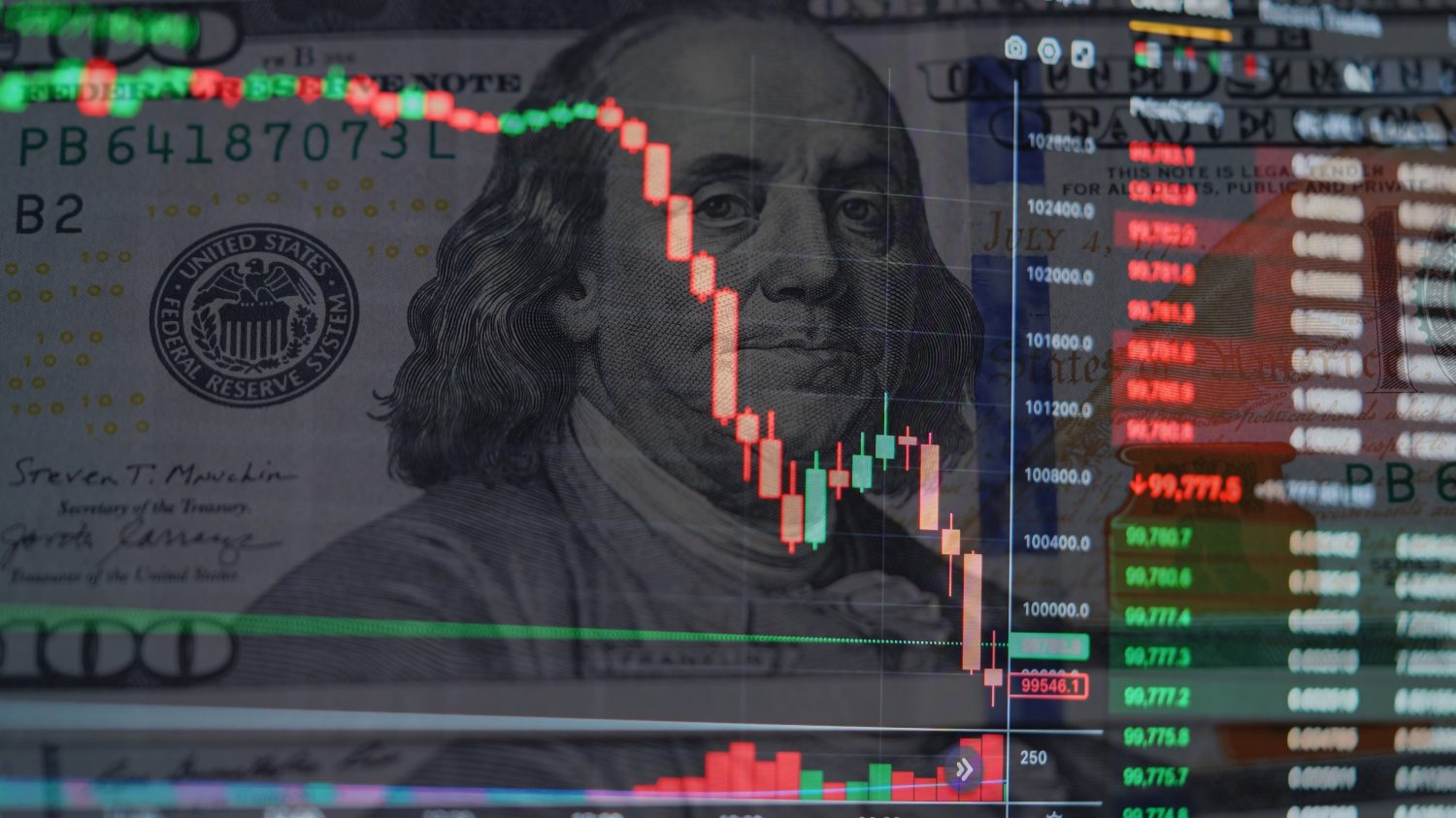
Gold is taking a sharp hit on Fed day, with the PHLX Gold/Silver Sector (^XAU) tracking nearly 2% lower. There has been a rotation out of safe havens ahead of the Federal Reserve’s afternoon decision even as the stock market takes a wait-and-see approach. The precious metal move snaps a quiet stretch and leaves bullion bulls staring at their first real test since the spring rally. The PHLX Gold/Silver Sector (^XAU) is headed for a nearly 10% drop for the month of April, bringing its YTD gains to barely 3%.
Real Yields Are Doing the Damage
The driver today is the opportunity cost trade. The 10-year Treasury yield sits near 4.4%, in the 77th percentile of the past year, while CME FedWatch pricing implies a 99.5% probability the FOMC holds the target range near 4% today. When risk-free paper pays north of 4% and the Fed signals patience, a non-yielding asset like gold loses its edge fast.
Risk appetite is amplifying the unwind. The SPDR S&P 500 ETF (NYSEARCA:SPY | SPY Price Prediction) has climbed 12% over the past month, and the VIX has collapsed from 31 in late March to about 18, a 42% decline that signals complacency. With fear gauges normalized and the yield curve still positive at a roughly half-point 10s-2s spread, capital is leaving defensive trades.
A Million-Dollar Bear and a Six-Figure Bull
Positioning is getting loud. An options desk put on a million-dollar credit spread on GLD selling upside calls and buying downside puts, betting on a 15% drop by mid-July. Technicians flag $4,300 as the bull-bear line, with a break risking a slide toward $3,400.
The longer-term bullish case remains firmly intact. Deutsche Bank projects gold hitting $8,000 per ounce within five years if central bank de-dollarization continues and bullion’s share of global reserves climbs from 30% to 40%, a shift the bank views as increasingly plausible given that central banks have already added more than 225 million ounces since 2008, while dollar holdings have nearly halved as a share of reserves over the past two decades. JPMorgan and Wells Fargo are in the same camp, pegging year-end targets in the $6,000 to $6,300 range, a growing Wall Street consensus that gold’s ascent is far from over.
What This Means for Investors
Today’s sell-off is a reminder that gold trades against real yields first and narratives second. GLD is still up 36% over the past year and 6% year to date, so the broader uptrend is intact. Holders should watch the Fed’s statement language on inflation, the dot plot if updated, and whether the 10-year breaks above the recent 4.4% peak. Those are the levers that decide whether this is a pause or a turn.









 Top Gaining Stocks
 Top Losing Stocks