


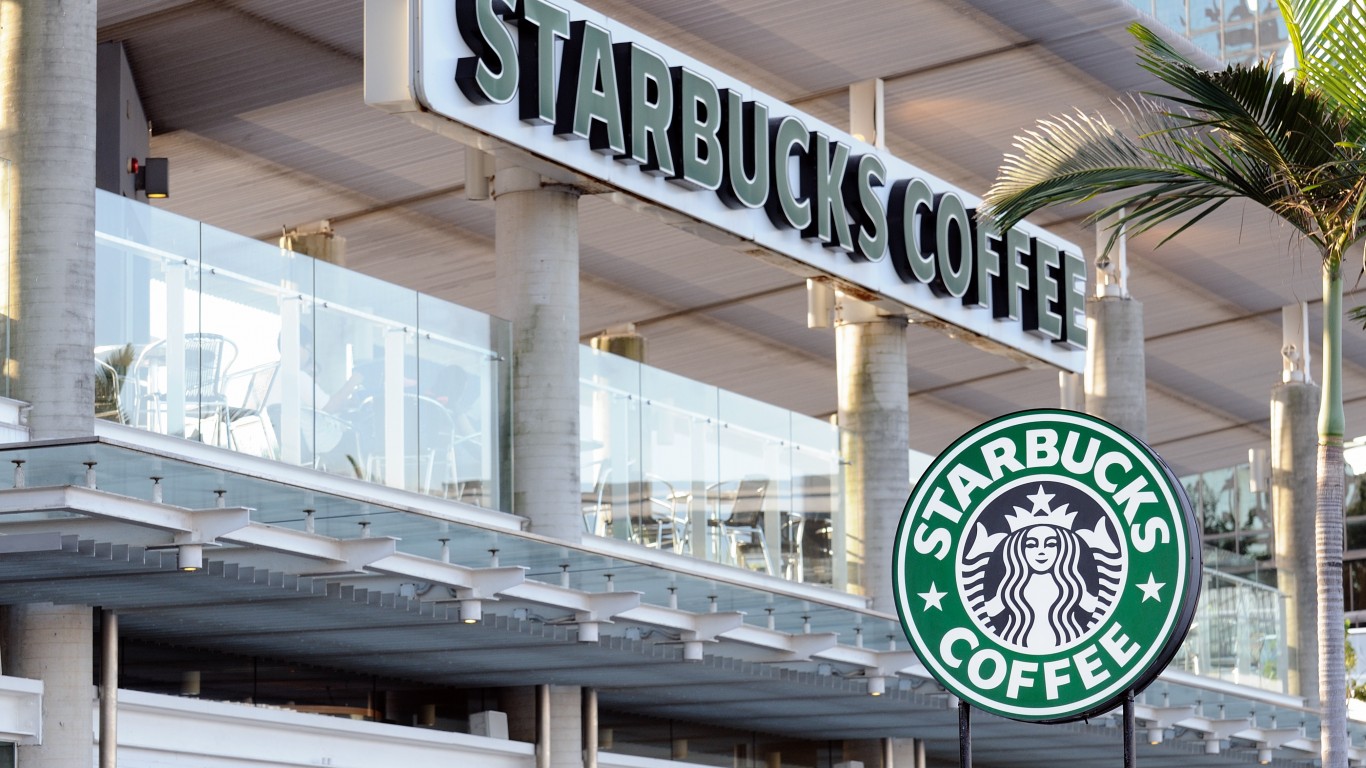
Shares of Starbucks (NASDAQ: SBUX | SBUX Price Prediction) have climbed 25.3% year-to-date and 21.5% in the past month alone. The stock closed at $105.50 on April 29, 2026, after an 8.5% single-day pop on the Q2 FY2026 earnings report. CEO Brian Niccol used the call to declare what investors had been waiting for. He said, “We believe this quarter reflects the turn in our turnaround, but we know there is more work to be done.” For retirement-focused investors who watched the recovery from the sidelines, the question is direct: with the thesis now validated, is the easy money already gone?
Valuation: Priced for Perfection
The numbers behind the run are substantial. Starbucks delivered EPS of $0.50 versus a $0.44 estimate (a 13.6% beat). Revenue totaled $9.53 billion, up 8.8% year-over-year, and global comparable store sales were +6.2% on transaction growth of +3.8%. North America posted +7.1% comps on +4.4% transaction growth, the strongest traffic showing in years.
The catch is what investors are paying for that performance. The trailing P/E is above 81, and the forward multiple is roughly 43x against management’s raised non-GAAP EPS guidance of $2.25 to $2.45. The analyst average price target of $104.62 is already below the current quote, implying modest downside from here. The 52-week high of $107.27 is only marginally higher than the current trading price.
Forward Catalyst: The Bar Just Got Higher
Niccol gave the market something measurable. FY2026 comparable store sales guidance was raised to 5% or greater (from 3%+), with non-GAAP EPS lifted to $2.25 to $2.45 from $2.15 to $2.40. Channel Development revenue surged 38.8%, and international operating margin expanded roughly 790 basis points to 20.3%. Niccol added: “We said we will grow the top line first and margin and earnings growth would follow. Q2 is proof our strategy is working.”
The Boyu Capital joint venture in China (Boyu 60%, Starbucks 40% plus brand licensing) removes a multi-quarter overhang and, per Cathy Smith, generated approximately $3.1 billion in gross cash proceeds, freeing capital for debt reduction. The 64th consecutive quarterly dividend at $0.62 per share remains intact for income-oriented holders.
Risk and Entry: Where the Downside Lives
The bear case has substance. China comps grew only 0.5% with average ticket down 1.6%. North America operating margin still contracted 170 basis points on labor investments, tariffs, and elevated coffee pricing. The balance sheet shows negative shareholders’ equity of $8.5 billion, and the effective tax rate jumped to 29.8% from 23.5%.
Insider activity is also notable. The recent transaction window shows consistent selling from CEO of International Brady Brewer and CFO Cathy Smith across the $90 to $100 range, with no opportunistic open-market purchases at lower levels. Analyst targets span a wide gap, from Mizuho at $86 (Neutral) to UBS at $105 to Stifel at $115 (Buy).
The Verdict
Existing holders are sitting on a fully valued position, while new capital deployed at $105.50 would be chasing a stock already at the analyst consensus. The turnaround has materialized. However, a 43x forward multiple, an analyst consensus already below the market price, and four-plus consecutive misses preceding this single beat leave almost no margin for an execution stumble. The 200-day moving average near $89.92 offers a more rational entry zone if China softness or margin pressure produces another wobble.
A pullback toward the low $90s would offer a more attractive risk/reward for fresh retirement capital.









 Top Gaining Stocks
 Top Losing Stocks