


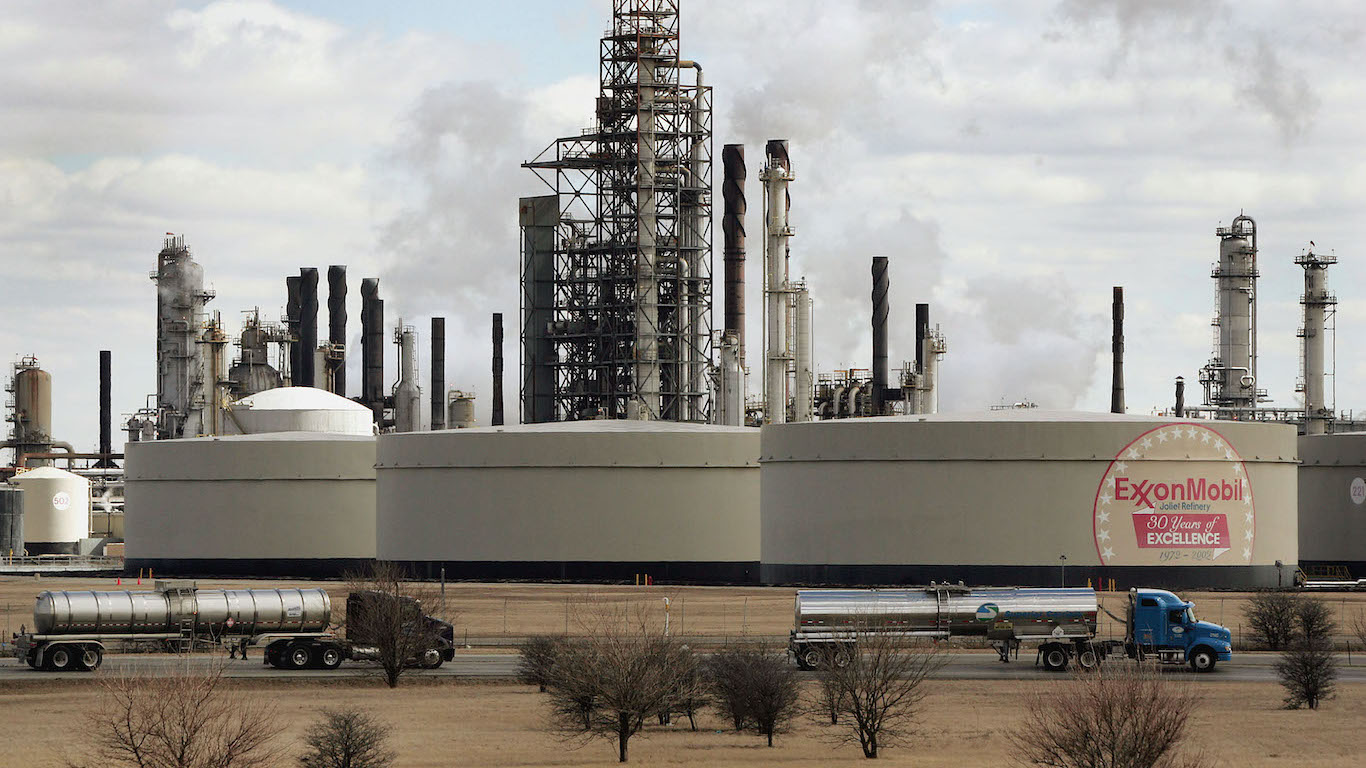
One of the topics from CNBC’s Halftime Report show on May 1, 2026 was that integrated oil majors, like Exxon Mobil (NYSE:XOM | XOM Price Prediction) and Chevron (NYSE:CVX), have spent a decade rebuilding themselves into disciplined cash-return vehicles. Retail investors have typically associated these companies with the 1970s “boom-bust cycles,” but the panel was blunt in saying times have changed: “These are not your father’s or grandfather’s energy companies.”
The 2016 Inflection That Reset Big Oil
The panel traced the shift back to a specific moment. Saudi Arabia flooded global markets with crude oil in the mid-2010s, triggering what was described as a “mini credit crisis” in 2016, driven by “cratering high-yield bonds for energy companies.” Management teams across the U.S. majors hit a wall, and the response was a wholesale shift in philosophy: “We’re not doing it anymore. We’re not going to put ourselves on the brink. We’re going to manage cash flows, we’re going to manage profits.” That recalibration has been “10 years in the making.”
Exxon as the Case Study
Exxon reflects that shift clearly. The stock trades at about 15x earnings, offers a dividend yield near 3%, and sits roughly 15% below its recent high. More importantly, capital returns have become the focus. Exxon repurchased $20.3 billion of stock in 2025 and paid $17.2 billion in dividends. Management is guiding to another $20 billion in buybacks for 2026, while maintaining a 43-year streak of annual dividend increases. The full Q1 2026 release is filed on SEC EDGAR.
Chevron Inside the Same Cohort
Chevron fits the same model. The company has returned more than $5 billion per quarter to shareholders for 16 consecutive quarters and recently raised its dividend to $1.78 per share, extending its growth streak to 39 years. CEO Mike Wirth tied Q1 performance to “disciplined performance” that “supports dependable cash generation, enabling us to continue returning significant capital to shareholders.”
The Validation Voice
A 15-year energy holder on the panel summarized the result of this increasing fiscal discipline as: “Phenomenal return of cash to shareholders, dividends, special dividends, shareholder buybacks.” Another panelist made the point that investors who added to their positions in November “never imagined that oil would go to $100 a barrel,” which highlights how commodity prices act as a tailwind rather than the foundation of the thesis with these companies.
Today, companies like Exxon and Chevron are being viewed less as cyclical trades and more as consistent cash-return vehicles. The industry “fell out of favor with a large swath of the investing community,” and management responded by pivoting toward “fiscal responsibility, not CapEx.”










 Top Gaining Stocks
 Top Losing Stocks