


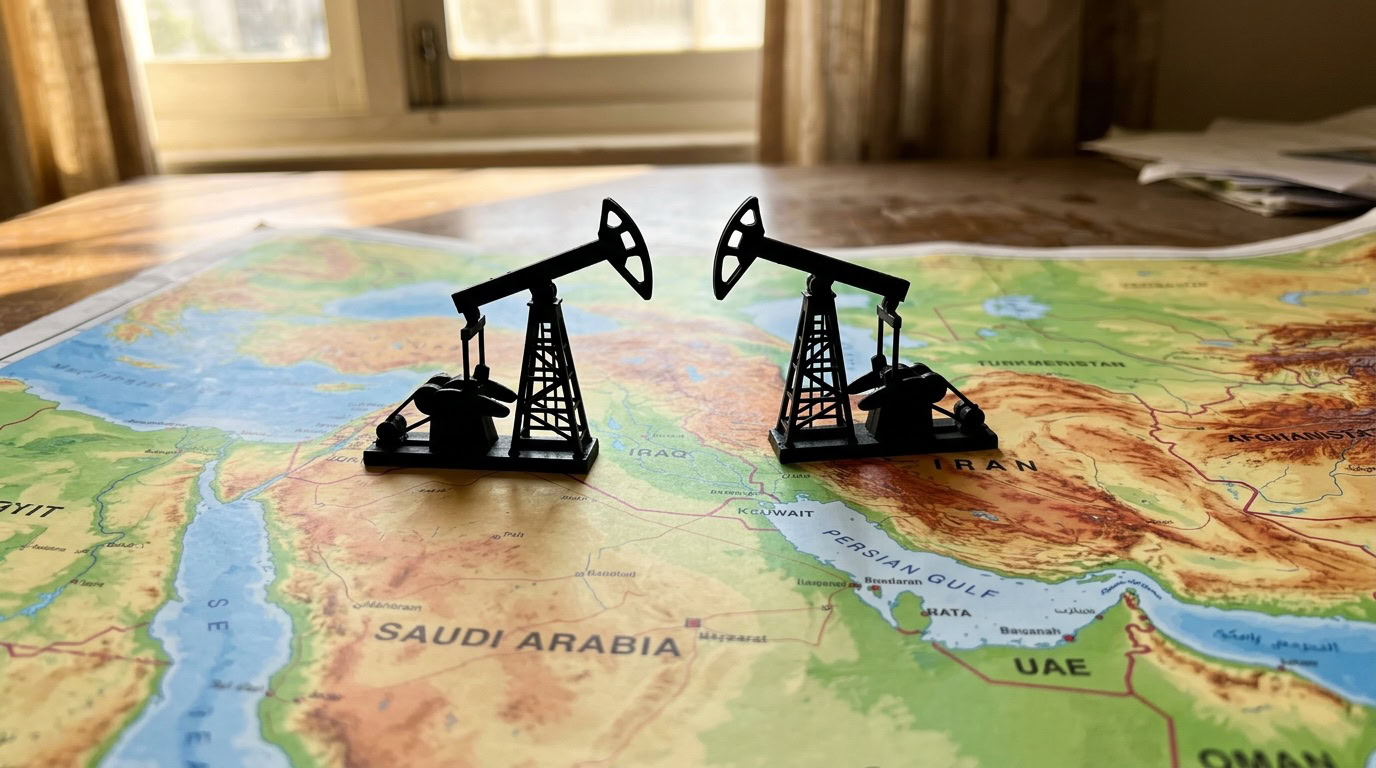
Wall Street spent the past several weeks gaming out a scenario most investors hoped would never happen: what if the Iran conflict spiraled into a full-scale energy shock? Oil traders, hedge funds, and economists weren’t debating whether prices would rise — they were debating how high.
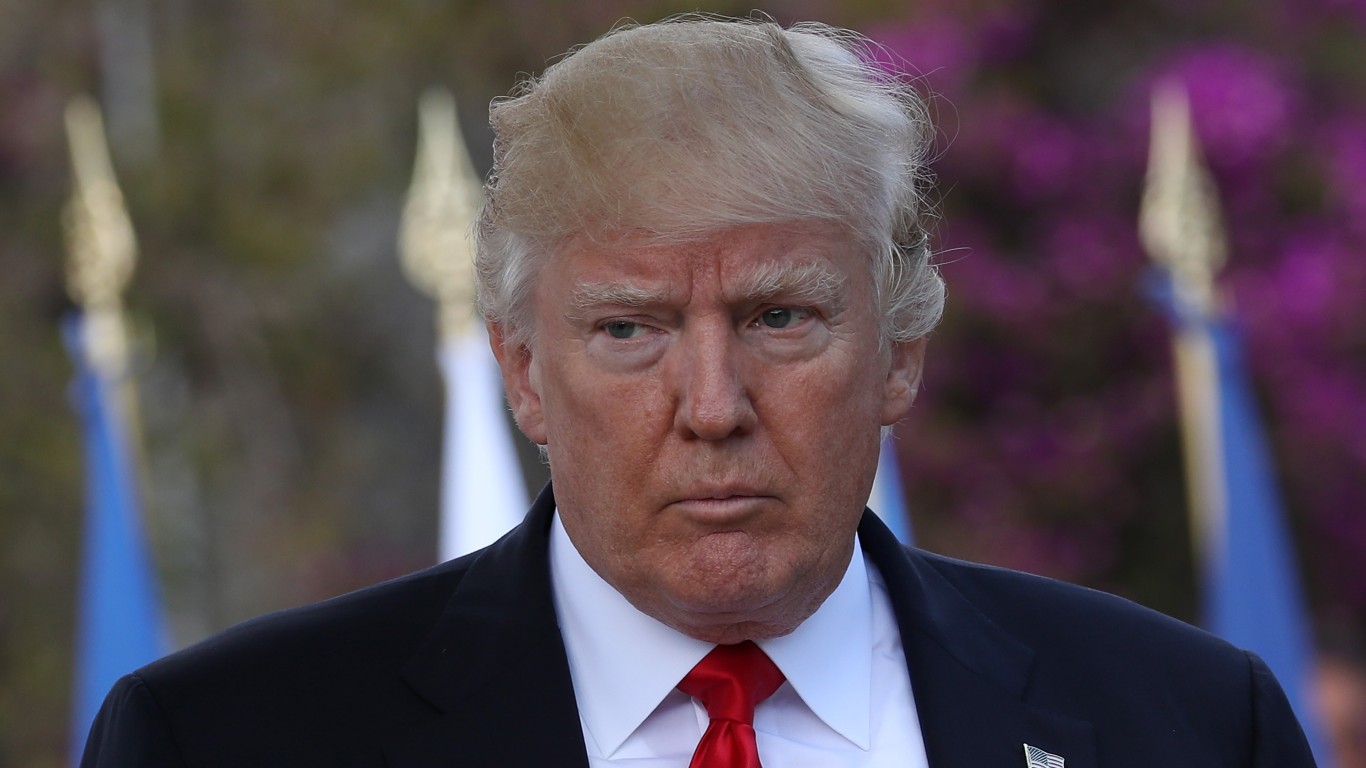
President Trump’s comments this week showed just how serious those fears had become. Speaking at the White House, Trump said he believed oil could have surged to $200 or even $250 per barrel during the conflict, while stocks might have crashed 20% to 25%, risks he was willing to accept for regime change in Iran.
For investors, that wasn’t just political rhetoric. It was a reminder of how quickly geopolitics can slam into portfolios, inflation, and the broader economy. The numbers suggest the economic threat was very real.
$200 Oil Would Have Hit the Economy Like a Sledgehammer
Let’s start with the key issue: oil doesn’t just affect gas stations. It affects almost everything.
According to the U.S. Energy Information Administration, roughly 20% of the world’s petroleum liquids consumption passes through the Strait of Hormuz each day. Any disruption there instantly raises fears of supply shortages.
For context, Brent crude briefly traded above $130 per barrel after Russia invaded Ukraine in 2022. U.S. inflation later hit 9.1% in June 2022, according to the Bureau of Labor Statistics. Gasoline prices averaged more than $5 per gallon nationally that summer.
Now imagine oil not at $130 — but at $200. Here’s what the numbers likely would have looked like:
| Economic Indicator | Approximate Impact at $200 Oil |
| U.S. gasoline prices | $7 to $8 per gallon |
| Airline fuel costs | Up 50% to 70% |
| Inflation rate | Potential return toward 7% to 9% |
| Fed interest rates | Higher for longer |
| Consumer spending | Slower retail and travel demand |
Consumers would have been squeezed from every direction at once. Higher fuel costs raise shipping expenses. Shipping raises retail prices. Food prices rise because farming relies heavily on diesel fuel and fertilizer. Airlines raise ticket prices. Manufacturers pay more for plastics and chemicals derived from petroleum.
In short, expensive oil acts like a tax increase on the global economy.
Why Trump’s 20%-25% Market Crash Estimate Was Plausible
Granted, a 25% decline sounds dramatic. But history suggests it was hardly impossible.
During the 1973 oil embargo, the S&P 500 fell 48% over roughly two years, according to data from Ned Davis Research. It precipitated the so-called “lost decade” of the 1970s. During the 1990 Gulf War oil spike, the index dropped about 17% before recovering. Even in 2022, when oil briefly topped $120 per barrel and inflation surged, the Nasdaq Composite fell 33%.
The reason is simple: higher energy prices crush profit margins. Companies suddenly face higher transportation costs, higher wage pressure, higher borrowing costs, and slower consumer demand.
And investors reprice stocks quickly when earnings estimates fall. The sectors that likely would have suffered most include:
- Airlines
- Restaurants
- Retailers
- Automakers
- Industrials
- Consumer discretionary stocks
Surprisingly, even many technology stocks could have struggled despite the ongoing AI boom. Higher inflation usually forces Treasury yields upward, and higher yields reduce the value investors place on future earnings growth.
Meanwhile, energy companies probably would have become the market’s safe haven. Here’s how some major oil companies compare today:
| Company | Forward P/E Ratio | Dividend Yield |
| Exxon Mobil (NYSE:XOM | XOM Price Prediction) | ~14 | 2.8% |
| Chevron (NYSE:CVX) | ~15 | 3.8% |
| ConocoPhillips (NYSE:COP) | ~13 | 2.8% |
Data from company filings and FactSet show energy stocks still trade at lower valuations than much of the broader market despite generating record cash flow in recent years. It’s almost certain that $200 oil would have sent capital flooding toward energy producers and away from growth sectors.
Key Takeaway
In the end, Trump’s comments reveal just how close markets believed the global economy came to a worst-case scenario.
The encouraging news for investors is that oil prices never reached those levels because fears of a prolonged Strait of Hormuz disruption eased before supply chains fully froze. Brent crude has since retreated sharply (it’s still elevated above $98 a barrel), calming inflation fears, and helping stocks stabilize.
That said, the episode offered an important reminder for smart investors: geopolitical risk still matters. A single shipping lane halfway around the world can still rattle retirement accounts in New Jersey, Texas, or California within hours.
In any case, the market’s reaction also reinforced another lesson. Energy remains one of the economy’s pressure valves. When oil spikes, inflation follows. When inflation follows, the Fed stays restrictive. And when rates stay elevated, stock valuations usually contract.
Savvy investors don’t need to panic over those risks. But they do need to understand them — because markets move long before headlines catch up.












 Top Gaining Stocks
 Top Losing Stocks