


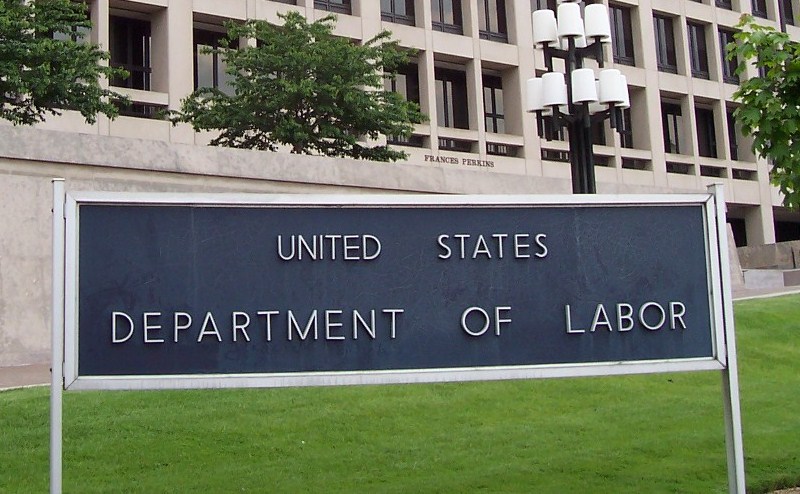
In many months recently, the private sector has created jobs and the public one has not. That difference may increase this year, as cuts in government spending accelerate. As is true with all labor numbers, the government statistics vary wildly from state to state. That is another reason to believe whatever recovery there is in unemployment will be uneven.
Gallup has released new figures on public employee data by state. In Washington, D.C., 29.2% of workers are government ones. In Indiana, the figure is only 11.5%. People in the Midwest state actually make things and supply services.
Federal job cuts could come as early as next month, if Congress and the White House cannot agree on a new budget. In the meantime, the president has advocated raises for many federal government workers, but some of those who get them could be laid off immediately.
Nationwide, 16.2% of Americans were government employees last year. Gallup claims that is the same percentage as the year before. After the District of Columbia, the states with the highest percentage of their working populations that are government workers are Alaska (28%), Hawaii (27.8%), Maryland (25.5%) and Virginia (22.8%). Maryland and Virginia have much larger populations than the other two. They also are located next to Washington, D.C., and rely heavily on federal government activity. If there are federal cutbacks, those two states are bound to suffer.
At the other end of the spectrum are Indiana, Pennsylvania (11.7%), Missouri (12.4%), Minnesota (12.6%), Michigan (12.7%) and Ohio (13.4%). Each of these is in or near the Midwest. And each has a heavy dose of manufacturing workers. Gallup does not give a reason for that. Clearly, there is a divide between states with sectors that employee tens of thousands of people in “real” jobs and ones where the government is among the largest employers
Federal cuts are not the only threat to the employment base in states that rely on the public sector. According to Gallup:
Of the 16.2% of U.S. workers employed by government in 2012, the largest segment, 6.3%, is employed by state governments. This is followed by local government workers, at 5.2%, and then federal workers, at 4.5%.
Many states and municipalities have recovered slightly from tax receipt drops brought on by the recession, but the improvement in most cases is minor. The weight of pension funds and other legacy issues will take years, or longer, to resolve.
The threat to employment levels in America, and particularly in the public sector, has not ended, even if the private sector has gained some ground.
Methodology: Results are based on telephone interviews conducted as part of Gallup Daily tracking from Jan. 1 to Dec. 31, 2012, with a random sample of 200,225 employed adults, aged 18 and older, selected using random-digit-dial sampling.







 Top Gaining Stocks
 Top Losing Stocks