



[cnxvideo id=”508131″ placement=”prodege”]
It is no news that the easy growth of Apple Inc. (NASDAQ: AAPL), fueled by a nearly insatiable demand for generation after generation of iPhone models, is over. Management has said Apple has to rely on its services businesses for growth. It needs to. In the most recent quarter, its revenue dropped from $61.1 billion in the year-ago period to $58 billion. After years of revenue growth, it was a shock.
Its Services business, as Apple calls it, includes several parts, each of which already has competition in the market. What it does not have is a premium video service of any size. To elbow into that business, it needs to take market share from Hulu, Amazon Prime, Netflix and a small army of other video subscription services. The most substantial hurdles are Netflix, which although it has hit a bump in the road in U.S. growth, has over 150 million subscribers worldwide, and Amazon, which does not break out exactly how many Prime members it has regularly. The figure is at least 100 million. Prime members have access to Amazon’s streaming video service. Without buying into the market, Apple has no chance to be a dominant force. If it is not a dominant force in premium video, it will be hard for Services to be large enough to offset the attrition in iPhone sales.
Apple Services is primarily made up of Apple Music, which is estimated to have less than 60 million subscribers. The Verge reports that is well behind Spotify’s 100 million subscribers. Its App Store is huge, but it is also relatively mature and dominated by a limited number of apps that have been available for download for years. The Apple iCloud storage offering is little different from other cloud storage services offered to consumers. Apple Pay has competition from other tech companies. Credit card and banking companies are rushing into the space. And the future of all these services relies on an Apple base of iPhones, Macs and other hardware devices. It is trapped, for the most part, inside its huge walled garden.
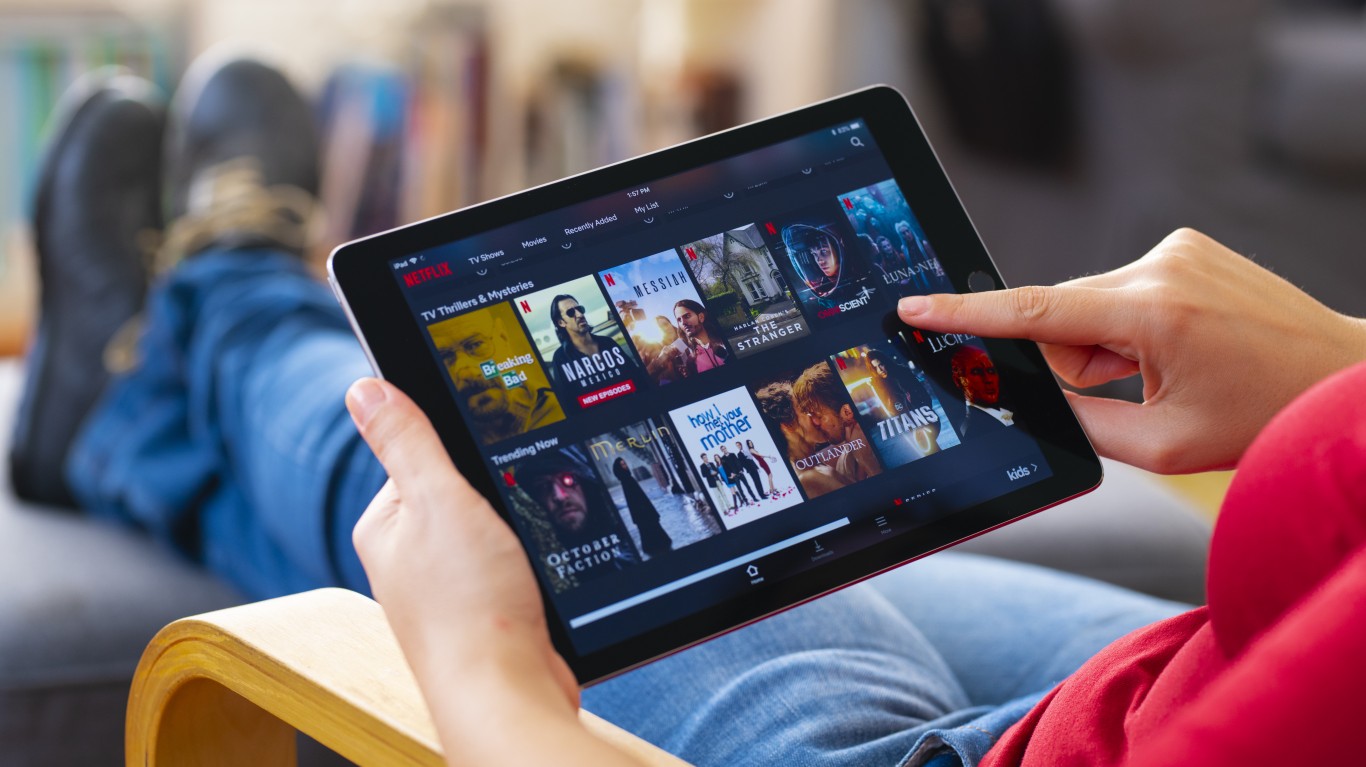
Netflix Inc. (NASDAQ: NFLX), in many ways, is not as attractive a business as it was two or three years ago. Subscribers were still growing rapidly then. It was not piling on debt to fund billions of dollars of original programming. It new online video competitors like Disney and AT&T had not pulled highly popular shows like “The Office” and “Friends.” Netflix faces a drop in subscribers without these shows. Netflix is not only losing these shows, but they are moving to these new competitors, mostly launched by the world’s largest media companies. The services run from HBO Max to Disney+, and these new streaming channels are funded by conglomerates with bottomless pockets. Netflix was good enough to actually announce the list when it reported quarterly results: “Over the next 12 months, Disney, Apple, WarnerMedia, NBCU and others are joining Hulu, Amazon, BBC, Hotstar, YouTube, Netflix, and many others in offering streaming entertainment. The competition for winning consumers’ relaxation time is fierce for all companies and great for consumers.”
Netflix may need Apple as much as Apple needs Netflix. Netflix’s long-term debt at the end of the second quarter was over $12 billion. In the same quarter two years ago, the figure was under $5 billion. On the other hand, one thing Apple has is money and access to more. It has $37 billion in cash on its balance sheet. That figure grows at several billion a quarter. It has another $42 billion in marketable securities.
A buyout of Netflix would be expensive. Its market cap is $140 billion and has been beaten down by a sell-off after earnings. If Apple paid Netflix shareholders the highest market cap the company ever had, the figure would rise to $170 billion. Likely the final number would be higher than that. Apple’s current market cap is $960 billion, which would be useful if any deal involved stock and cash.
How much risk would Apple take if it bought Netflix, which has an annual revenue run rate of $20 billion but modest earnings? From a financial standpoint, a great deal. However, it is too late for Apple to ever having a significant video streaming business. It will never have a major services business without one.
[recirclink id=553195]
[wallst_email_signup]






 Top Gaining Stocks
 Top Losing Stocks