


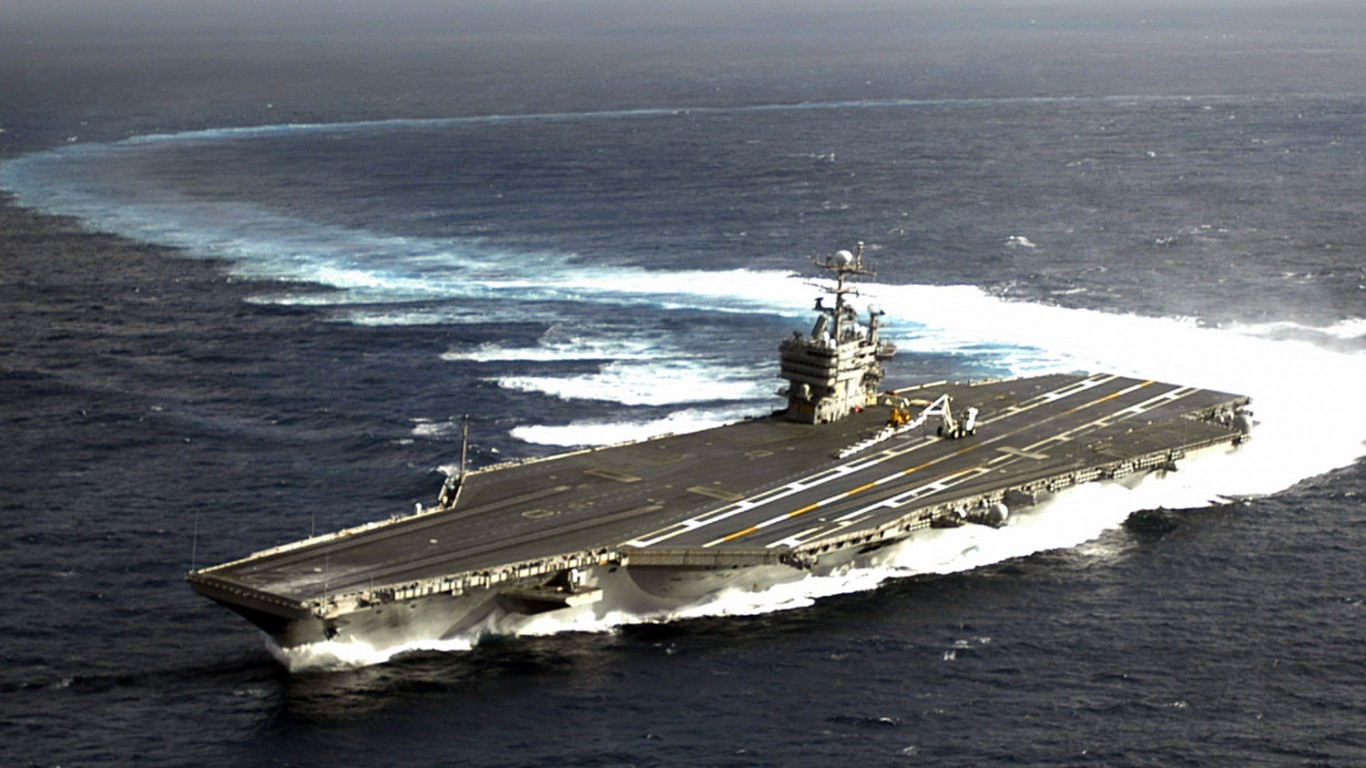
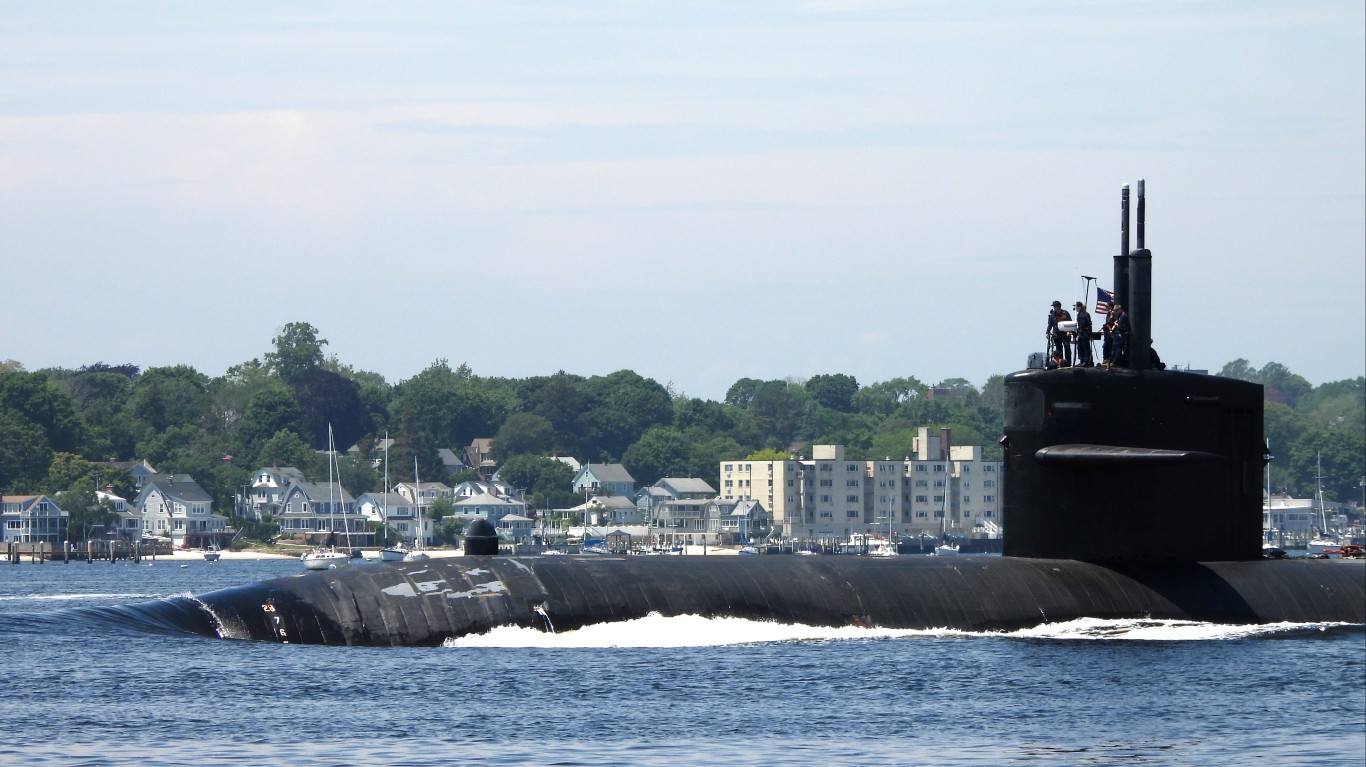
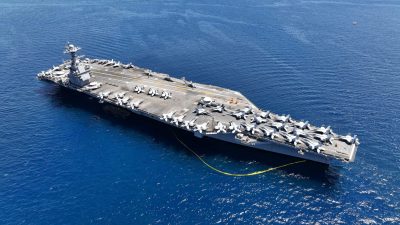
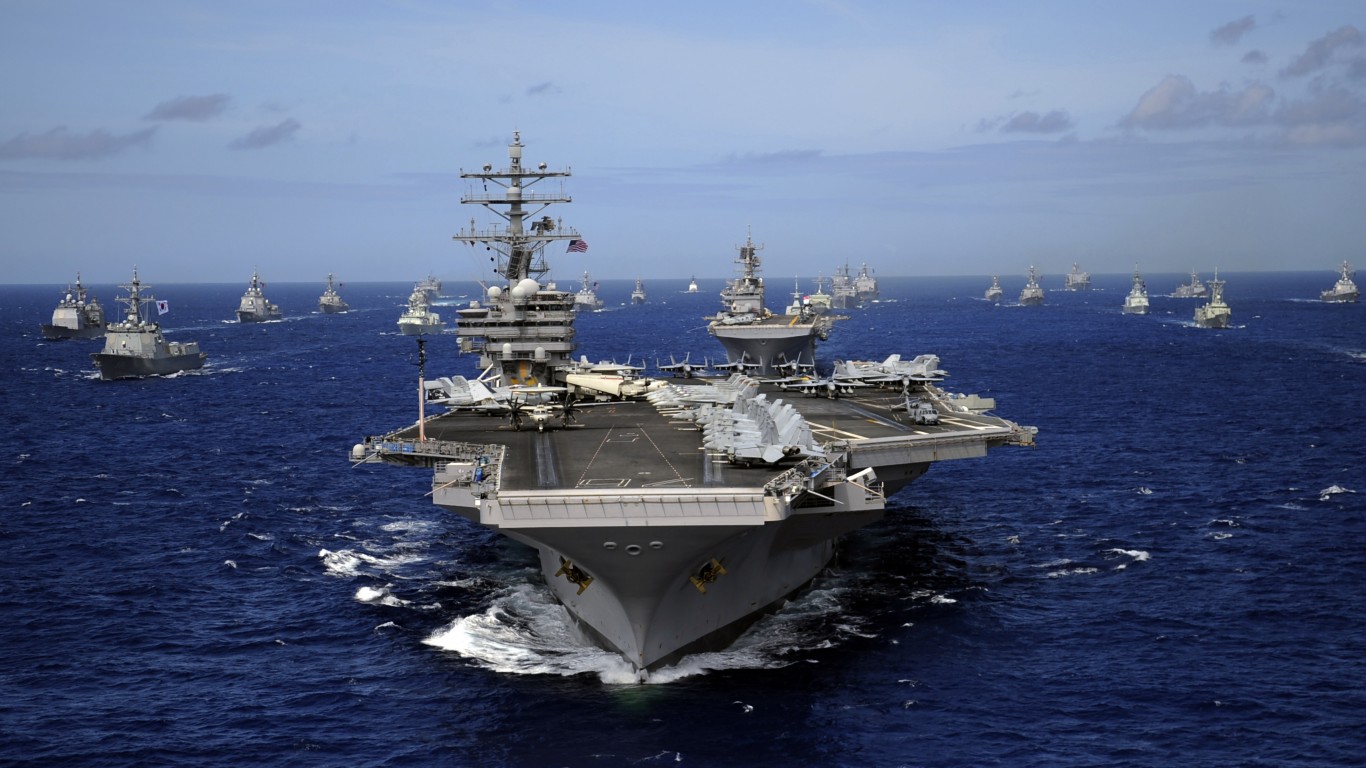
The American aircraft carrier USS Abraham Lincoln has been dispatched to the northern Arabian Sea because of the rise in tensions between the United States and Iran. Carriers are often moved into hot spots as deterrents, based on their ability to launch dozens of fighter jets and other aircraft quickly. They are also surrounded by other warships, such as cruisers and submarines. The question about the effectiveness of carriers and their vulnerability to attack is raised whenever they sail in hostile waters. However, carriers are nearly impossible to sink, which challenges the argument that they are a risky and expensive way for the Navy to spend its money.
The Lincoln is among the Nimitz class carriers, which are slowly being replaced by new Gerald R. Ford class carriers. It was launched in 1988. It is one of the world’s largest ships, at 1,092 feet long.
According to The National Interest, there are several reasons carriers are very hard to attack and harder to sink.
First, their speed allows them to outrun many other ships, particularly submarines. Their speed also makes them hard to track.
[nativounit]
They have “hundreds of watertight compartments and thousands of tons of armor, no conventional torpedo or mine is likely to cause serious damage,” The National Interest reports.
The carriers also have high-tech sensors that can pick up missiles at great distances. To counter missiles they have “radar-guided missiles and 20 mm Gatling guns that shoot 50 rounds per second.”
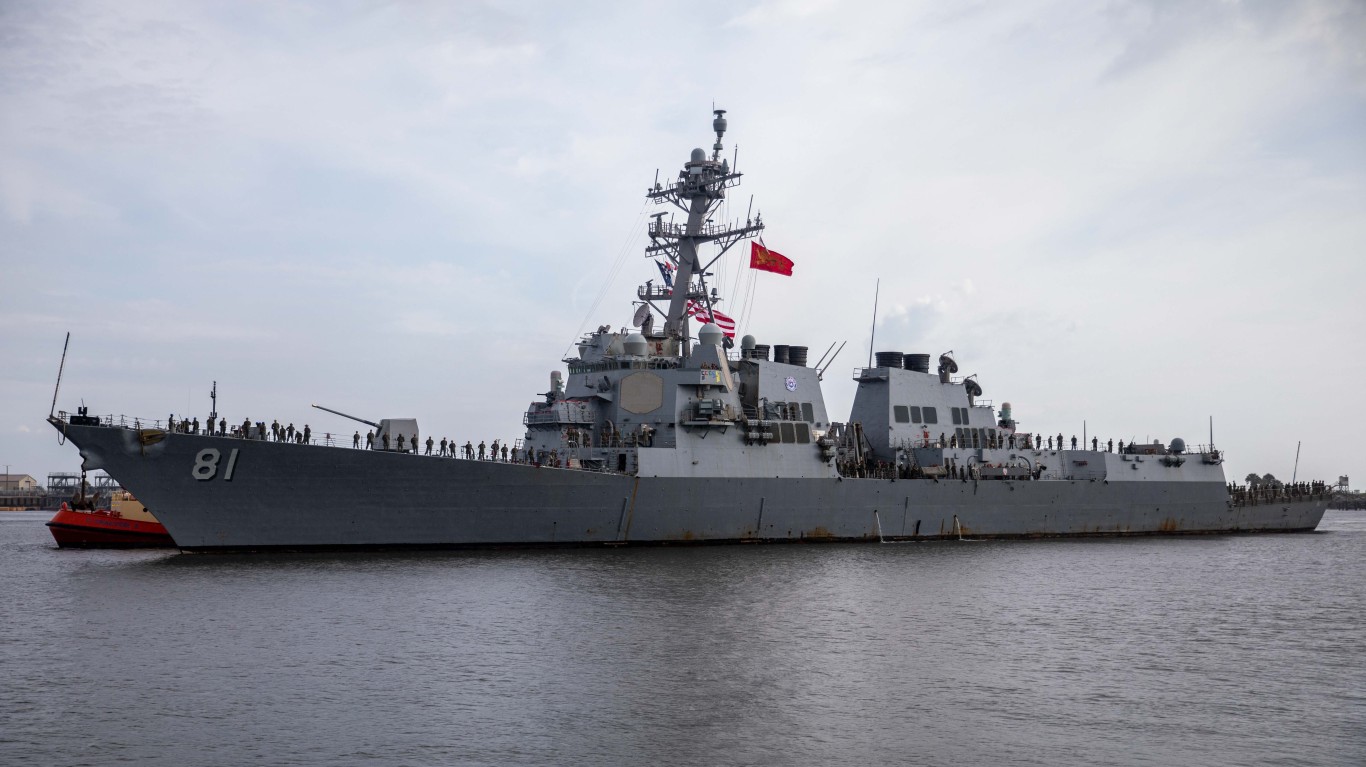
Among the most important points The National Interest makes is that carriers are part of large groups of ships, Some of these carry Aegis combat systems, which are highly sophisticated naval defense systems. These groups also include their own submarines and a number of submarine detection methods and deterrents.
The Navy also operates carriers in such a way as to keep them far from potential threats. The National Interest points out that includes staying away from areas that might be mined.
Professor Robert Farley of the Patterson School of Diplomacy and International Commerce at the University of Kentucky, who is an expert in naval ships and defenses, recently wrote:
The United States has spent, essentially, 30 years developing and working out a reconnaissance strike complex that includes multiple redundant systems of surveillance and communication, resulting in a kill chain that transfers information in real time from advanced sensor platforms (satellites, submarine listening posts, drones, patrol aircraft) through communications nodes (satellites, aircraft) to ships, planes, and submarines that can launch and guide missiles to targets.
Finally, each time a carrier is overhauled, many of its systems are upgraded. This allows carriers built decades ago to be fitted with current technology. The Navy also has upgraded the systems on other ships that protect carriers.
The National Interest concludes:
The most important advance of recent years has been the netting together of all naval assets in an area so that sensors and weapons can be used to maximum effect. Initiatives like the Naval Integrated Fire Control – Counter Air program link together every available combat system in a seamless, fast-reacting defensive screen that few adversaries can penetrate.
The USS Abraham Lincoln is already among the most powerful ships in the world, but it will become obsolete with the launch of new Gerald R. Ford class carriers, another example of how the United States is the leader among countries that spend the most on war.
[recirclink id=547646]
[wallst_email_signup]





 Top Gaining Stocks
 Top Losing Stocks