


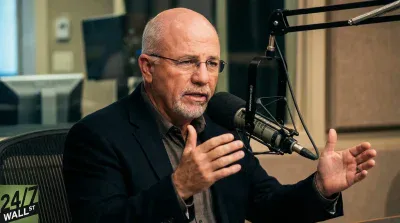
“I have never met someone that became a millionaire when they owned cars with payments,” financial host Dave Ramsey recently told Bridger, a 21-year-old from Salt Lake City.
Bridger and his 20-year-old wife earn $55,000 combined annually and are eight months into their marriage. They recently received access to $27,000 through a trust fund. They already spent $8,500 paying off credit cards, $500 on car repairs, and $1,000 on discretionary spending, leaving $17,000. Their most pressing problem: two car payments totaling $1,000 per month, one vehicle financed at $16,000 and the other at $20,000.
Consumer auto debt is not a niche problem. Americans currently owe a record $1.66 trillion in auto loan debt, according to the Consumer Federation of America. The average monthly car payment is $750-$775l
$1,000 a Month Is a Wealth Problem
On a $55,000 household income, these car payments represent $12,000 per year before insurance, fuel, or maintenance. Ramsey was direct: “You signed up for it, but you’re getting killed by your cars.”
Co-host Jade Warshaw put a number on the opportunity cost that is hard to ignore. “If you took that car payment from today until age 61, so 40 years, that’s $8 million, my man.” That figure assumes consistently investing the $1,000 monthly payment over 40 years at a long-run stock market return rate.
The Boring Car Philosophy
Ramsey’s advice: Sell both cars, and use the proceeds plus remaining trust money to buy in cash two cars around $7,000 each. He recommended Camrys and Accords specifically. “A boring car is one that doesn’t have a lot of miles, that grandmother drove to church on Sundays only, and that your friends think you’re a goober because you bought it.” A low-mileage, unglamorous sedan with a reputation for reliability costs less to own across every dimension: purchase price, insurance, and repairs.
“When you take out a car payment, what you are doing is you’re looking in the mirror and saying, ‘Lord, I desperately want to be middle class the rest of my life,'” Ramsey said. “That’s what the data tells us.” The trust fund gives Bridger and his wife a rare window to exit the payment cycle without taking on additional debt.
The calculus shifts for someone with a stable high income and substantial existing investments. A household earning $180,000 with $400,000 already invested and a single modest car payment is not facing the same wealth-destruction dynamic. The payment is a smaller share of income, and the compounding is already working elsewhere.
Ramsey suggested the couple redirect that $1,000 from car payments into a Roth IRA and a starter emergency fund. At 21, time is the most valuable asset Bridger owns. Car payments at this life stage do not just cost money now, they cost the compounded version of that money for decades. Better to invest.













 Top Gaining Stocks
 Top Losing Stocks