


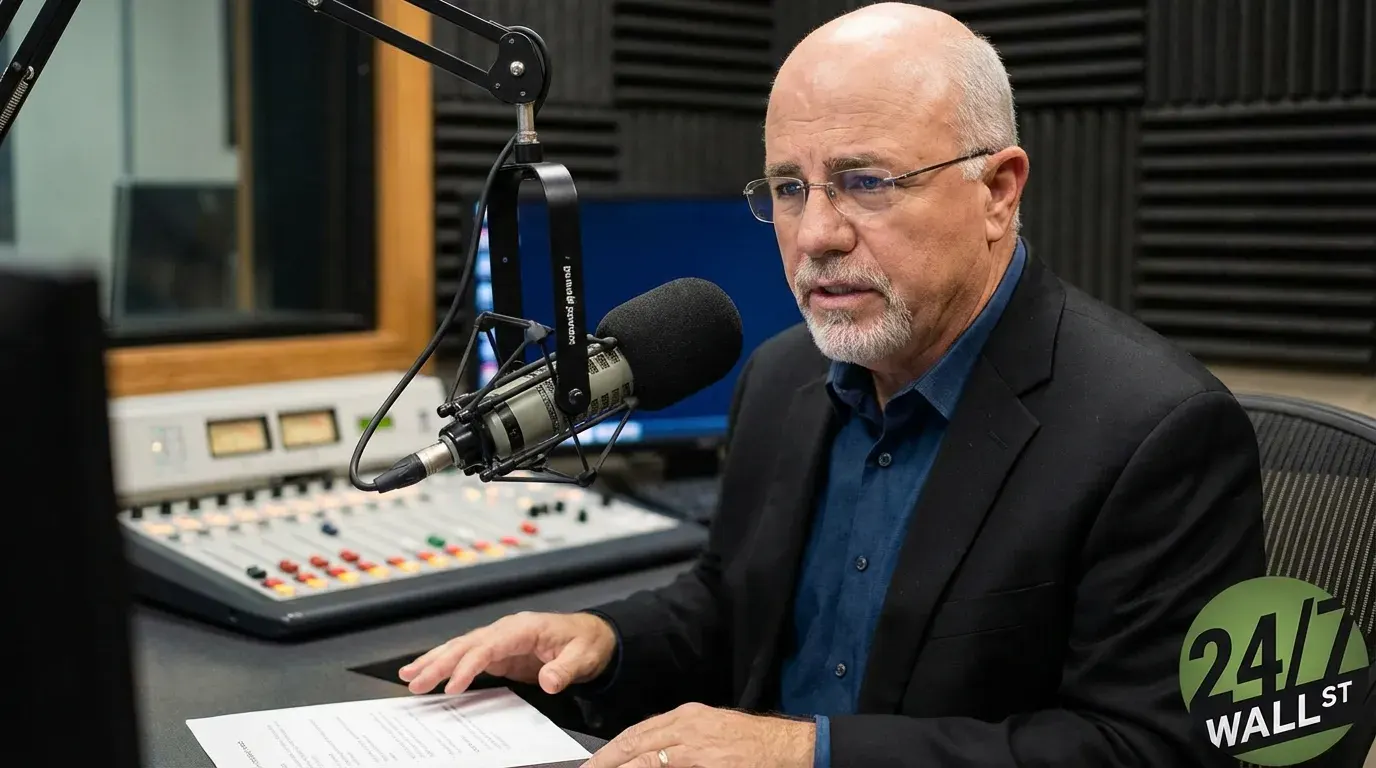
Oscar is 20 years old, earns $2,600 a month managing a restaurant, and is carrying $19,053 in debt with his 21-year-old wife. The worst of it: a $10,000 car loan at 27% interest.
When Oscar called The Ramsey Show, Dave Ramsey did not soften the diagnosis. "You apparently don’t read anything before you sign debt, because you’ve got some of the worst debt products on the planet," Ramsey said. "You’ve stepped in every bear trap known to man."
Ramsey is right. The math behind why he’s right is something every young borrower needs to see clearly.
What 27% Actually Costs You
The federal funds rate currently sits at 3.75%. Oscar’s car loan is priced at 27%, meaning he is paying a rate far above the benchmark borrowing rate. That gap reflects a lender pricing in extreme default risk and charging accordingly.
On a $10,000 balance at 27% with minimum payments, a borrower pays thousands in interest before the principal moves meaningfully. Every month that loan sits unpaid, the interest compounds and the hole deepens. At 20 years old, Oscar has decades of financial life ahead. Starting with a 27% anchor is a structural problem that compounds every financial decision Oscar makes from here.
The full debt picture makes it worse: $2,000 at 17%, $3,053 at 30%, $1,200 at 0%, and $2,800 in collections, in addition to the car. Three of those five obligations carry rates above 20%. That is a pattern of signing without reading.
Ramsey’s Prescription and Why It Works Here
Ramsey told Oscar to use the debt snowball: "I would list my debts smallest to largest and use the $7,800 will clear off almost everything except the car and leave $1,000 in your emergency fund."
The debt snowball means paying minimums on everything and throwing every extra dollar at the smallest balance first. Once that balance hits zero, roll that payment into the next one. The psychological momentum is real, but the math is what matters most when rates are this high.
Oscar has $8,800 in cash. Ramsey’s plan leaves $1,000 as a minimal emergency buffer and deploys $7,800 to eliminate the smaller debts. That wipes out the $2,000 at 17%, the $3,053 at 30%, the $1,200 at 0%, and the $2,800 in collections, leaving only the car. Then every dollar attacks the 27% loan directly.
On income, Ramsey was direct: "You need to be working an additional 40 hours starting right now somewhere else in addition to what you have now. You need 2 more part-time jobs."
Oscar previously earned $4,000 to $5,000 a month in car sales before trading it for the steadier $2,600 restaurant income. The gap between those two income levels is the accelerant his debt payoff needs.
Who This Situation Fits and Who Should Take Note
Oscar’s scenario is common. Consumer sentiment has weakened alongside rising debt burdens, reflecting a broader pattern of Americans carrying thinner financial cushions than in prior years., meaning Americans broadly are carrying thinner financial cushions. When a bad financing decision hits, there is less buffer to absorb it.
Ramsey’s advice applies to anyone under 30 with high-interest consumer debt, a modest but stable income, and cash on hand. No savings account, money market, or low-risk investment pays 27%. Paying off that debt is the highest guaranteed return available.
The plan has one vulnerability: someone with no emergency fund at all. Ramsey’s $1,000 minimum buffer is thin. A single car repair or medical bill could force new debt at the same punishing rates. If Oscar can push that reserve to $2,000 to $3,000 before going full attack on the car loan, the plan becomes more durable.
The Steps That Actually Move the Needle
- Deploy available cash to eliminate every balance except the car, keeping a minimum $1,000 to $2,000 emergency reserve. Paying off the 30% credit card alone stops a compounding bleed immediately.
- Pursue additional income aggressively. Even one extra part-time shift per week at $15 an hour adds to monthly income, which shortens the car payoff timeline directly.
- Once the car is paid off, redirect every dollar that was going to debt into a starter emergency fund of three months of expenses before taking on any new obligations.
- Read every financing document before signing. A 27% rate is disclosed in plain text. The trap only closes if you walk into it.
Ramsey’s closing line to Oscar was the most important: "We don’t borrow money anymore, Oscar." The debt is fixable. The habit that created it needs to change first.













 Top Gaining Stocks
 Top Losing Stocks