



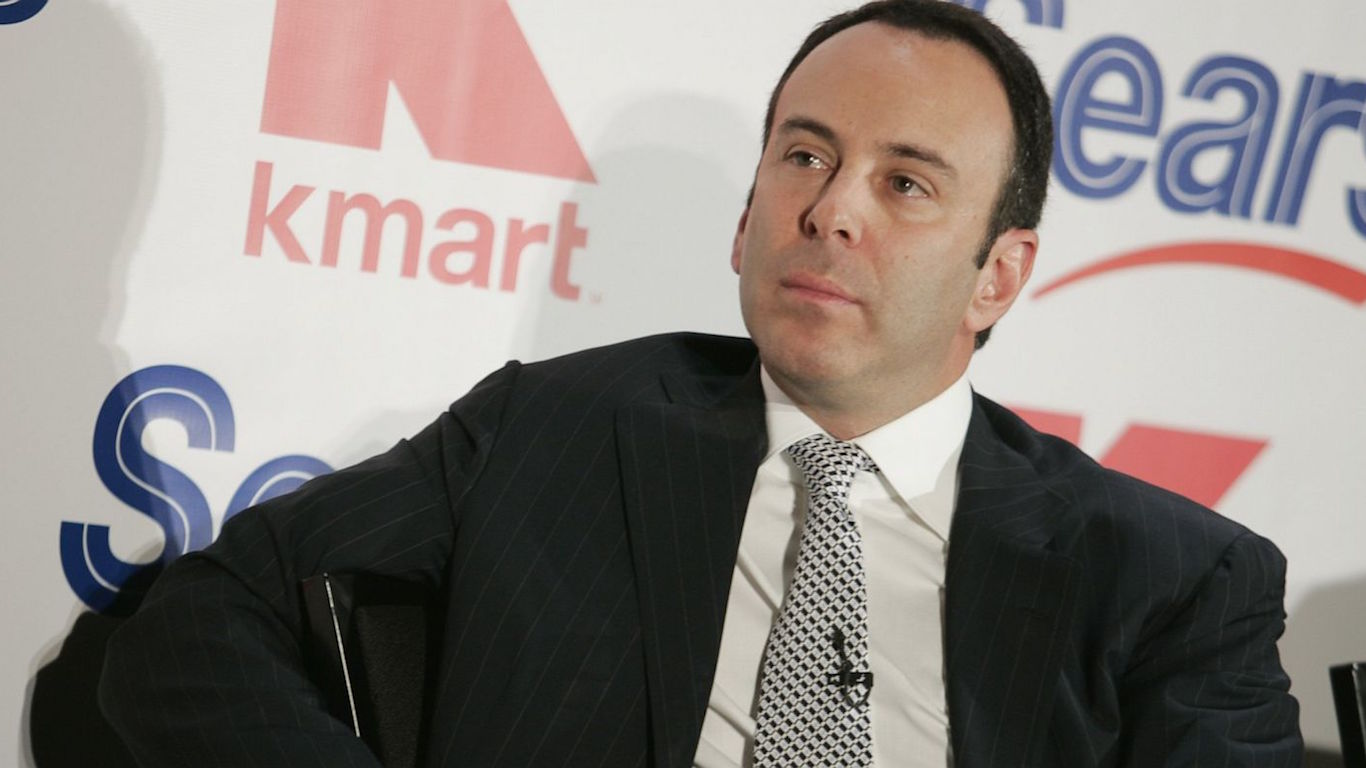
Hedge fund chief Edward Lampert helped create Sears Holdings Corp. (NASDAQ: SHLD), owner of Kmart and Sears, in 2005. He has presided over its serial decline, which has left the company something less than a shadow of what it was a decade ago. Now, he has decided to leverage Sears Holdings more and buy it time for its businesses to stabilize. It seems like a plan that will fail before it is entirely in place.
According to a filing with the U.S. Securities and Exchange Commission:
Sears Holdings Corporation (“Holdings,” “we,” “us,” “our,” or the “Company”) (NASDAQ: SHLD) announced today it has entered into an agreement to extend the maturity of its existing term loan, which originally was to mature in June 2018 (the “Term Loan”), to January 2019, with the option to further extend the maturity to July 2019. During the fourth quarter, the Company paid down the Term Loan by $325 million, reducing the outstanding balance to approximately $400 million and bringing our total Term Loan repayment during 2017 to approximately $570 million.
In addition, the Company announced it intends to obtain a new secured credit facility (the “Secured Credit Facility”) in connection with the agreement reached with the Pension Benefit Guaranty Corporation (“PBGC”) on November 7, 2017 that provides for the release of 138 of our properties from a ring-fence arrangement with the PGBC. The Secured Credit Facility is expected to be secured by such properties and consist of an approximately $407 million (net of associated costs) first lien tranche and a second lien tranche of up to $200 million. The Company intends to use the net proceeds from the Secured Credit Facility to fund the payment of approximately $407 million into the Sears pension plans and for general corporate purposes. Following the funding of the $407 million pension contribution, Holdings will be relieved of the obligation to make further contributions to the pension plans for approximately two years (other than a $20 million supplemental payment due in Q2 2018). Holdings expects to repay the Secured Credit Facility over time with the proceeds from sales of the underlying properties.
[nativounit]
The decision does not make any sense, unless Lampert has an undisclosed way to rescue the company, or a plan to continue a sale of its assets, which could include brands, locations or real estate.
Whatever Lampert’s plan, it faces the wall of failure Sears has been through for the past several years. In the most recent quarter, which ended October 28, same-store sales across all Sears Holding’s stores fell 15.3% compared to the same period a year ago. Kmart comparable store sales dropped 13%. Sears sales fell 17%. Revenue, particularly for the Sears brand, is literally disappearing. Revenue for the period was $3.7 billion, down from $5 billion in the same period a year ago. The net loss was $558 million, compared to $748 million in the same quarter of last year.
What is Lampert up to? No matter what it is, it has to be very risky. But that has been the case with many of Lampert’s decisions about Sears before.
[wallst_email_signup]






 Top Gaining Stocks
 Top Losing Stocks