


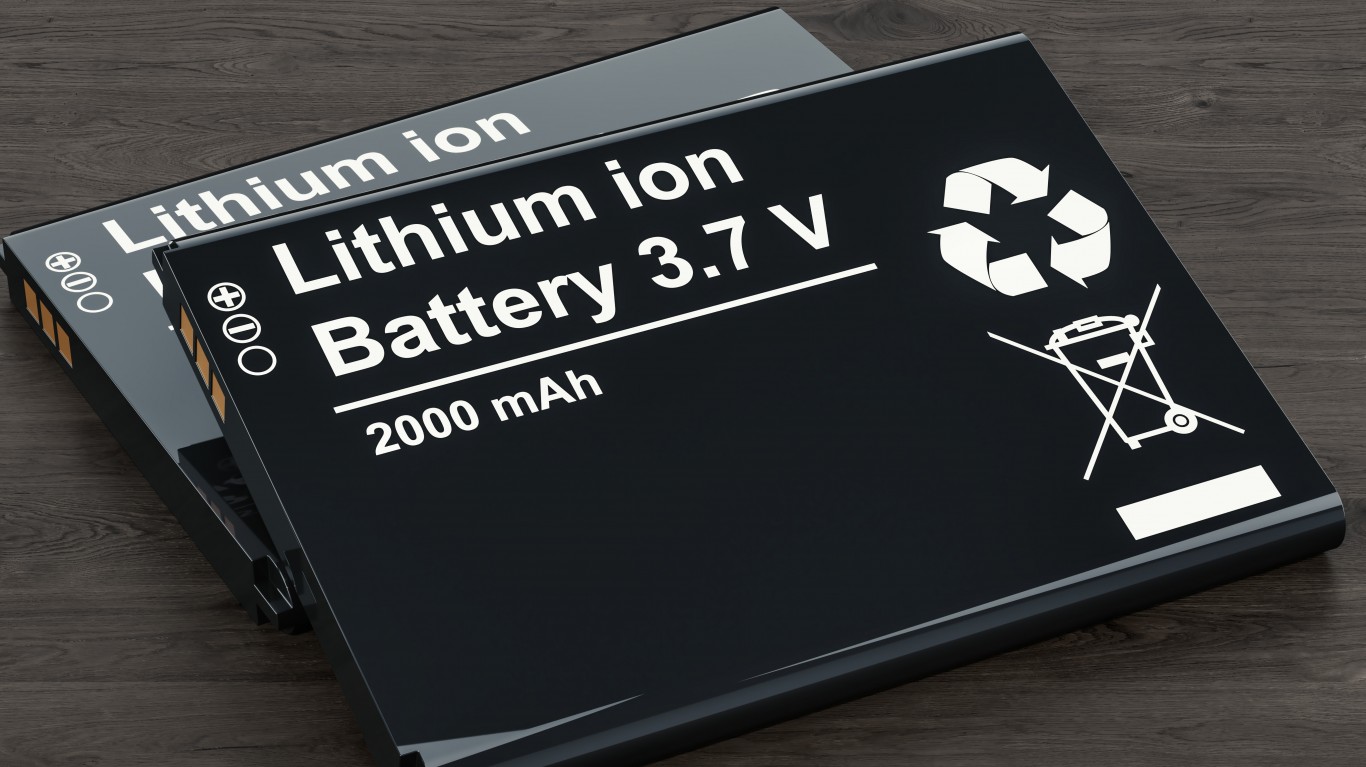
A lawsuit filed Tuesday with the U.S. District Court for the Central District of California charges Amazon.com Inc. (NASDAQ: AMZN | AMZN Price Prediction) with deceiving customers “by falsely advertising, marketing, and selling defective, fraudulent, and often dangerous lithium-ion 18650 battery cells and products containing them.”
The lawsuit was filed by Craig Crosby, publisher of The Counterfeit Report, and Christopher Johnson, a purchaser of the allegedly fraudulent batteries, and seeks class-action status on behalf of California residents who purchased the batteries or products containing the batteries.
According to an announcement of the filing, “Amazon chose to ignore two legal notices and continual complaints submitted for hundreds-of-thousands of dangerous, fraudulent Lithium-ion (‘Li-ion’) battery cells offered or sold on Amazon.”
Crosby and Johnson claim that salvagers in China relabel recycled batteries as new, exaggerating capacity claims and selling fraudulent battery packs at low prices.
[nativounit]
Not only does the lawsuit charge Amazon with fraud, it also alleges that “[t]housands of hospital emergency room visits, hundreds of aircraft fires, dismemberments, hospitalizations, and deaths are documented from Li-ion batteries.”
In July of last year, a federal appeals court reversed a district court’s decision that under Pennsylvania law the reseller, not Amazon, was the seller because it listed the product on Amazon’s Marketplace and shipped the product directly to the customer. The District Court also ruled that Amazon was exempt from liability for failing to warn consumers of product issues, citing Section 230 of the Communications Decency Act of 1996 (CDA): “No provider or user of an interactive computer service shall be treated as the publisher or speaker of any information provided by another information content provider.” This is the same defense that social media giants like Facebook and Twitter hide behind when it comes to policing content on their websites.
Last month, a California appeals court ruled that Amazon may be held liable for damages caused by a defective laptop battery that ignited and caused third-degree burns to its user. The user had purchased the battery from a third-party seller on Amazon.
Amazon said it would appeal the ruling and commented: “The court’s decision was wrongly decided and is contrary to well-established law in California and around the country that service providers are not liable for third party products they do not make or sell.”
Both President Trump and Democratic challenger Joe Biden have called for the revocation of Section 230 of the CDA. Trump claims the law allows web platforms systematically to censor conservative views, an allegation for which there is no evidence. Biden claims that companies are not removing enough harmful material. According to a recent interview with the two U.S. Senators who pushed the legislation through in 1996, neither Trump nor Biden gets it right.
Amazon is certain to say that it intends to defend itself vigorously against the lawsuit by Crosby and Johnson. Absent a change to the CDA, that’s proven to be a pretty stout defense.
[recirclink id=732258][wallst_email_signup]








 Top Gaining Stocks
 Top Losing Stocks