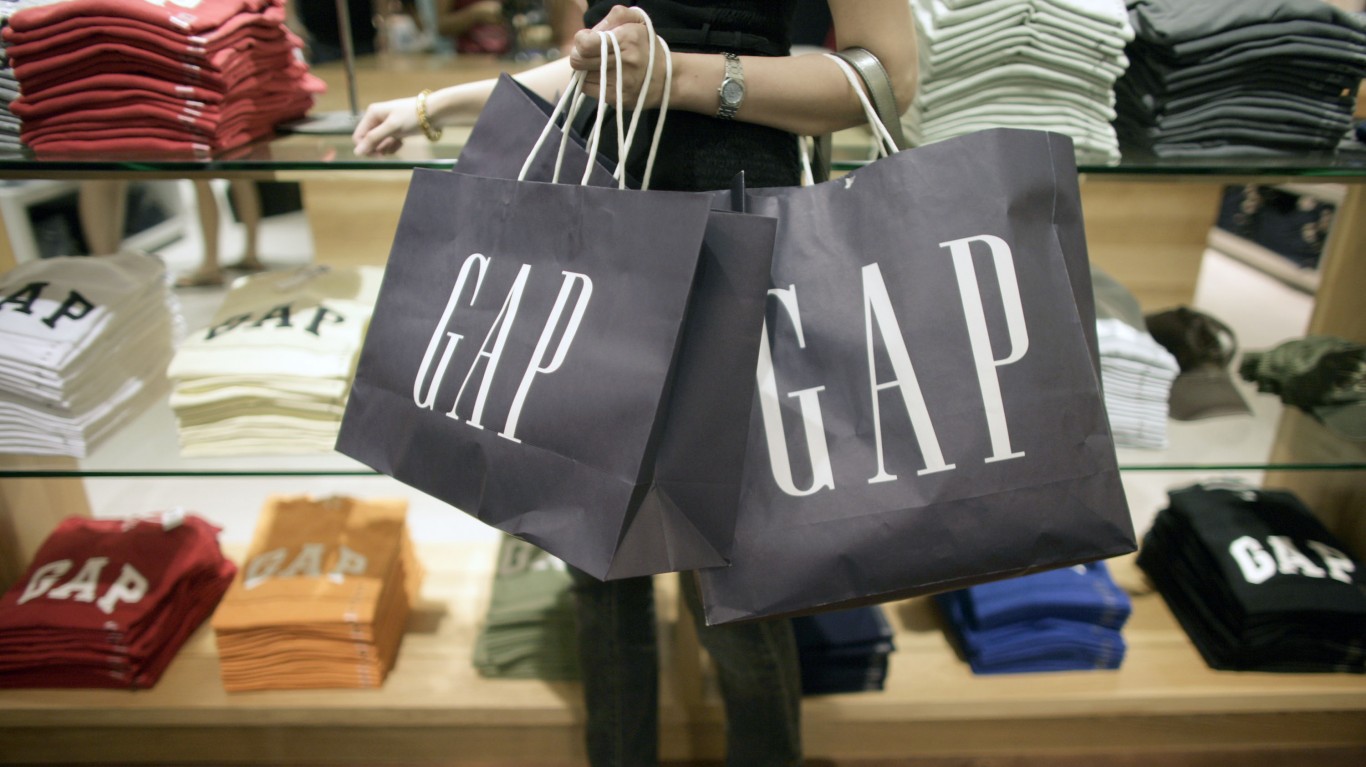
Gap Becomes the Next Sears

Photo of Douglas A. McIntyre
By Douglas A. McIntyre Published
This post may contain links from our sponsors and affiliates, and Flywheel Publishing may receive compensation for actions taken through them.
Gap Becomes the Next Sears

© Dimas Ardian / Getty Images News via Getty Images

The retailer Sears was too big to fail. Founded in 1892, it became America’s largest store chain 90 years later and then began to fall apart. Now, for all intents and purposes, Sears does not exist. There have been several retailers that have followed a path similar to Sears. Its stablemate Kmart belongs on the list. So does J.C. Penney. All have done poorly picking merchandise, designing stores, pricing inventory and moving online. It is often said that Amazon has caused 100% of the damage done. That is naive. Management counts.
[in-text-ad]
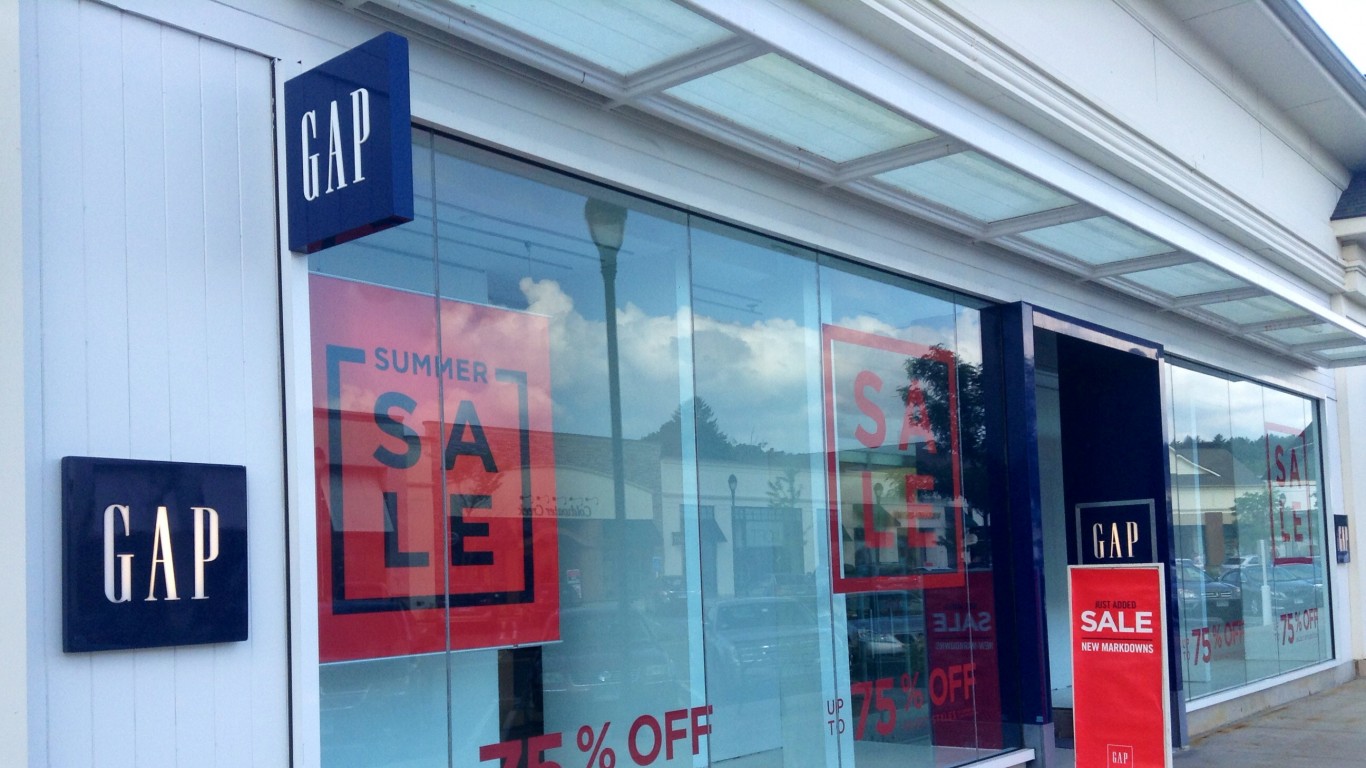
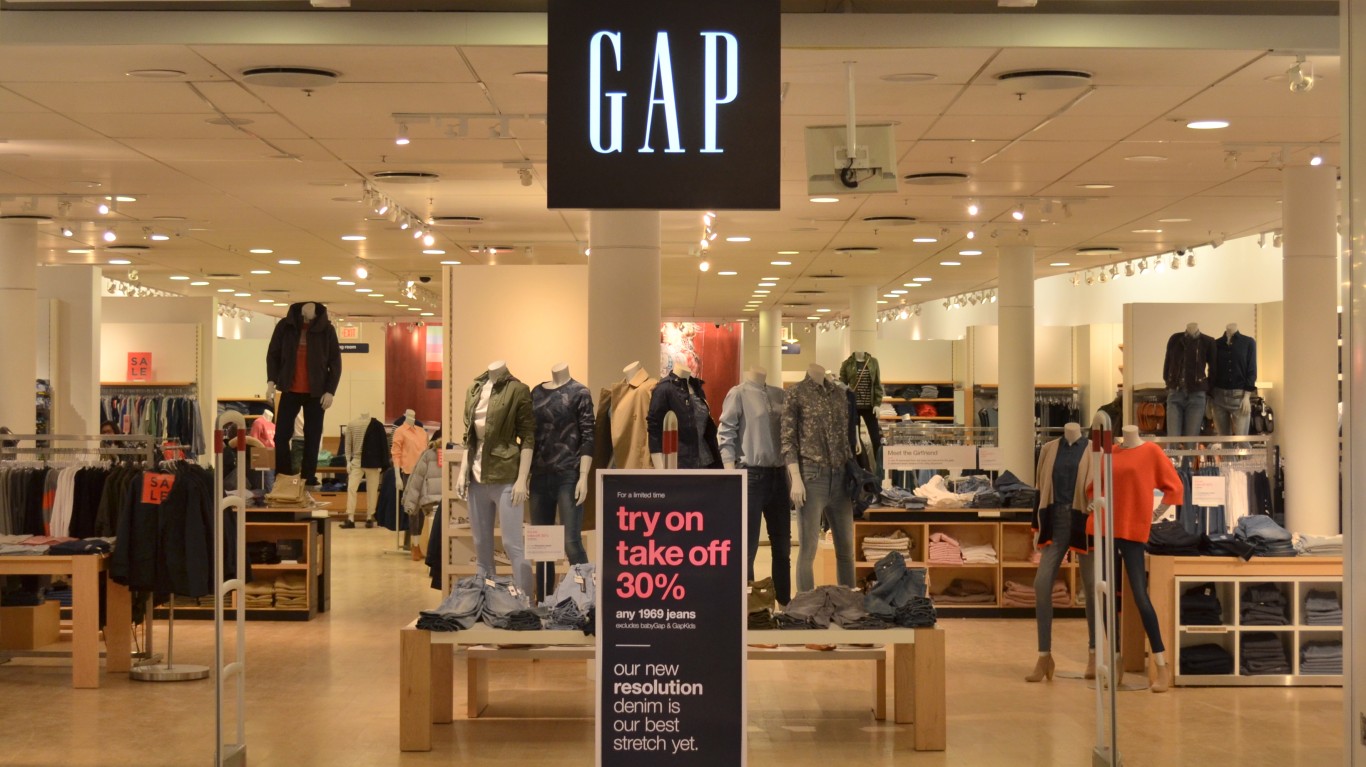
Gap started to fall apart years ago. After occasional recoveries, it began what is probably its last leg downward. Starting in 1969, it became another of America’s legendary store chain successes. For years it was called America’s largest “specialty retailer,” which essentially means it inhabited the clothing retail niche.
[nativounit]
Gap’s earnings forecast shows how desperate its situation has become. One of the first signs of trouble is the ouster of the head of the Old Navy division. As Nancy Green departs, Gap CEO Sonia Syngal will temporarily oversee the division — never a good sign.
[recirclink id=1090198]
Then, there is the case of Gap’s decision to cut its forecast:

In light of the macro-economic dynamics as well as the execution challenges at the Old Navy brand, the company is updating its first quarter fiscal 2022 net sales growth guidance to approximately low to mid-teens year-over-year declines from its prior guidance of mid to high single digit year-over-year declines.

Syngal still believes in the power of the Old Navy brand, whatever that means.

[wallst_email_signup]
Gap’s share price has dropped below $13. That is down from a 52-week high of $37.53.

Gap has been mentioned as an activist target. However, that may not be true. Even if an outsider could buy the company cheaply, is there any value left to buy?


Photo of Douglas A. McIntyre
About the Author Douglas A. McIntyre →

Douglas A. McIntyre is the co-founder, chief executive officer and editor in chief of 24/7 Wall St. and 24/7 Tempo. He has held these jobs since 2006.

McIntyre has written thousands of articles for 24/7 Wall St. He is an expert on corporate finance, the automotive industry, media companies and international finance. He has edited articles on national demographics, sports, personal income and travel.

His work has been quoted or mentioned in The New York Times, The Wall Street Journal, Los Angeles Times, The Washington Post, NBC News, Time, The New Yorker, HuffPost USA Today, Business Insider, Yahoo, AOL, MarketWatch, The Atlantic, Bloomberg, New York Post, Chicago Tribune, Forbes, The Guardian and many other major publications. McIntyre has been a guest on CNBC, the BBC and television and radio stations across the country.

A magna cum laude graduate of Harvard College, McIntyre also was president of The Harvard Advocate. Founded in 1866, the Advocate is the oldest college publication in the United States.

TheStreet.com, Comps.com and Edgar Online are some of the public companies for which McIntyre served on the board of directors. He was a Vicinity Corporation board member when the company was sold to Microsoft in 2002. He served on the audit committees of some of these companies.

McIntyre has been the CEO of FutureSource, a provider of trading terminals and news to commodities and futures traders. He was president of Switchboard, the online phone directory company. He served as chairman and CEO of On2 Technologies, the video compression company that provided video compression software for Adobe’s Flash. Google bought On2 in 2009.

Featured Reads

Our top personal finance-related articles today. Your wallet will thank you later.

Continue Reading

Top Gaining Stocks

CBOE Vol: 1,568,143
PSKY Vol: 12,285,993
STX Vol: 7,378,346
ORCL Vol: 26,317,675
DDOG Vol: 6,247,779

Top Losing Stocks

LKQ
LKQ Vol: 4,367,433
CLX Vol: 13,260,523
SYK Vol: 4,519,455
MHK Vol: 1,859,865
AMGN Vol: 3,818,618