


The poverty level for an individual without a family is $12,880. For a family of four, the figure is $26,500. A $15 an hour wage creates an annual income of just above $30,000. Starbucks recently raised the low end of its pay base to $15. Dave Bozeman, vice president of Amazon Delivery Services, recently commented to Reuters that Amazon will keep its base pay at $15. Starbucks and Amazon seem to wonder, at least in public, about why their workers in some areas of the country want to form unions.
[in-text-ad]
If the union movement has done anything over a period that started before the beginning of the 20th century, it is that members and prospective members get better pay and benefits over time. The Starbucks and Amazon labor actions are not based on local issues, although they have been local actions so far.
[nativounit]
Jeff Bezos, the founder and board chair of Amazon, is the second richest person in the world. The Starbucks CEO (for the third time), Howard Schultz, is also worth over $1 billion. Each of the companies was built largely on inexpensive labor. Each makes large sums of money and has large cash reserves.
[wallst_email_signup]
The argument companies make about unions is that they take partial control of compensation away from management. That is fair enough because it is true. It leaves the question of whether companies should pay a living wage. At this point, Starbucks and Amazon do not support this for all their employees.
[recirclink id=1107616]
The union movements at Amazon and Starbucks will continue to grow, with a great deal of pushback by management. That pushback almost certainly will not work over time, which means management will have been better off using its time more wisely.
Starbucks and Amazon Face Unions Pressing to Lift Workers Out of Poverty

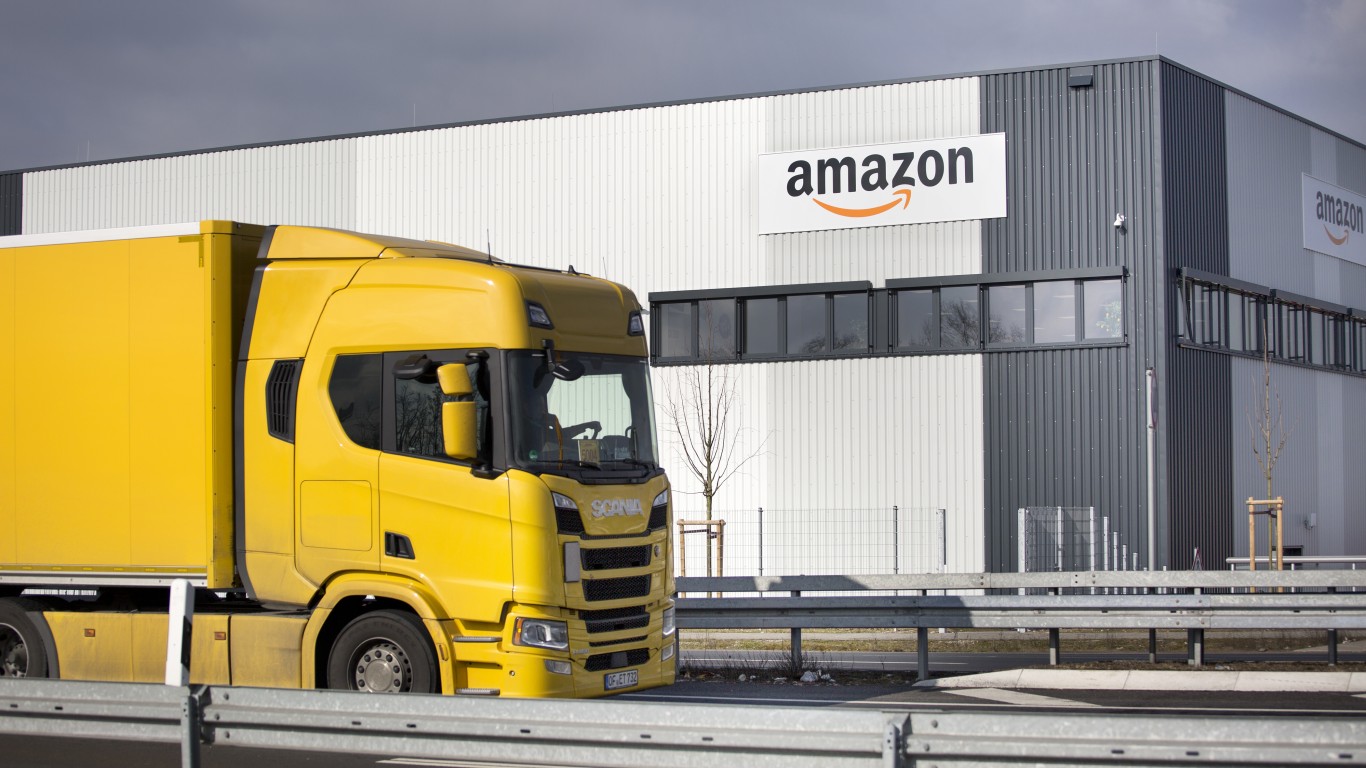
© ollo / Getty Images

Douglas A. McIntyre is the co-founder, chief executive officer and editor in chief of 24/7 Wall St. and 24/7 Tempo. He has held these jobs since 2006.
McIntyre has written thousands of articles for 24/7 Wall St. He is an expert on corporate finance, the automotive industry, media companies and international finance. He has edited articles on national demographics, sports, personal income and travel.
His work has been quoted or mentioned in The New York Times, The Wall Street Journal, Los Angeles Times, The Washington Post, NBC News, Time, The New Yorker, HuffPost USA Today, Business Insider, Yahoo, AOL, MarketWatch, The Atlantic, Bloomberg, New York Post, Chicago Tribune, Forbes, The Guardian and many other major publications. McIntyre has been a guest on CNBC, the BBC and television and radio stations across the country.
A magna cum laude graduate of Harvard College, McIntyre also was president of The Harvard Advocate. Founded in 1866, the Advocate is the oldest college publication in the United States.
TheStreet.com, Comps.com and Edgar Online are some of the public companies for which McIntyre served on the board of directors. He was a Vicinity Corporation board member when the company was sold to Microsoft in 2002. He served on the audit committees of some of these companies.
McIntyre has been the CEO of FutureSource, a provider of trading terminals and news to commodities and futures traders. He was president of Switchboard, the online phone directory company. He served as chairman and CEO of On2 Technologies, the video compression company that provided video compression software for Adobe’s Flash. Google bought On2 in 2009.






 Top Gaining Stocks
 Top Losing Stocks