


Even though we are right in the middle of the busy summer travel and vacation season, there are mounting reasons why the airlines need to be viewed with caution. The rise in oil pricing should precipitate a rise in jet fuel prices, which is, of course, a major cost component for the industry. Toss in some other headwinds, and it makes sense for investors to be careful.
In a new research report, Deutsche Bank becomes more cautious as well. It recently downgraded some of the top companies in the industry, especially those with big international exposure. The report noted this:
It has been our experience that in a world of heightened macroeconomic and geopolitical risks, economically-sensitive, high beta stocks such as airlines typically underperform the broader market. The possibility that the current trade dispute between the US and its global partners could become something bigger is problematic for the industry’s top-line given how closely correlated it is to imports and exports of goods and services.
Deutsche Bank stays focused on the top companies that have more domestic exposure, and they have four rated Buy that remain the firm’s top picks in the sector. They are listed here in order of preference.
[nativounit]
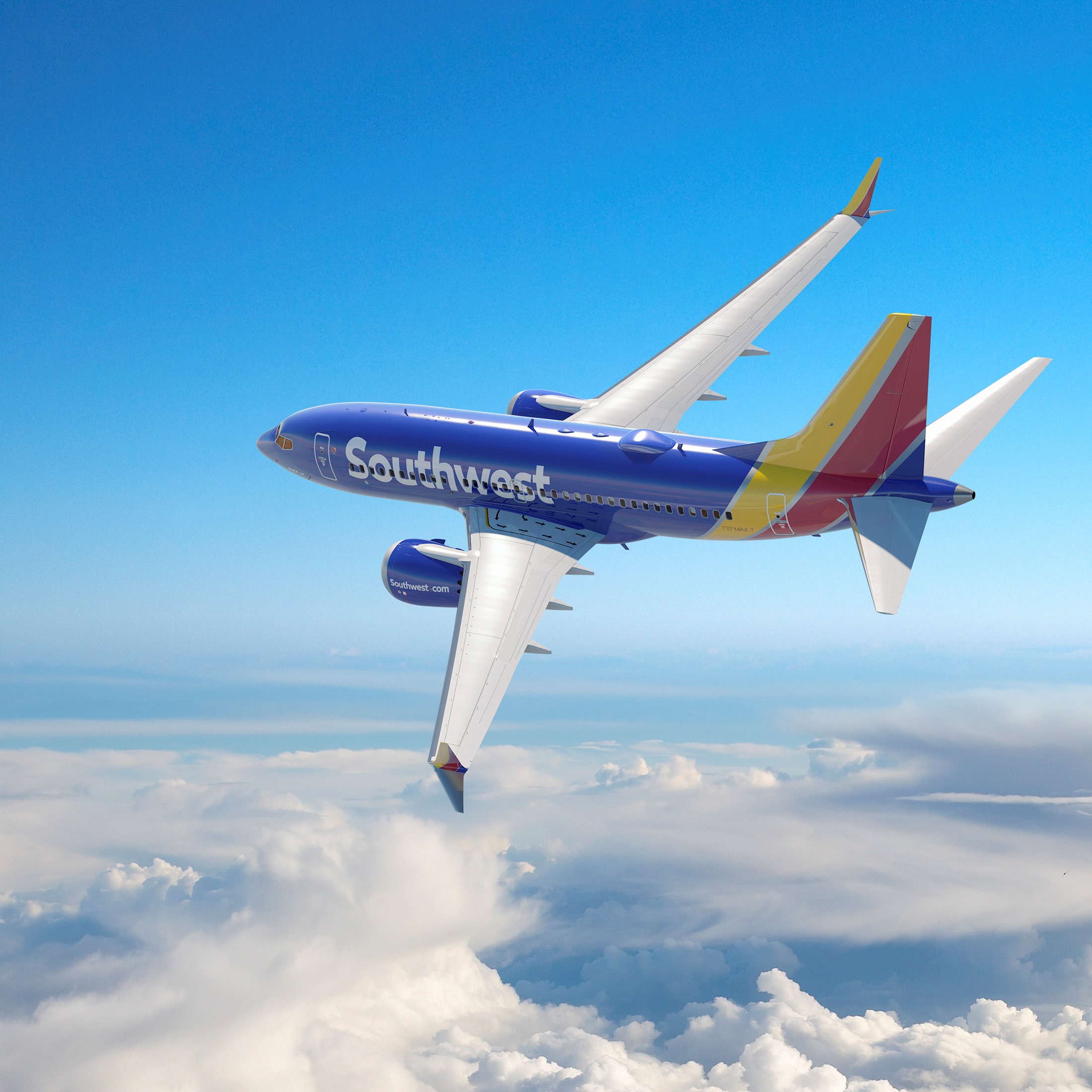
Southwest Airlines
This company continues to expand routes, remains a low-cost leader and is also one of the top airline picks across Wall Street. Southwest Airlines Inc. (NYSE: LUV) is the fourth-largest U.S. airline by revenues and operates a customer-friendly, low-cost, point-to-point model without fees and offers flights throughout the continental United States. Its six largest operations are in Dallas, Chicago, Las Vegas, Baltimore, Phoenix and Houston.
Jet fuel prices, which have been creeping higher this year and are almost 30% of Southwest’s total costs, have been a key for improving revenues and earnings. With almost no international business at this time, currency headwinds are not an issue for the airline. The company will begin routes to Hawaii later this year or early in 2019.
Based on the U.S. Department of Transportation’s most recent data, Southwest Airlines is the nation’s largest carrier in terms of originating domestic passengers boarded. The company operates the largest fleet of Boeing aircraft in the world, the majority of which are equipped with satellite-based Wi-Fi, providing gate-to-gate connectivity.
Southwest shareholders receive a 1.21% dividend. Deutsche Bank has a $62 price target for the shares. The consensus price target across Wall Street is $64.50. The stock traded early Monday at $52.85.
Spirit Airlines
The company is an ultra-low-cost carrier that sold off big from the 2017 highs and is still offering investors an excellent entry point. Spirit Airlines Inc. (NASDAQ: SAVE) is based in Mirimar, Florida, and fundamentally focused on providing the lowest available fares to consumers on routes in which it serves.
Spirit’s low-cost structure enables the carrier to enter markets with fares 25% lower than prevailing ones and to stimulate traffic that otherwise would not have flown. As of year-end 2017, Spirit operated a fleet of 95 aircraft. The low-cost carriers tend to have quite an advantage over the legacy airlines, and Spirit remains a favorite.
The Deutsche Bank price target is $51, and the posted consensus target is $48.47. Shares traded at $37.70 Monday morning.
Alaska Air
This company has a big west coast exposure and continues to rank high on Wall Street. Alaska Air Group Inc. (NYSE: ALK) is the parent company of Alaska Airlines, and it reported impressive traffic data buoyed by strong demand. The company serves more than 100 cities through an expansive network in Alaska, the Lower 48 states, Hawaii, Canada and Mexico. Despite recent challenges by other carriers for superiority in the Northwest, the company has strong customer loyalty, which has contributed to outstanding earnings and revenue growth.
The company recently began nonstop service between Mineta San Jose International Airport and John F. Kennedy International Airport in New York City. With the addition of the new service, Alaska now operates 15 flights a day to JFK from six west coast gateways, including Las Vegas; Los Angeles; Portland, Oregon; San Francisco; San Jose; and Seattle.
Shareholders receive a 2.05% dividend. The $74 Deutsche Bank price target compares with a $79.00 consensus target. The shares were last seen at $62.85 apiece.
[recirclink id=475753]
JetBlue Airways
This stock has traded sideways for well over a year and may be looking to breakout. JetBlue Airways Corp. (NASDAQ: JBLU) is a point-to-point airline that operates out of its headquarters in New York, as well as Boston, Fort Lauderdale/Hollywood, Los Angeles (Long Beach), Orlando and San Juan. JetBlue carries more than 32 million customers a year to 87 cities in the United States, the Caribbean and Latin America with an average of 850 daily flights.
The company posted solid first-quarter results and reiterated the full-year guidance. It also has said that the current fare environment for the industry remains positive and has been steady since late 2017.
The Deutsche Bank price objective is $23. The consensus target is $22.83, and the shares traded at $19.40.
[wallst_email_signup]
Needless to say, jet fuel pricing will remain an important component, and if oil skyrockets it would be a negative for the industry. That noted, airlines typically do well in a strong economy, and that we do have now.






 Top Gaining Stocks
 Top Losing Stocks