


As is so very typical on Wall Street, the minute that President Trump ordered Boeing’s 737 MAX out of the air and grounded, the analysts on Wall Street started to crunch the data and come up with the potential winners and losers among the carriers. It should be noted that the 737 MAX accounts for about 4% of the capacity from the U.S. west coast to Hawaii, and with Southwest Airlines (NYSE: LUV) unveiling new service to the islands, that jumps right out.
A timely new Stifel research report points out that while Southwest’s use of the MAX is broad, it is not particularly concentrated in any specific markets. The 737 MAX series is actually the fourth generation of the Boeing 737 plane (with the 737-800 being the third). As such, it has the latest technologies, exemplary fuel efficiency and more advanced construction than its predecessors.
When you compare the 737 MAX 8 directly to the 737-800 on numbers alone, it has a longer range and ability to carry 18 more full-fare-paying customers. From that standpoint for the major carriers, it’s the clear winner. But for now, it’s on the bench.
The Stifel analyst feels four airlines could benefit from the grounding, albeit maybe a temporary benefit.
[nativounit]
Alaska Air
This company has a big west coast exposure and continues to rank high on Wall Street. Alaska Air Group Inc. (NYSE: ALK | ALK Price Prediction) is the parent company of Alaska Airlines, and it reported impressive traffic data buoyed by strong demand. The company serves more than 100 cities through an expansive network in Alaska, the Lower 48 states, Hawaii, Canada and Mexico. Despite recent challenges by other carriers for superiority in the Northwest, the company has strong customer loyalty, which has contributed to outstanding earnings and revenue growth.
The company reported solid operational results in February, while revenue per available seat is expected to be down some for the quarter. Most on Wall Street remain extremely bullish on the shares. With less exposure to Hawaii and Dallas, Stifel sees a benefit for the company.
Stifel has a Buy rating and a $95 price target. The Wall Street consensus target is at $76, and shares were trading Thursday at $55.85.
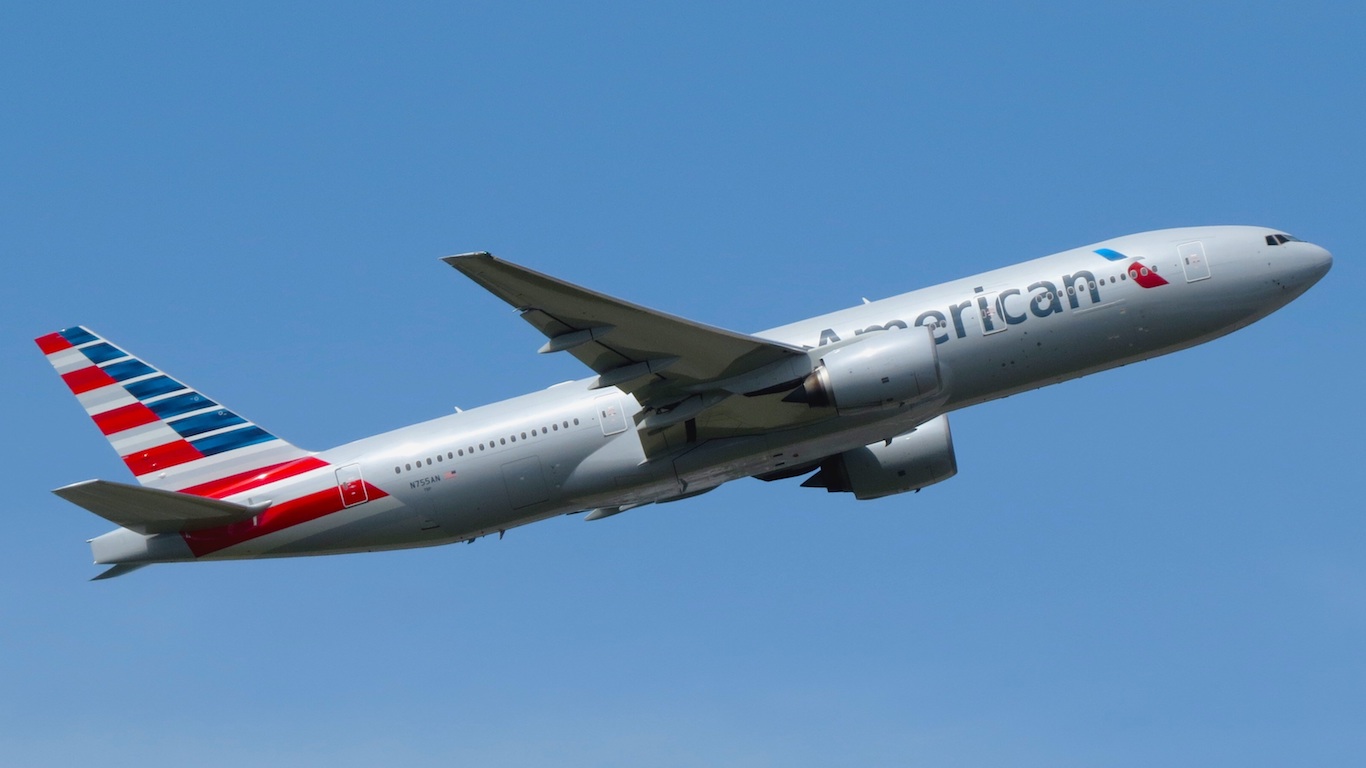
American Airlines
This company has its major hub in Dallas, where business continues to boom. American Airlines Group Inc. (NASDAQ: AAL) is the holding company for American Airlines.
Together with wholly owned and third-party regional carriers operating as American Eagle and US Airways Express, the airlines operate an average of nearly 6,700 flights per day to 350 destinations in over 50 countries from its hubs in Charlotte, Chicago, Dallas/Fort Worth, Los Angeles, Miami, New York, Philadelphia, Phoenix and Washington, D.C. Needless to say, with both American and Southwest having major hubs in Dallas, the advantage goes to American.
This Buy-rated stock resides on Stifel’s Select List, and its price target is $55. The consensus target is $45.17, and shares were trading at $31.99 on Thursday.
[recirclink id=534346]
Hawaiian Holdings
This carrier has numerous routes from the west coast to Hawaii and a thriving inter-island business as well. Hawaiian Holdings Inc. (NYSE: HA) is in its 90th year of continuous service, and it is Hawaii’s biggest and longest-serving airline. It offers nonstop service to Hawaii from more U.S. gateway cities (12) than any other airline, along with service from Japan, South Korea, Australia, New Zealand, American Samoa and Tahiti. Hawaiian also provides, on average, more than 170 jet flights daily between the Hawaiian Islands, with a total of more than 250 daily flights systemwide.
The company has led all U.S. carriers in on-time performance for each of the past 14 years (2004 to 2017), as reported by the U.S. Department of Transportation. Consumer surveys by Condé Nast Traveler, Travel + Leisure and TripAdvisor have placed Hawaiian among the top of all domestic airlines serving Hawaii.
The delay in Hawaii for Southwest plus the 737 MAX issues slowing down traffic into Hawaii for United are both positives.
Investors receive a 1.78% dividend, and the Buy-rated stock has a $38 price target, well above the $31.18 consensus estimate. The shares were last seen trading at $27.18.
Spirit Airlines
Shares of this ultra-low-cost carrier have sold off big from the 2017 highs and are still offering investors an excellent entry point. Spirit Airlines Inc. (NASDAQ: SAVE) is based in Mirimar, Florida, and fundamentally focused on providing the lowest available fares to consumers on routes in which it serves.
Spirit’s low-cost structure enables the carrier to enter markets with fares 25% lower than prevailing ones and to stimulate traffic that otherwise would not have flown. As of year-end 2018, Spirit operated a fleet of 95 aircraft. The low-cost carriers tend to have quite an advantage over the legacy airlines, and Spirit remains a favorite. The lack of capacity from Dallas Love Field for Southwest is seen as an advantage for the company.
Stifel’s Hold rating comes with a $65 price target, while the consensus target is up at $76.38. Shares were trading at $55.58.
[wallst_email_signup]
Needless to say, any benefit to these carries could be short-lived, as you can bet Boeing is furiously working to locate and fix any problems. In the meantime, with planned travel having to be changed now, there could be some late first-quarter and early second-quarter surges in revenue for some or all these carriers.






 Top Gaining Stocks
 Top Losing Stocks