


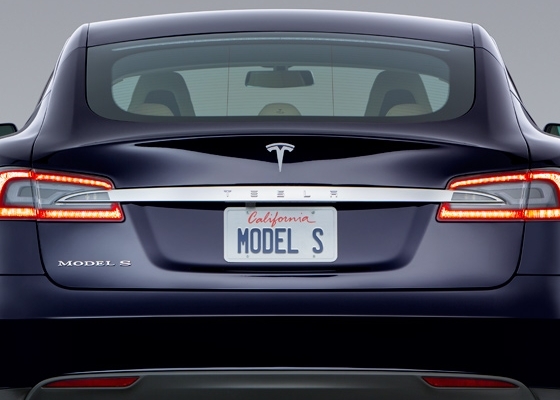
The company announced:
A variety of factors such as corrosion, physical damage to receptacles, or inappropriate wiring or installation of electrical outlets can cause higher than normal electrical resistance when using the Universal Mobile Connector (“UMC”) NEMA 14-50 adapters to charge Tesla Model S vehicles. When charging, higher than normal electrical resistance connections to external energy sources may cause excessive heating of the adapter. In December 2013, Tesla released an over-the-air software update to address this issue, enabling the Model S onboard charging system to automatically reduce the charging current by 25 percent if it detects unexpected fluctuations in the input power to the vehicle. This fully addresses the issue by substantially reducing the heat generated in any high resistance connections outside the vehicle. This update increases robustness and safety considerably in the unlikely event that a home wiring system, receptacle, adapter or cord is unable to meet its rated current capacity.
Because this was an over-the-air update, customers can confirm receipt without having to bring their vehicles into a Tesla Service Center or other location by simply tapping on the 17” touchscreen and verifying that their Model S is running software version 5.8.4 or later. Any vehicle that is not within range of the wireless network or is not remotely accessible for any other reason can have the update installed through Tesla authorized Service Centers or Tesla Rangers.
Tesla believes that this software update fully addresses any potential risks. However, to provide another layer of assurance to Model S customers using the 14-50 socket, we have designed an improved wall adapter with a thermal fuse. Even if the circuit breakers on the house side and car side don’t trip, the thermal fuse will prevent current from flowing if the wall socket region heats up for any reason. Although we do not believe the improved adapter is required to address the issue, we are taking this step as part of our commitment to full customer satisfaction. We will provide this upgraded adapter to existing and new customers free of charge starting in a few weeks.
In addition, Tesla has informed the National Highway Traffic Safety Administration of these proactive measures.
Tesla has been dogged by worry that the National Highway Traffic Safety Administration will force it to recall its cars. The proactive measure by the company has the appearance of being the equivalent of a recall of its own. While the description of the affected technology may be complex to owners, it is nevertheless a modification which is likely to cause some anxiety about how safe the cars have been up until now.
The success of Tesla has helped build the reputation of its ingenious founder El0n Musk. But, what the press giveth, the press can take away. It will only take one more requirement for repair or one more accident involving the car’s battery to put the entire image of Tesla at great risk of falling into disrepair itself.






 Top Gaining Stocks
 Top Losing Stocks