


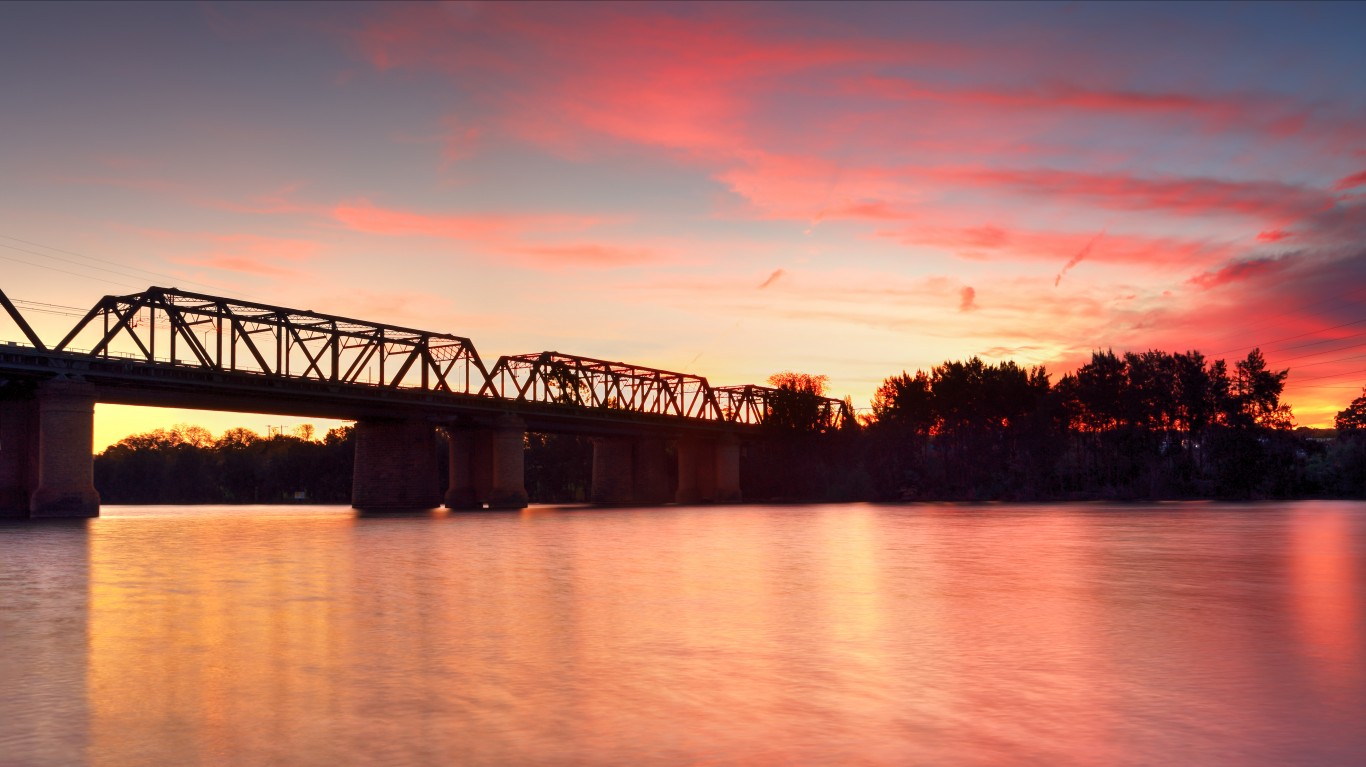
Penrith, Australia, well west of the city of Sydney, which is under the threat of huge bush fires, posted a temperature of 119 degrees Fahrenheit, a record for the area. Although Penrith is sometimes called a suburb of Sydney, it is 31 miles away. The temperature is, however, an indication of why brush fires in the area are not likely to abate soon, and that temperatures in the region are likely to stay above 100 degrees for the foreseeable future.
Penrith’s population is about 13,000. It sits barely above sea level, so it does not have the benefit of a higher location, where altitude might mitigate the temperature. The temperature in the town is generally very high in the summer months, with an average monthly temperature of almost 90 degrees in January and February. Because it is well inland from the coast, it gets very little rain, which makes it especially susceptible to fires. However, it does sit on a river, the Nepean, which runs along its western border.
The high temperatures in Penrith are almost unprecedented. According to the Guardian, “Penrith set a new record for the hottest temperature in the Sydney basin, beating the previous mark of 47.8C [117°F] recorded in Richmond in 1939. The new mark also made it one of the hottest places in the world on Saturday afternoon.”
The temperatures in and around Penrith are unusual for another reason. The fifteen highest temperatures in the world today are in towns and cities in eastern Australia. Typically, the highest temperatures at any given time are in India, Iran or Kuwait, places that are blazing hot during much of the year. These are the hottest inhabited places in the world.
The risk of the high temperature goes well beyond the fires. Human body temperatures are driven up by extreme heat. Heatstroke, which can start when the temperature is about 104 degrees, can cause the body to shut down as it tries to cool itself. Part of the brain that triggers perspiration can be damaged altogether. The brain can start to swell, which can cause blood clots and confusion. Eventually, someone suffering from heatstroke may lose consciousness and even die.
[nativounit]
While the record heat in Penrith makes the danger of fire more likely, other effects can be much worse.
[recirclink id=601372]
[wallst_email_signup]











 Top Gaining Stocks
 Top Losing Stocks