Recession Risk Soars

Photo of Douglas A. McIntyre
By Douglas A. McIntyre Published

Quick Read

  • Economists and bankers have raised their odds that the United States falls into a recession.

  • Increasing tariffs are the primary reason they think so.

This post may contain links from our sponsors and affiliates, and Flywheel Publishing may receive compensation for actions taken through them.
Recession Risk Soars

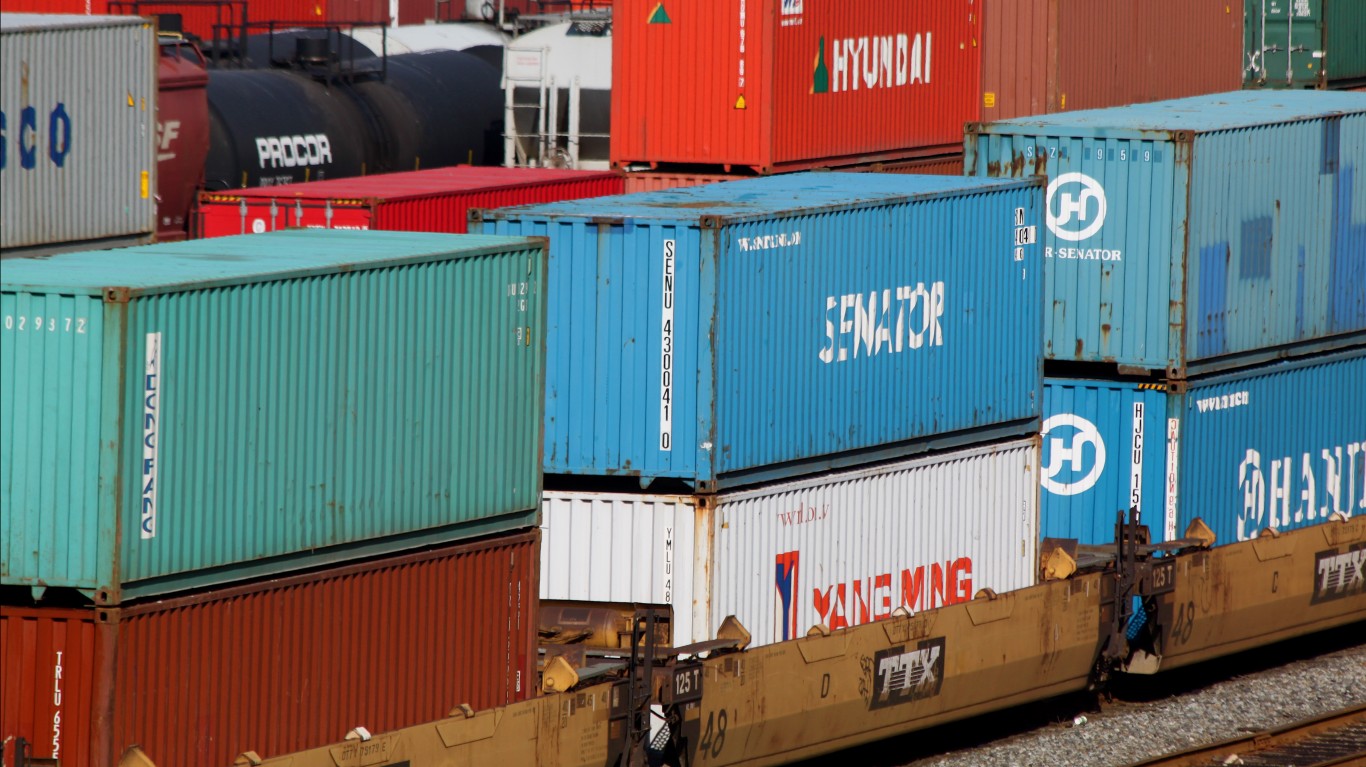
© Cargo containers (CC BY 2.0) by Roy Luck

Over the past three weeks, more and more economists and bankers have increased their odds that the United States will fall into a recession. The most pessimistic of these, from bond company PIMCO, is that the odds have risen to 35%.

Goldman Sachs recently increased their odds of a recession from 15% to 20%. J.P. Morgan placed the risks at a slightly higher level. Each analysis names tariffs as the primary reason for their opinions.

The chances that the United States will experience a recession in 2025 have increased because of the tariffs it has implemented, Alec Kersman, managing director and head of Asia-Pacific at PIMCO, told CNBC. He pointed to the fact that tariffs will make the price of certain goods sold in the United States higher. This is particularly true of those that are imported.

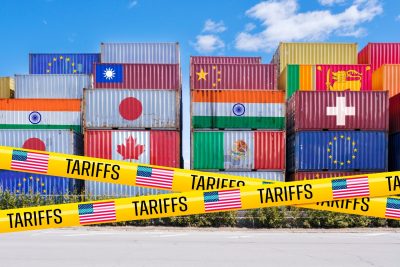
Most experts see tariffs as a tax, although not one levied by the federal or state government. A recent 25% set of tariffs on steel and aluminum will affect the prices of everything from houseware to construction to cars. Europe, in turn, has retaliated, which means U.S. companies will find it harder to sell goods there because they are more expensive. In other words, this essentially raised the prices of U.S. exports.

Americans have taken on record levels of credit card debt. Credit card debt hit $1.21 trillion in the fourth quarter of last year, which is a record since the federal government started gathering data on the subject in 1999. Credit card and car loan default rates are rising. Some Americans have lost their purchasing power even before tariffs raise prices.

Broad tariffs on some goods now appear to be unavoidable. The open question is what industries and products they will hit. Consumer spending is 68% of gross domestic product, and consumer spending is already shaky.

Baby Boomers Should Sink Their Money in T-Bills and HYSAs Before a Market Collapse

Photo of Douglas A. McIntyre
About the Author Douglas A. McIntyre →

Douglas A. McIntyre is the co-founder, chief executive officer and editor in chief of 24/7 Wall St. and 24/7 Tempo. He has held these jobs since 2006.

McIntyre has written thousands of articles for 24/7 Wall St. He is an expert on corporate finance, the automotive industry, media companies and international finance. He has edited articles on national demographics, sports, personal income and travel.

His work has been quoted or mentioned in The New York Times, The Wall Street Journal, Los Angeles Times, The Washington Post, NBC News, Time, The New Yorker, HuffPost USA Today, Business Insider, Yahoo, AOL, MarketWatch, The Atlantic, Bloomberg, New York Post, Chicago Tribune, Forbes, The Guardian and many other major publications. McIntyre has been a guest on CNBC, the BBC and television and radio stations across the country.

A magna cum laude graduate of Harvard College, McIntyre also was president of The Harvard Advocate. Founded in 1866, the Advocate is the oldest college publication in the United States.

TheStreet.com, Comps.com and Edgar Online are some of the public companies for which McIntyre served on the board of directors. He was a Vicinity Corporation board member when the company was sold to Microsoft in 2002. He served on the audit committees of some of these companies.

McIntyre has been the CEO of FutureSource, a provider of trading terminals and news to commodities and futures traders. He was president of Switchboard, the online phone directory company. He served as chairman and CEO of On2 Technologies, the video compression company that provided video compression software for Adobe’s Flash. Google bought On2 in 2009.

Featured Reads

Our top personal finance-related articles today. Your wallet will thank you later.

Continue Reading

Top Gaining Stocks

CBOE Vol: 1,568,143
PSKY Vol: 12,285,993
STX Vol: 7,378,346
ORCL Vol: 26,317,675
DDOG Vol: 6,247,779

Top Losing Stocks

LKQ
LKQ Vol: 4,367,433
CLX Vol: 13,260,523
SYK Vol: 4,519,455
MHK Vol: 1,859,865
AMGN Vol: 3,818,618