


Costco (NASDAQ:COST | COST Price Prediction) is poised to become a leading dividend stock, driven by its consistent dividend history, robust growth, and a business model that ensures sustainable payouts. Some investors already consider it a top income stock to own.
As of April 2025, Costco’s $439 billion market cap and $990 stock price reflect its dominance in retail, but its dividend potential, underpinned by strong free cash flow (FCF) generation, positions it as a top choice for income investors by 2030.
An enviable record of growth
Costco began paying dividends in 2004 and has since established a stellar track record, increasing its payout for 21 consecutive years. In 2025, Costco pays a quarterly dividend of $1.16 per share, yielding 0.5%, but it is set to rise to $1.30 per share on May 16 after the warehouse club announced earlier this month it was raising the payout 12%.
While the yield may seem modest, Costco’s dividend growth is exceptional, with a 10-year compound annual growth rate of 11%, meaning its $1.78 per share dividend in 2015 is growing to $5.20 per share by the end of 2025. This growth rate outpaces inflation and many Dividend Aristocrats, like Procter & Gamble (NYSE:PG), which has a 6% CAGR, highlighting Costco’s commitment to enhancing shareholder value.
Dividend growth matters more than yield alone because it compounds income over time. A high yield with stagnant growth risks erosion, whereas Costco’s growth signals long-term reliability. Further, the warehouse club has also been paying out significant special dividends to shareholders every couple of years.
The last special payout was in 2023 for $15 per share. The one prior to that in 2020 was $10 per share. So even its special dividends are rising over time as well.
A dividend grower to count on
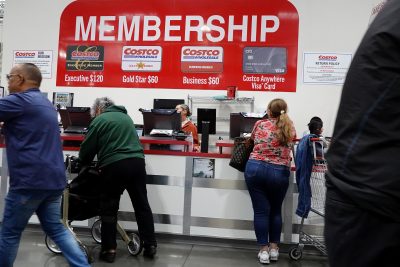
Costco’s membership-based business model with 871 global locations underpins its dividend sustainability. Membership fees, $4.8 billion in 2024, provide a high-margin, recurring revenue stream, with a 93% renewal rate.
This stability allows Costco to weather retail volatility, as seen during the 2020 pandemic when sales grew 9.3%. Its low-price, high-volume strategy drove $255 billion in 2024 revenue, up almost 7% year-over-year, ensuring consistent cash flow to support dividends. Costco’s focus on essentials, such as groceries, household goods, and gas, makes it recession-resistant, as a significant percentage of its sales are non-discretionary. This defensive positioning, combined with e-commerce growth, which rose 15% in 2024, supports long-term profitability, a crucial element for dividend payments.
Moreover, the retailer’s ability to generate and grow FCF is a key driver of its dividend potential, making it a future leader among dividend stocks. In 2024, Costco generated $8.9 billion in FCF, up from $6.8 billion in 2023, a 33% increase. FCF is critical because it represents cash available after Costco pays all of its bills, which ensures it can fund dividends, buybacks, and growth without borrowing. Costco’s dividend payout of $2 billion in 2024 consumes just 23% of FCF, leaving ample room for increases. This low payout ratio, compared to peers like Walmart (NYSE:WMT) (51%), signals sustainability and growth potential.
Analysts project FCF to reach $10 billion by 2027, driven by new store openings and further e-commerce expansion. This growth will likely fuel a 10% annual dividend increase through 2030, potentially doubling the payout to $2.32 per share, yielding 2% at current prices.
Risks are manageable
Challenges exist, such as tariff risks from Trump’s 2025 trade policies, which could raise costs for Costco’s imported goods, which are about 20% of inventory. However, the retailer’s pricing power — raising membership fees 8% in 2024 without losing members — mitigates this, as does its 10.4$ billion cash reserve.
Competition from Amazon (NASDAQ:AMZN) and Walmart is always a concern, but Costco’s loyal membership base and 7% same-store sales growth in 2024 outpace Walmart’s 4% increase.
Key takeaway
By 2030, Costco’s consistent dividend growth, low payout ratio, and FCF expansion will cement its status as a leading dividend stock. Its business model ensures resilience, while FCF growth supports higher payouts, potentially earning it Dividend Aristocrat status by 2029. For investors seeking reliable, growing income, Costco is a top pick.








 Top Gaining Stocks
 Top Losing Stocks