


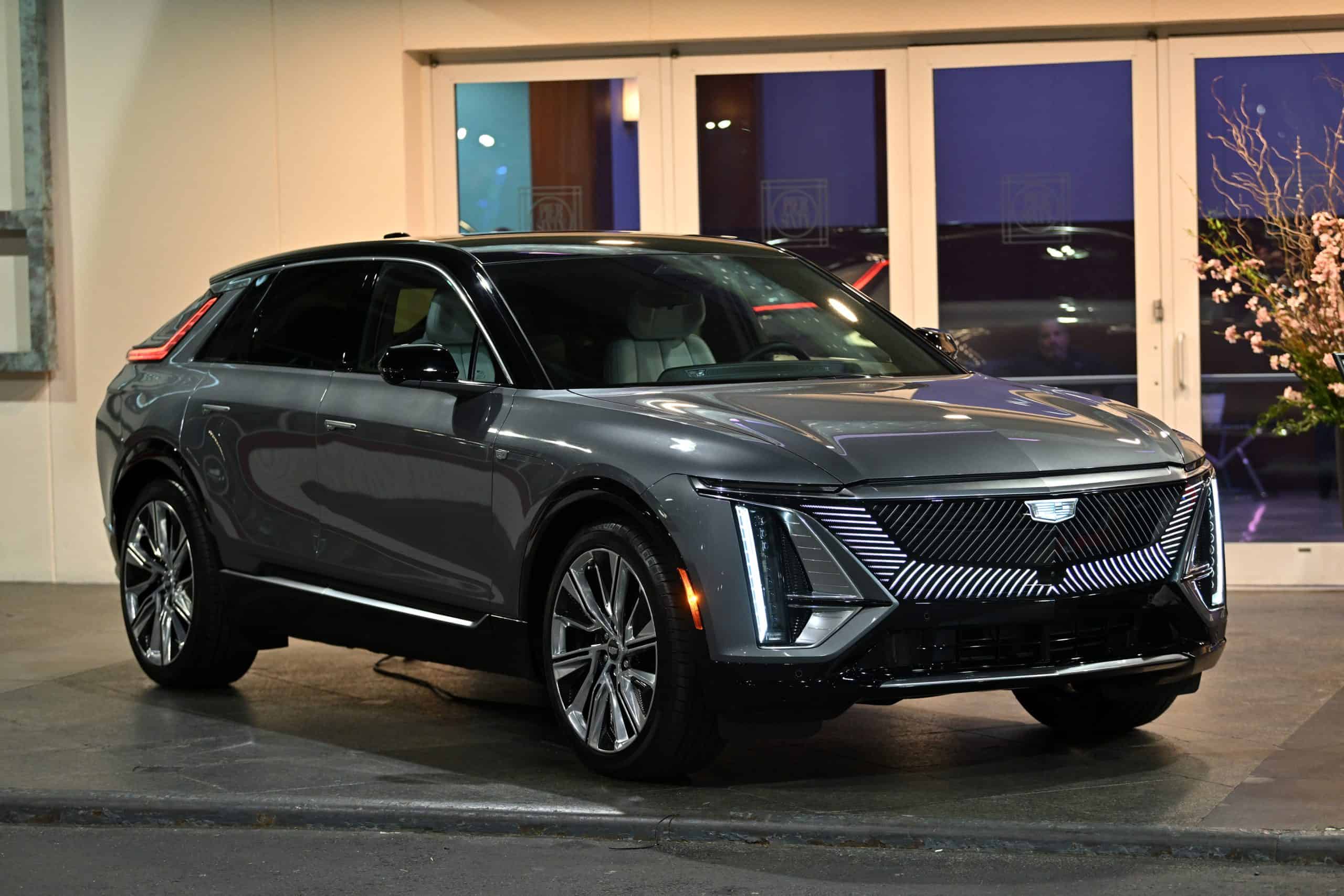
No one can tell from their stock prices that Ford Motor Co. (NYSE: F | F Price Prediction) and General Motors Co. (NYSE: GM) have almost completely wasted the tens of billions of dollars each has put into electric vehicles (EVs). There is even a rumor that Ford will kill its EV flagship, the F-150 Lightning. The stock market favors manufacturers that produce and sell gasoline-powered cars. In parts of the world, especially outside China, it will remain a great business for years, if not decades.
If the stock market is, indeed, a gamble on the futures of the economy and individual companies, consider that Ford and GM each trade at extraordinary levels. GM is at its all-time high. Ford is very near its 52-week high. For some reason, it experienced an unprecedented surge in late 2021. Otherwise, Ford’s stock is also near an all-time high.
Ford and GM will continue to trade well because they are, among other things, not a force in China. There are, by many counts, 100 EV companies in China. This has triggered an ugly market share war, which has even badly damaged EV leader BYD. (Warren Buffett was wise to recently sell the last BYD shares he held.)
Neither Ford nor GM is a leader in the European Union. Each is well behind Volkswagen, Renault, and Stellantis. It has been years since Ford or GM has done very well there.
However, GM and Ford—along with Toyota Motor Corp. (NYSE: TM)—lead the market share charts in the United States. GM’s market share is 17%. Toyota’s is 16% and Ford’s is 13%. Ford and GM have established factory networks, which took the better part of several decades to develop. Each has hundreds of car dealers. The value of these dealerships is underrated. Like Walmart stores, they are a direct conduit to the buying public.
Neither Mary Barra of GM nor Bill Ford gets much credit for their successes. Each was painted into the corner of the combustion-engine car business due to the failure to achieve a large EV market share. Moreover, their failures have resulted in billions of dollars in annual losses, which still remain heavily on Ford’s books. A “successful” EV future would make their stock prices look like those of Rivian Automotive Inc. (NASDAQ: RIVN) or Lucid Group Inc. (NASDAQ: LCID).
In the first three-quarters of this year, EV sales were about 8% of all new car sales in the U.S. With the expiration of the $7,500 federal tax credit (which did not apply to all EVs), iSeeCars forecasts that this number will drop to 4%. The EV segment will be more crippled than it already is.
The U.S. has plenty of gas stations. Gasoline-powered cars can have long ranges. Filling a gas tank takes 10 minutes. Combustion engines are not affected by extreme cold.
Luck has ultimately been on the side of both GM and Ford.
Ford Stock Price Prediction and Forecast 2025–2030











 Top Gaining Stocks
 Top Losing Stocks