



Venezuela is supposed to be the amazing future of big oil. After all, about one-fifth of the world’s proven oil reserves sit in and under land and water it controls. These are vast new fields for Exxon Mobil Corp. (NYSE: XOM | XOM Price Prediction) and Chevron Corp. (NYSE: CVX). Not so fast.
As the United States seized Venezuelan dictator Nicolás Maduro, word went out that President Trump will gather oil executives at the White House. Venezuela had seized and nationalized some oil facilities. Presumably, big oil companies will take those back. Moreover, the U.S. government can ensure their oil fields extend to new regions on land and off Venezuela’s shore.
Exxon stock jumped on the news about Venezuela. Shares had risen in the past year at about the same rate as the S&P 500. It has a safe 3.3% yield.
Exxon Faces Hurdles
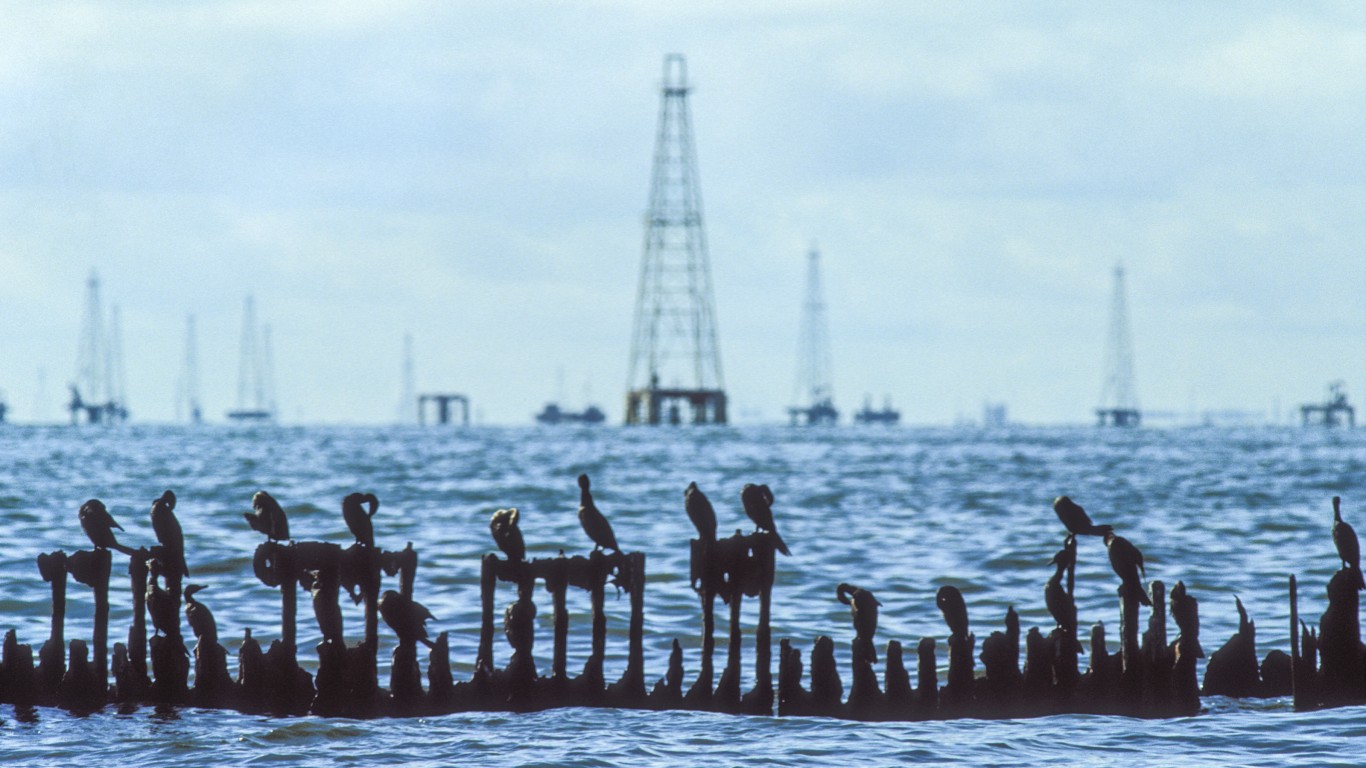
Exxon faces huge hurdles that do not appear to be baked in to the stock price. First, the ongoing takeover of Venezuela could be messy. It is unclear who will fight to control the government. Certainly, the U.S. will be in the battle. Yet, there is no good guess about how long that conflict will go on. It is not easy to control a country with 30 million residents spread over 350 million square miles, much of it mountainous. The U.S. may still need to put its military on the ground to control the nation.
Next, it is unclear how badly the oil infrastructure has been damaged by neglect. Exports have dropped from 3 million barrels a day to about a third of that. How much of that is due to sanctions and how much to disrepair? Additionally, to find and produce new oil will take years and cost billions of dollars. The Trump administration may underwrite that. However, the president is out of office in three years. Bob McNally, president of District of Columbia-based consulting firm Rapidan Energy Group, told CNN, “Venezuela can be a huge deal but not for 5 to 10 years.”
Another question is how valuable the crude is the day it comes out of the ground. Reuters makes this point: “To start, most of Venezuela’s oil reserves, located in the Orinoco belt, are classified as heavy and extra‑heavy. These highly viscous grades must be blended with diluent and upgraded into lighter oil to be extracted, transported and processed. All this raises the production costs.” At what price, a decade from now, will Exxon and Chevron break even?
Finally, there is the simple price of oil worldwide. Benchmark West Texas Intermediate traded at $80 a barrel just less than a year ago. It trades at $58 today. Overabundance is one reason for this. More oil from major fields could take that price even lower.
Venezuela may have 20% of the world’s proven oil reserves. However, that does not mean Exxon and Chevron can make money from it.
Marathon Petroleum to Reap a Windfall on Venezuela Oil Boom






 Top Gaining Stocks
 Top Losing Stocks