


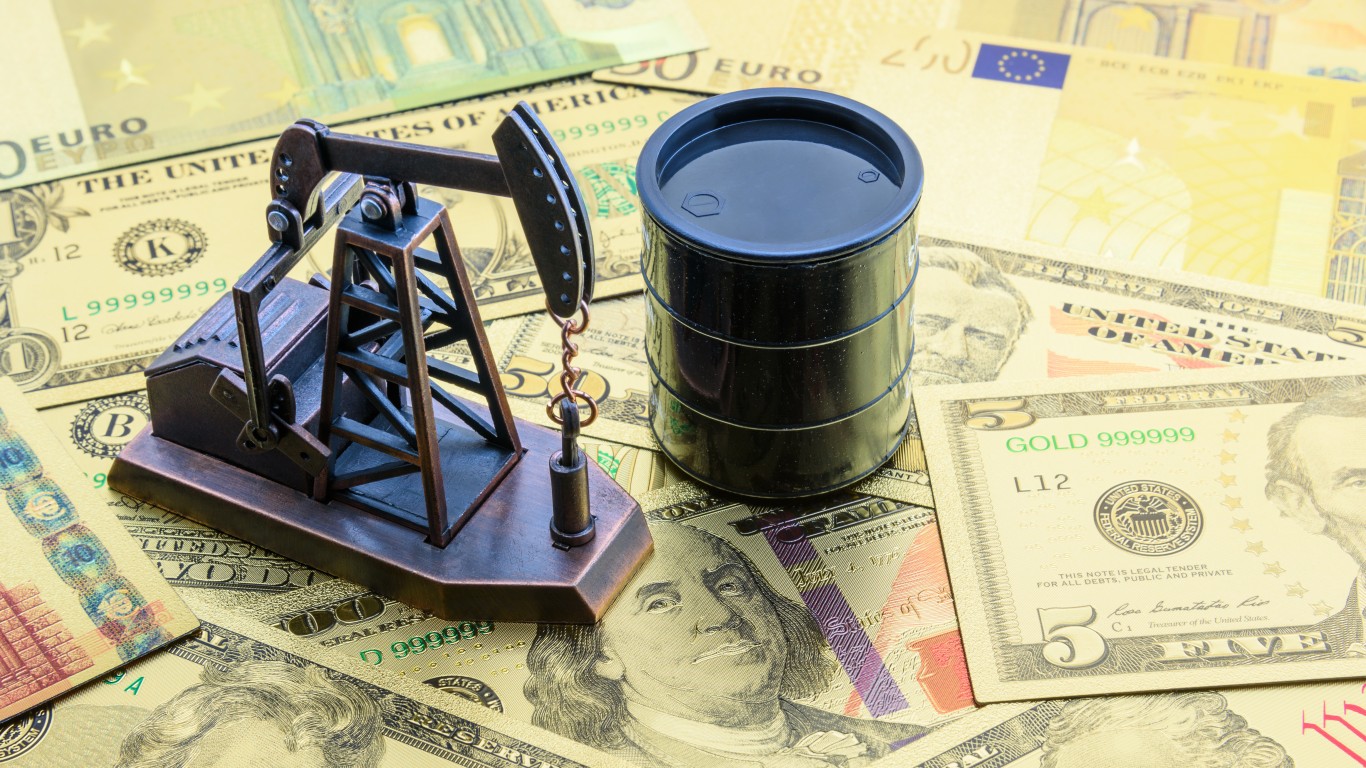
President Trump recently hosted oil executives at the White House to promote his plan for rebuilding Venezuela’s oil industry. He outlined billions in investments from U.S. companies, backed by security guarantees, to revive production from around 800,000 barrels per day to potentially 3 million over a decade.
While presented as a key opportunity for the U.S. oil industry, Exxon Mobil (NYSE:XOM | XOM Price Prediction) showed little enthusiasm. CEO Darren Woods called Venezuela “uninvestable” without major reforms to its legal and commercial systems, noting the company would carefully weigh risks before going into the country again after losing billions from two prior asset seizures.
Trump was not pleased that Exxon was not onboard with the plan and told reporters he is “inclined” to exclude Exxon from Venezuela, criticizing its response as “playing too cute.” For Exxon investors, though, if Trump makes good on his threat and locks out Exxon, they should rejoice at the outcome.
A Seismic Shock to the System
The world was shocked to awaken Jan. 3 to the news of the U.S.-led raid on Caracas that resulted in the capture of Venezuelan President Nicolas Maduro and his wife. Maduro is now in U.S. custody, with Vice President Delcy Rodríguez serving as interim leader.
Trump announced that the U.S. would oversee Venezuela’s operations during the transition, including indefinite control over oil sales to ensure stability and revenue protection. An executive order shields these revenues from legal claims. This shift aims to access Venezuela’s 303 billion barrels of reserves, mostly heavy crude from the Orinoco Belt, but it has raised concerns about long-term political risks and potential policy reversals under future administrations.
Exxon’s Rational Reluctance
Exxon has valid reasons for hesitation. It doesn’t want to experience deja vu all over again. Its assets in Venezuela have been nationalized twice, with the most recent in 2007 under former strongman Hugo Chavez. Although Exxon sued and was awarded about $12 billion in compensation through international arbitration, it has recovered only a small portion. Trump has stated that past debts will not be addressed, emphasizing instead that companies will earn far more through new investments.
ConocoPhillips (NYSE:COP), which faced similar nationalization and is owed $12 billion as the largest non-sovereign creditor, shares this caution. CEO Ryan Lance highlighted these unresolved debts during the White House meeting. Other majors like Chevron (NYSE:CVX) maintain limited operations, producing around 200,000 barrels per day, and plan modest increases, but will avoid any large-scale commitments without better conditions or higher oil prices.
The Oil Industry’s Mixed Feelings on Rebuilding
While some industry players support the initiative, major oil companies remain hesitant. Repsol aims to triple its current 45,000 barrels per day output, and independent driller Armstrong Oil & Gas views Venezuela as “prime real estate.”
However, challenges include mismanagement, sanctions, and the need for additional processing to convert Venezuela’s heavy crude into usable products. Halliburton (NYSE:HAL) exited the country in 2019 due to U.S. sanctions and later sued over damages. France’s TotalEnergies (NYSE:TTE) has stayed through negotiations but faces uncertainties. In contrast, refiners like Marathon Petroleum (NYSE:MPC) could benefit indirectly, with its Garyville refinery poised to handle 20% to 30% of increased Venezuelan exports, as it specializes in heavy crude processing.
Why Investors Should Celebrate a Lockout
Locking Exxon out will spare it from the massive upfront costs the rebuilding effort will require, estimated at $10 billion to $20 billion for short-term rehabilitation to reach 1.5 million barrels per day, and up to $100 billion over 10 years for higher output. Achieving these levels would take years due to infrastructure decay and operational hurdles.
Current oil markets also face a glut, with prices already depressed at around $60 a barrel, or 22% below last year’s price. Added Venezuelan supply could lower them further, impacting all producers. Exxon would still experience the pricing effects, and it might miss out on the revenue stream its Baton Rouge facility could generate from processing, but it avoids committing billions on uncertain returns.
Instead, it can continue prioritizing its profitable assets like the Permian Basin and Guyana discoveries, preserving capital for dividends and stock repurchases rather than risky ventures.
Key Takeaway
Excluding Exxon from Venezuela carries risks, as the country holds vast reserves that could offer long-term opportunities. However, much of the oil is heavy crude requiring extra processing and diluent imports, adding complexity and costs.
Overall, getting locked out of Venezuela protects Exxon investors from political instability, unrecovered past losses, and market pressures, allowing it to focus on stable, high-return projects instead. That’s an outcome investors should welcome.









 Top Gaining Stocks
 Top Losing Stocks