


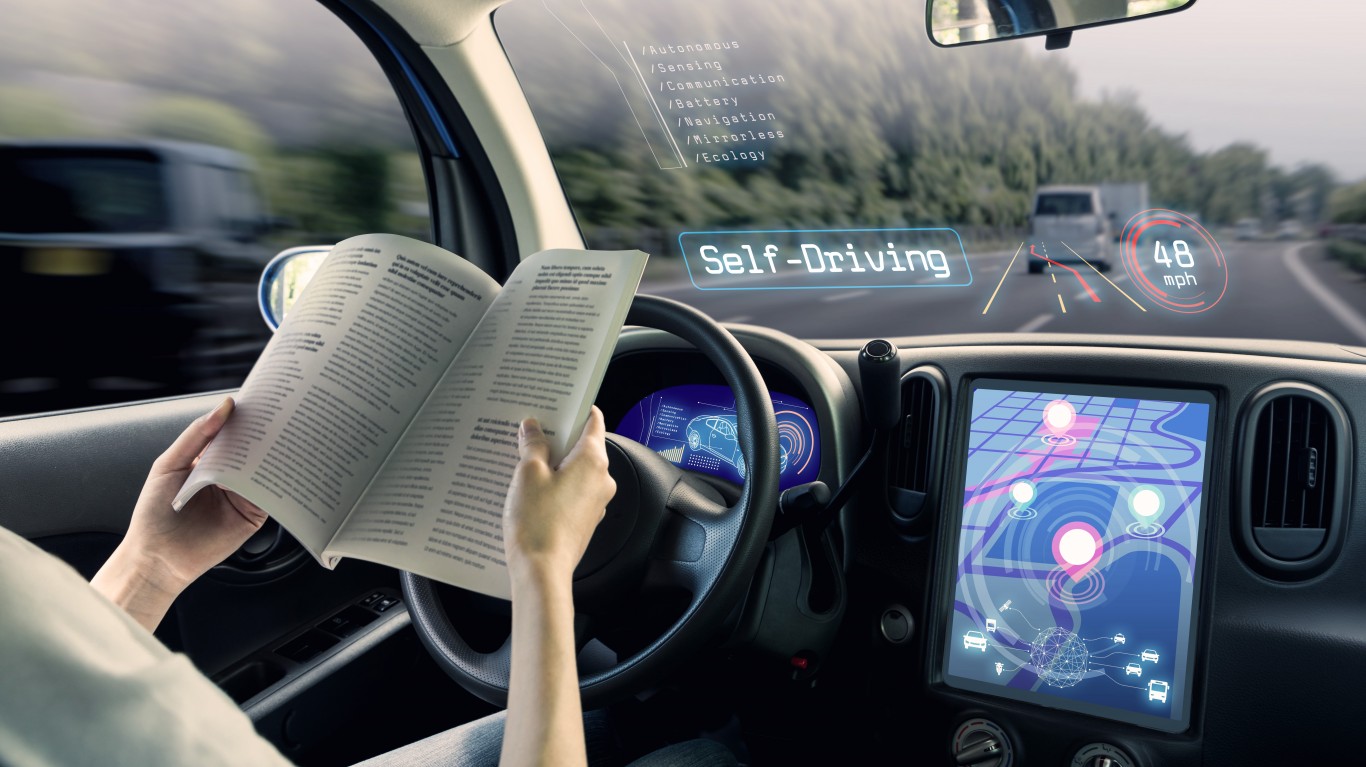
Just a few days ago, AI chip king Nvidia (NASDAQ:NVDA | NVDA Price Prediction) announced that it’s about to join the robotaxi race, with a plan to test its own offering by next year. Undoubtedly, with a growing number of rivals already revving their engines ahead of the great robotaxi rollout, one just had to think that Nvidia was bound to make a big splash in a big market that could mint many winners across the board.
With an impressive autonomous driving platform already in place and a ton of tech partners that could help it along the way, I certainly wouldn’t bet against the AI chip giant as it looks to new growth pathways to go down.
Of course, with Vera Rubin ready to launch in the second half and a pipeline of new AI chips that could power many years’ worth of high double-digit percentage growth, Nvidia certainly doesn’t have to expand into the autonomous vehicle (AV) space to warrant its high, but certainly not overheated 46.7 times trailing price-to-earnings (P/E) multiple.
As is the case with most Magnificent Seven companies, though, it’s all about expanding into new markets to keep the explosive growth going for longer. And with Nvidia announcing its intent to get a piece of the evolving robotaxi market with a Level 4 self-driving service, questions linger as to which companies will come out ahead come 2030, when more robotaxis are rolling on the roads than ever before.
Jensen Huang believes in physical AI and robotics. There’s no bigger robotics opportunity than autonomous driving
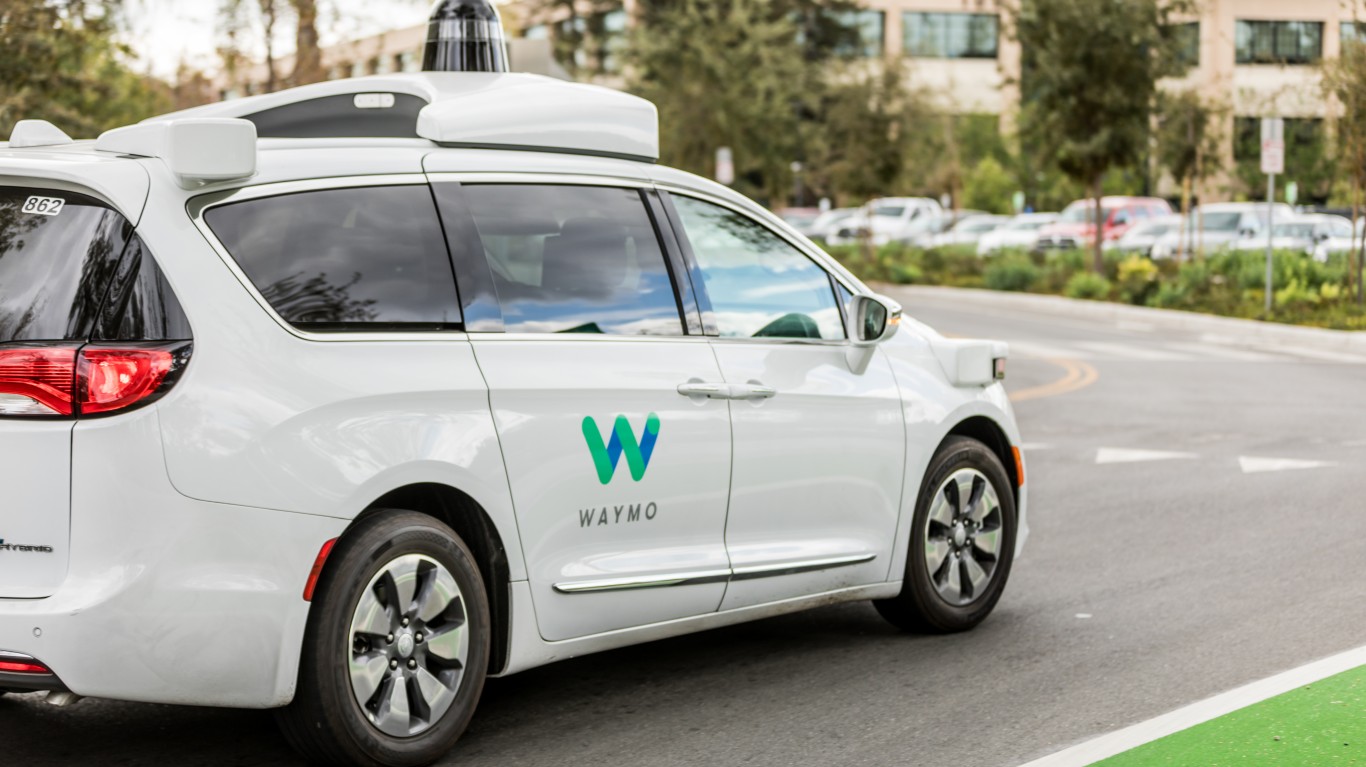
Given that autonomous driving is an AI problem, it’s only natural to think that one of the biggest leaders of the AI revolution, Nvidia, will be best able to come up with an optimal solution. Although it’s far too early in the game to tell how Nvidia is going to stack up against the likes of Waymo, Tesla (NASDAQ:TSLA), or even Amazon (NASDAQ:AMZN) Zoox, I certainly wouldn’t count Nvidia out of the game as the industry matures and individual robotaxi players look to find ways to differentiate themselves.
When it comes to differentiation within robotaxis, it’s the safety track record that comes out on top. To have the safest solution on the roads, there must be an AI solution in place that knows how to react and respond correctly as quickly as possible.
Undoubtedly, with the robotics revolution (some tout 2026 as being the year of robotics and physical AI) upon us, expanding into self-driving robotaxi services just seems like a natural move for an AI titan that’s doing a great job of diversifying beyond just GPUs.
Whether we’re talking about the latest Groq deal (for its LPU tech and talent) or collaborating with a large number of industry leaders, I think Nvidia has the potential to become more of an AI disruptor than just a maker of GPUs over the coming decade.
Nvidia is becoming far more than just a GPU maker
AI is a powerful disruptor, and firms that leverage it effectively, such as Nvidia, may be able to break into (and perhaps dominate) new lucrative businesses with relative ease.
Either way, I’m a big fan of Nvidia’s “Alpamayo” family of chain-of-thought models as well as the DRIVE Thor superchip, which are custom-tailored for autonomous driving. Such cutting-edge hardware and AI might mint the firm as a top contender in a few years, even though few investors saw Nvidia making such an aggressive push into the space before the latest announcement.
With the right infrastructure in place and partners (think Uber (NYSE:UBER)), the firm could accelerate’s own robotaxi service ambitions sooner than most would expect. It’s going to be a fierce battle in the robotaxi race in the next three years, and Nvidia might have what it takes to outclass the competition.








 Top Gaining Stocks
 Top Losing Stocks