



The Janus Henderson Securitized Income ETF (NYSEARCA:JSI) offers a 5.7% yield through securitized debt, an income strategy most retail investors overlook. With $1.4 billion in assets since launching in November 2023, this fund remains under the radar despite delivering consistent monthly dividends.
How JSI Generates Income
JSI generates income through securitized debt markets that most retail investors never access directly. The fund’s portfolio centers on agency mortgage-backed securities from Fannie Mae (OTCQB:FNMA) and Freddie Mac (OTCQB:FMCC), which provide government-backed stability while delivering coupons up to 6.5%. Management supplements this core with tactical allocations to asset-backed securities, commercial mortgage debt, and collateralized loan obligations.
The securitized approach fundamentally changes the income equation. Instead of waiting for companies to generate profits and declare dividends, JSI collects interest payments from underlying mortgage pools each month. This structure allows the fund to spread risk across 514 different positions while maintaining concentrated exposure to its highest-conviction opportunities, with the top 10 positions representing 45% of assets.
Evaluating Distribution Safety
JSI’s monthly distributions demonstrate the stable income characteristics of securitized debt. Over the past year, payments ranged from $0.21 to $0.32 per share, with December consistently showing elevated payouts due to year-end income adjustments.
The fund’s heavy allocation to agency MBS provides a crucial safety cushion. These securities carry implicit government backing through Fannie Mae and Freddie Mac, virtually eliminating default risk. The primary risk is interest rate sensitivity. When rates rise, MBS prices typically decline as prepayment speeds slow and duration extends. However, active management allows portfolio adjustments across rate cycles.
JSI’s performance demonstrates why investors should evaluate both yield and price stability when assessing income ETFs. The fund delivered approximately 12.8% total return over the past year by combining its 5.7% yield with modest price appreciation of around 7.1%.
Recent trading in a tight range shows the price stability that makes securitized debt attractive for income-focused portfolios.
The fund’s 0.49% expense ratio reflects the cost of active decision-making across securitized markets. Management earns this fee by rotating capital between sectors as relative values shift, evidenced by 94% portfolio turnover that captures opportunities in agency MBS, asset-backed securities, and collateralized loan obligations as they emerge.
A Focused Alternative
JSI’s distribution appears sustainable based on credit quality of underlying holdings and structural income from securitized assets. Monthly payment variability is typical for MBS-focused strategies.
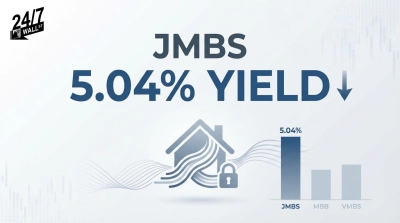
Investors seeking similar exposure with narrower focus should consider the Janus Henderson Mortgage-Backed Securities ETF (NYSEARCA:JMBS | JMBS Price Prediction). With $7 billion in assets and a 5.0% yield, JMBS concentrates exclusively on mortgage-backed securities. Launched in 2018, JMBS offers a longer track record and lower 0.22% expense ratio. The fund provides pure-play exposure to agency and non-agency MBS without the CLO and ABS exposure JSI includes. JMBS trades with higher liquidity and has demonstrated consistent performance through multiple rate cycles, offering a more established alternative in the securitized income space.













 Top Gaining Stocks
 Top Losing Stocks