



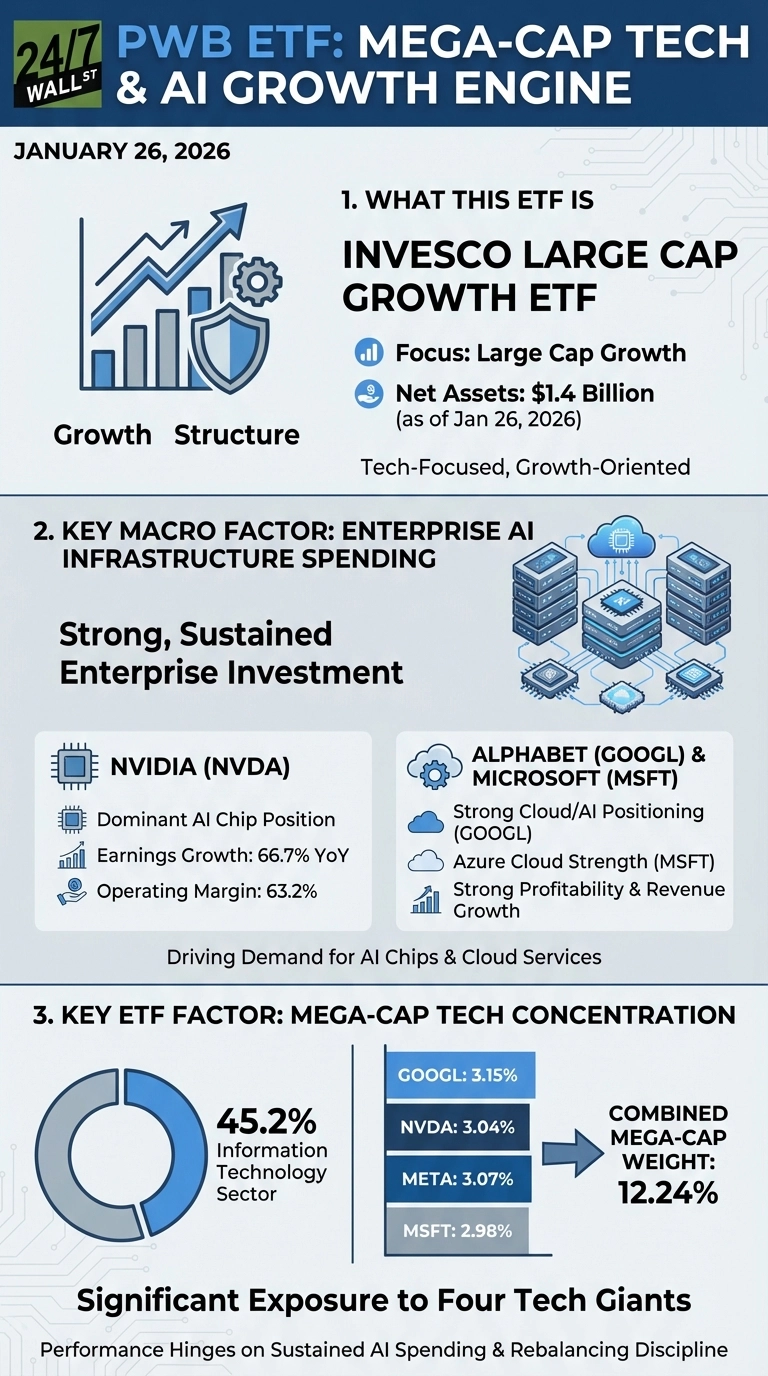
The Invesco Large Cap Growth ETF (NYSEARCA:PWB) has climbed 6% year to date and 25% over the past year, riding a wave of mega-cap technology strength that shows no signs of breaking. The fund’s returns tell a clear story: concentrated exposure to four tech giants is driving performance.
While the fund holds a diversified portfolio of 100 growth stocks, Alphabet Inc. (NASDAQ:GOOGL | GOOGL Price Prediction), NVIDIA Corp. (NASDAQ:NVDA), Meta Platforms Inc. (NASDAQ:META), and Microsoft Corp. (NASDAQ:MSFT) represent the engine behind its outperformance. These four holdings combine for 12% of the fund’s assets, amplifying the impact of their individual gains.
The AI Infrastructure Boom Isn’t Slowing Down
The macro factor driving PWB forward is straightforward: enterprise spending on artificial intelligence infrastructure remains robust, and the companies building that infrastructure are printing money. Alphabet’s net income surged 35% year-over-year in Q3 2025 as businesses adopted its Gemini AI models and expanded Google Cloud usage. NVIDIA tells an even more dramatic story—its data center business has transformed the company from a gaming chip maker into an AI infrastructure powerhouse, with earnings growth that reflects the scale of enterprise AI adoption.
This trend has legs because AI adoption is still in early innings. Companies are moving beyond experimentation to production deployments, which means sustained capital expenditure on chips, cloud services, and infrastructure. Watch quarterly earnings reports from these four companies—particularly revenue growth in cloud and data center segments—to gauge whether demand is holding. If those growth rates stay above 20%, PWB’s tech-heavy portfolio will likely continue outperforming.
Concentration Risk Cuts Both Ways
PWB’s heavy weighting toward mega-cap technology creates a double-edged sword. Information Technology represents 45% of total holdings, meaning the fund’s fate is tied to a narrow slice of the market. When Alphabet surged 68% over the past year, it pulled the fund higher—but concentration also means vulnerability when momentum shifts.
The fund’s quarterly rebalancing process matters here. Check the issuer’s fact sheet and holdings files each quarter to see whether these four positions are growing or shrinking as a percentage of assets. If the fund trims winners to maintain target weights, that could limit upside capture during continued mega-cap strength. Conversely, if these stocks pull back and the fund rebalances into them at lower prices, that mechanical buying could support future returns.
The Bottom Line
PWB’s next 12 months hinge on whether enterprise AI spending sustains current growth rates and whether the fund’s rebalancing discipline helps or hurts performance as mega-cap valuations stretch.










 Top Gaining Stocks
 Top Losing Stocks