


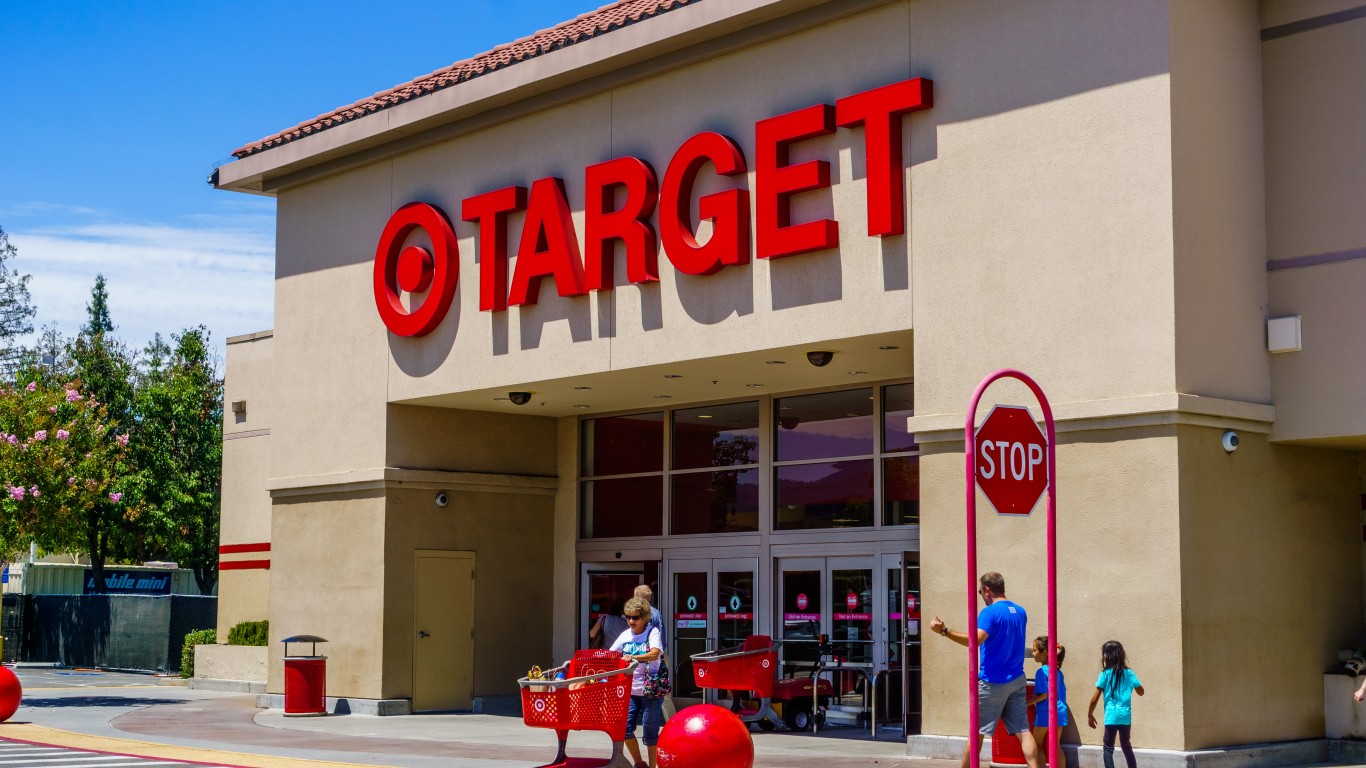
A UBS equity research analyst covering hardlines, broadlines, and food retail went on live TV this week with a straightforward message about Target Corporation (NYSE:TGT | TGT Price Prediction): the retailer is making a serious bet on itself in 2026, and it just might work.
The analyst, who carries a Buy rating on Target, put it plainly: “Target has had some challenges on the execution front over the last couple of years. This year, in 2026, they are making significant investments, in the area of $2 billion, with one billion dollars in additional capital investment and a billion dollars of additional operating expense investment.”
That $2 billion breaks into two distinct buckets. The capital side funds store remodels and physical upgrades. The operating expense side funds more labor on the floor and re-merchandising of key categories. Together, the thesis is that Target drifted from what made it special and now needs to recommit to being a destination for style, value, and convenience.
The Numbers Behind the Bet
The backdrop for this call is genuinely mixed. Comparable sales declined 2.5% in Q4, and that marked the fourth straight quarter of same-store sales declines. Revenue for the full year came in at $104.78 billion, down 1.68% year over year. Transactions fell, margins compressed, and the stock spent much of last year in the $80s.
But the stock has recovered sharply. From its November 2025 low near $85, shares have climbed roughly 36% to around $115.75. That recovery accelerated after Target’s Q4 report showed adjusted EPS of $2.44 against a $2.16 estimate and management guided for roughly 2% net sales growth in 2026 with full-year EPS of $7.50 to $8.50.
CEO Michael Fiddelke added a notable data point: “Target saw a healthy, positive sales increase in February, serving as an important milestone on our path back to growth this year.” That February positive comp was the first encouraging sequential signal after a long stretch of declines.
The Real Challenge: Value Perception
The UBS analyst was direct about the central knock on Target. Target has a somewhat premium feel relative to Walmart and Costco, which is a headwind when consumers are focused on saving money. That value perception gap is hard to close quickly, especially with consumer sentiment sitting at 56.4, deep in pessimistic territory.
Walmart is capturing upper-income shoppers while also owning value. Costco commands loyalty through its membership model with an 89.7% worldwide renewal rate. Target sits in a trickier middle ground.
The $2 billion investment is essentially Target’s answer to that positioning problem. Better stores, better staffing, and sharper merchandising are the tools. Whether they close the gap depends on execution, which has been inconsistent. If the new leadership team under Fiddelke can deliver on the February momentum and convert the $2 billion into traffic and transactions, the current valuation at roughly 14x trailing earnings reflects a market still weighing whether the turnaround is in its early innings or already priced in.






 Top Gaining Stocks
 Top Losing Stocks