


Costco (NASDAQ:COST | COST Price Prediction) and Target (NYSE:TGT) just delivered earnings that crystallize the gap between premium membership retail and traditional discretionary discount.
Costco posted another beat with comparable traffic still climbing. Target, under its newly seated CEO Michael Fiddelke, eked out a bottom-line beat on shrinking sales. Same sector, same shopper, very different operating realities.
Membership Flywheel Hums. Discretionary Cart Stalls.
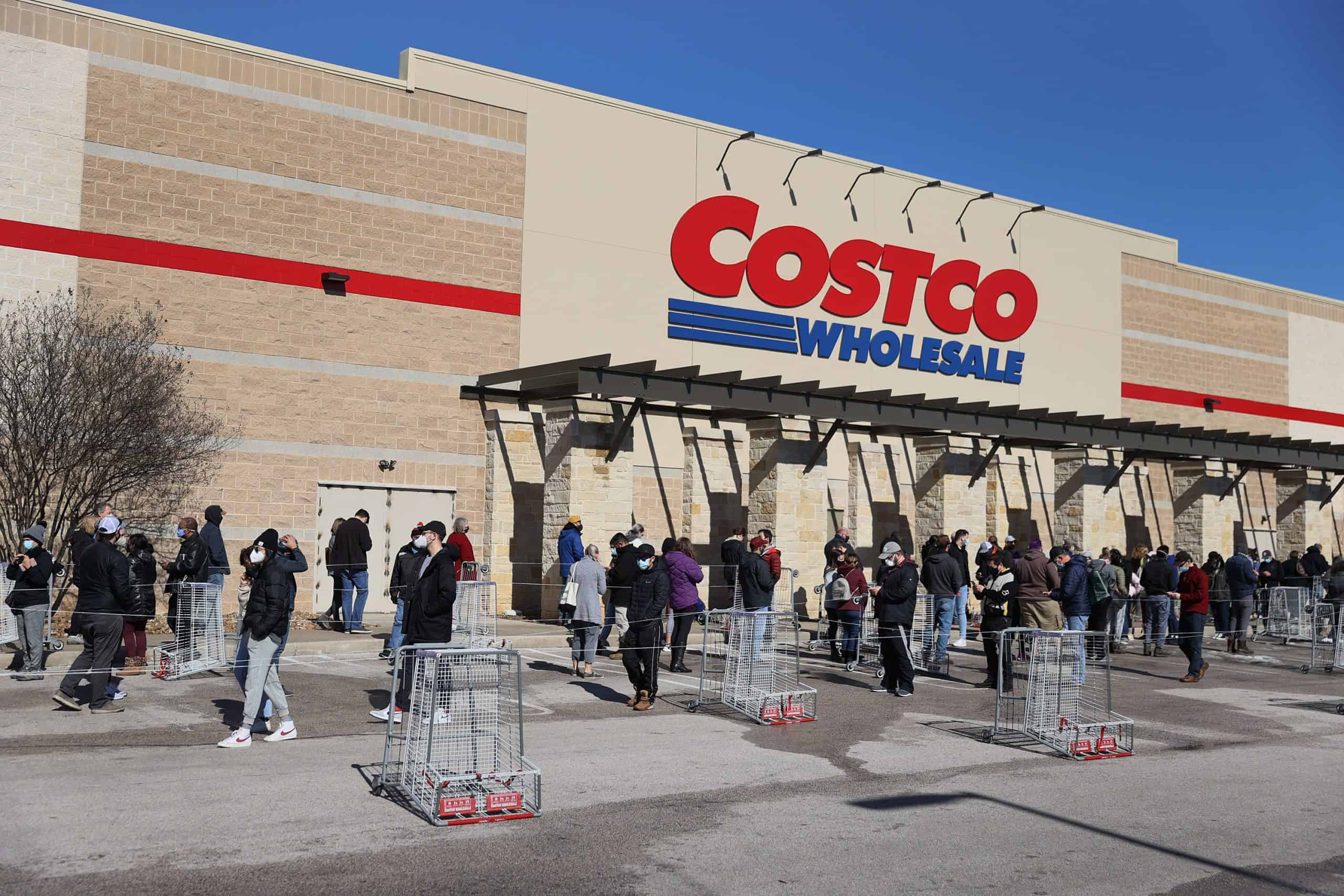
Costco’s Q2 FY2026 print was textbook. Revenue hit $69.60 billion, up 9.22% year over year, and EPS came in at $4.58 against a $4.54 consensus. The real engine is the membership base: 82.1 million paid members, an 89.7% worldwide renewal rate, and $1.35 billion in fee income, up 13.6%. Executive members now drive 75.8% of sales. Digital scaled alongside it, with digitally-enabled comps surging 22.6% and app visits up 63%.
Target’s quarter told the opposite story. Adjusted EPS of $2.44, comfortably beating the $2.16 consensus, but revenue slipped to $30.45 billion, down 1.5% year over year. Comparable sales fell 2.5%, with store comps off 3.9% and transactions down 2.9%.
Bright spots came from non-merchandise revenue, which grew over 25%, with Roundel ads and Target Circle 360 memberships carrying the narrative.
One Scales Globally. The Other Rebuilds the House.
| Lens | Costco | Target |
| Core Bet | Membership flywheel and Kirkland Signature | Merchandising reset and digital ad growth |
| Footprint Move | ~28 net new warehouses in FY2026 | 17 net new stores in FY2025 |
| Margin Story | Gross margin 11.02%, up 17 bps | Gross margin 26.6%, up 40 bps on lower shrink |
| Valuation | Forward P/E 50 | Forward P/E 16 |
Costco is leaning harder into international, where “Other International” comps led at 13%, and into private label depth with new Kirkland launches like ABF Blackened Salmon and Crispy Wings.
Target, meanwhile, is in repair mode. Fiddelke wants to “strengthen our merchandising authority” and lean on marketplace, which grew over 30%. Both face tariff exposure, but only one has an 89.7% renewal rate cushion.

The Next Test Is Traffic, Not Margin Math
For Costco, I will be watching whether traffic stays above 3% globally and whether the 13% dividend hike to $1.47 per share signals more aggressive capital return ahead.
For Target, the question is simpler: can transactions actually turn positive? Guidance calls for ~2% sales growth and full-year EPS of $7.50 to $8.50, which leaves no room for another markdown cycle. Clothing PCE of $580.5 billion in February 2026 suggests discretionary capacity exists; converting it into Target carts is the harder part.
Why I Lean Toward Costco, but Target Tempts the Contrarian in Me
Personally, Costco is the easier business to underwrite. The membership economics, 29.6% return on equity, and a 52-week high of $1,062.65 all support a defensive growth thesis, even if a forward multiple near 50 leaves little margin for error.
Target intrigues me as a turnaround. Its 235th consecutive quarterly dividend and a 3.47% yield pay you to wait. If Fiddelke restores positive comps by midyear, the gap between these two stocks narrows fast. Until then, I would rather own the flywheel than the fixer-upper.







 Top Gaining Stocks
 Top Losing Stocks