


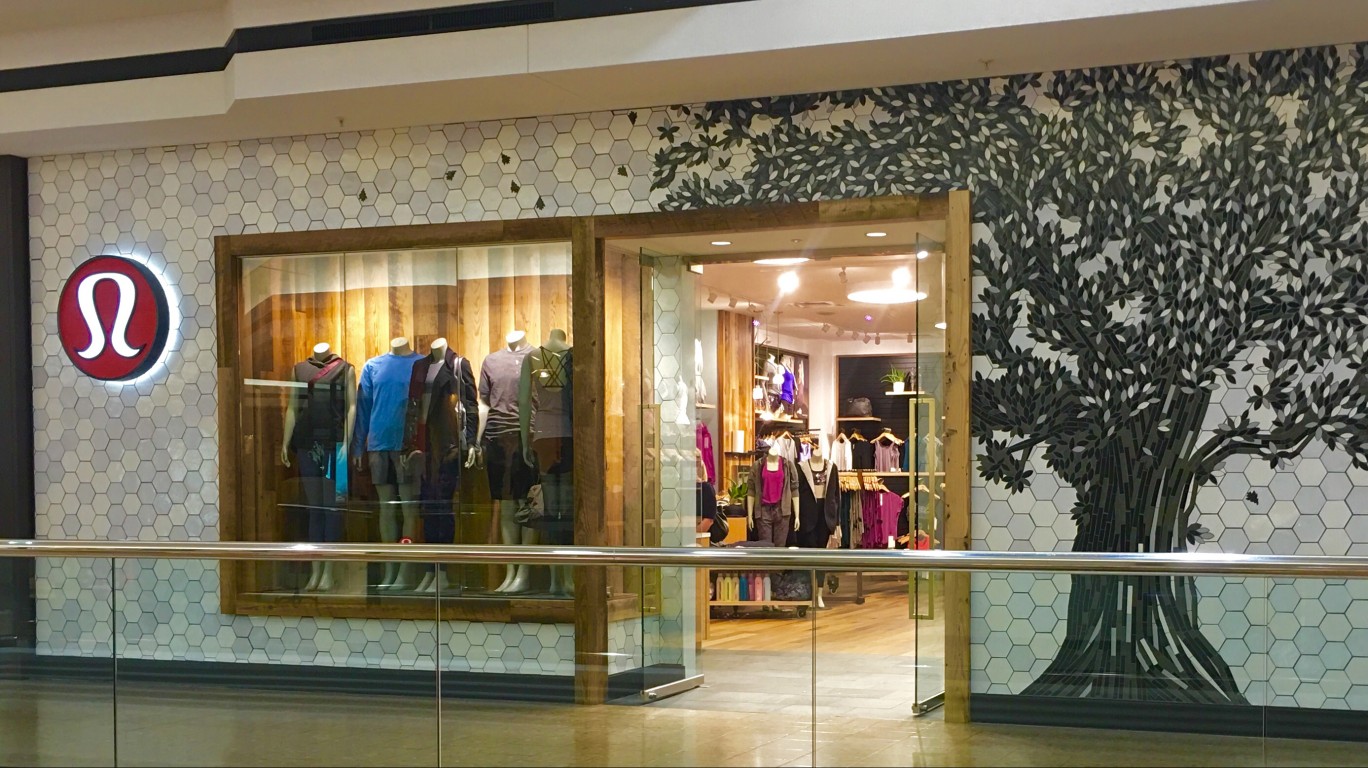
Lululemon Athletica (NASDAQ: LULU | LULU Price Prediction) reported Q4 fiscal 2025 earnings after the close on March 17, 2026, delivering beats on both revenue and earnings per share. The stock’s reaction was muted, and it remains under significant pressure. Shares are trading near their 52-week low of $156.64, down 51.3% over the past year. The stock’s sharp decline has drawn attention from both bulls and bears, with the outcome depending heavily on which set of facts carries more weight.
The Bull Case
Lululemon beat estimates where it counted. Q4 revenue came in at $3.64B, ahead of the $3.576B estimate, while diluted EPS of $5.01 also topped expectations. International momentum is real: international revenue grew 22% for the full year, with China Mainland comparable sales up 30% in Q4. Geographic diversification is becoming a genuine growth engine for Lululemon.
Governance is quietly improving. Chip Bergh, former president and CEO of Levi Strauss, joined the board effective March 13, 2026, bringing deep global retail and branding expertise. New product lines, including Unrestricted Power and ShowZero, are entering the market in 2026 with early positive guest response noted by management.
Valuation has compressed dramatically. The trailing P/E now sits at just 11x, unusually low for a brand with Lululemon’s historical pricing power. The analyst consensus target price is $205.88, implying meaningful upside from current levels. The base case model target is $205.56, representing 29.1% upside.
The Bear Case
The guidance is the problem. Full-year 2026 revenue growth is forecast at just 2% to 4%, and FY2026 diluted EPS guidance of $12.10 to $12.30 implies a decline from the $13.26 earned in FY2025. That is not a recovery story. That is a company guiding investors to expect less.
The core North American business is deteriorating. Americas revenue fell 1% for the full year, and US revenue declined 6% in Q4. Gross margin contracted 550 basis points in Q4 to 54.9%, and operating margin fell 660 basis points to 22.3%. Tariff impacts are not yet reflected in guidance, adding an unquantified downside risk.
Leadership instability compounds the concern. The company is operating under interim co-CEOs Meghan Frank and André Maestrini with no permanent CEO named. Founder Chip Wilson has launched a proxy fight, publicly criticizing the company’s discounting strategy and calling product design stale. Insider activity has trended toward net selling.
The Verdict
The valuation is genuinely compressed and international growth is real. Yet, the company is guiding to lower earnings than the prior year, lacks a permanent CEO, faces a proxy fight, and carries tariff exposure explicitly excluded from guidance. Thirty of 34 analysts rate it a Hold. That consensus reflects a story where analysts are waiting for more clarity before shifting their outlook.









 Top Gaining Stocks
 Top Losing Stocks