


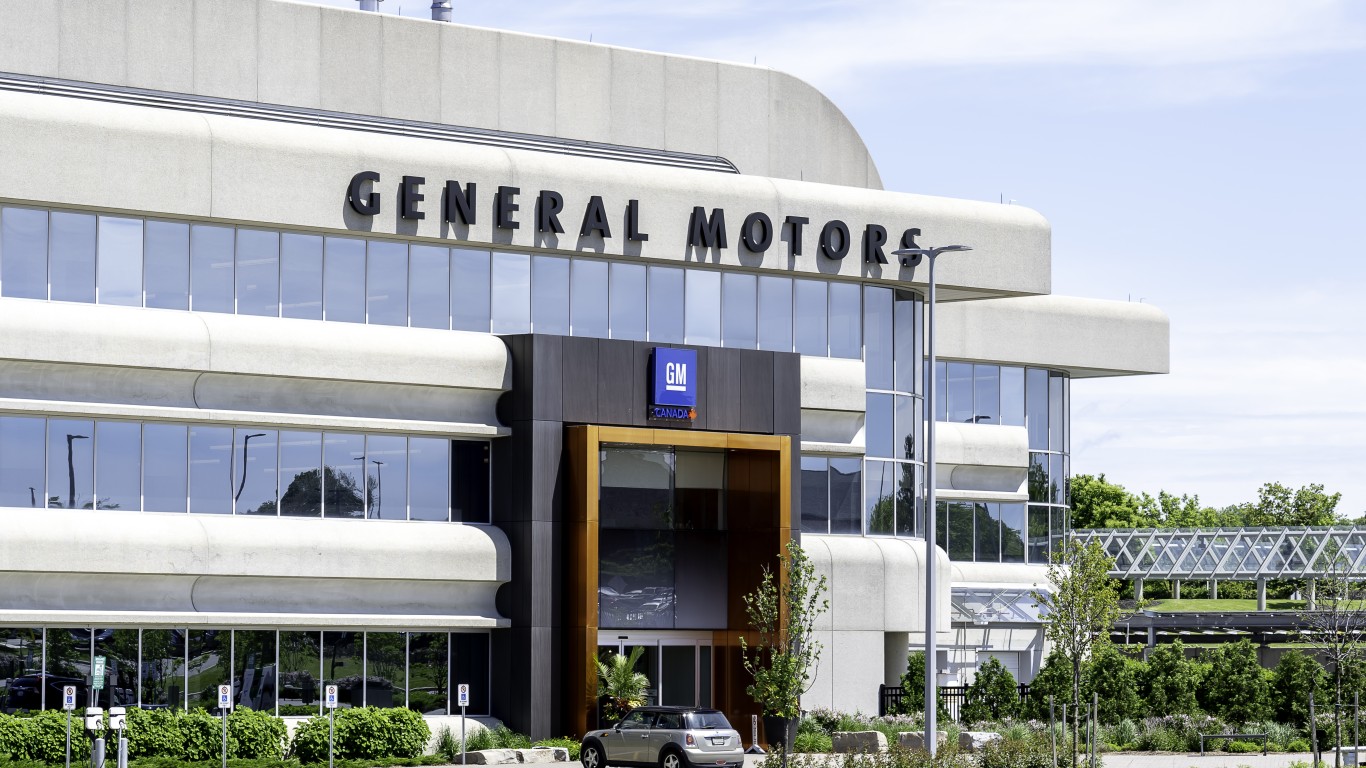
General Motors (NYSE:GM | GM Price Prediction) garnered a price target raise to $108 from $105 from Citi on April 29, which maintained a Buy rating after the automaker’s Q1 2026 earnings beat. Wells Fargo also raised its target to $59 from $57 but kept an Underweight call, leaving Wall Street split on GM stock. The contrast captures the tension: a clear earnings beat and guidance raise running into tariff math and raw-material pressure.
For prudent investors, the question is whether General Motors is genuinely defying the macro or simply borrowing time.
| Ticker | Company | Firm | Action | Old Rating | New Rating | Old Target | New Target |
|---|---|---|---|---|---|---|---|
| GM | General Motors | Citi | Price Target Raise | Buy | Buy | $105 | $108 |
| GM | General Motors | Wells Fargo | Price Target Raise | Underweight | Underweight | $57 | $59 |
The Analyst’s Case
Citi cites GM’s Q1 beat despite a volatile geopolitical backdrop, improved financial performance, and a lower share count from steady buybacks, framing General Motors as a self-help story where margins expand even as volumes slip. Wells Fargo sees a different picture, flagging that shares moved up just 1% despite a beat and a full-year guide raise on IEEPA.
The firm noted limited color on offsetting $0.5B in raw materials and a rest-of-year guide implying $1B in year-over-year EBIT despite $3B in costs.
Company Snapshot
General Motors operates through GM North America, GM International, and GM Financial, with brands including Chevrolet, GMC, Cadillac, and Buick. Q1 2026 adjusted earnings per share came in at $3.70 versus the $2.62 consensus, the fourth consecutive EPS beat, on revenue of $43.62 billion.
General Motors’ adjusted EBIT rose 22% year over year (YoY) to $4.25 billion, with North America’s adjusted EBIT margin expanding to 10.1%. Management raised full-year adjusted EPS guidance to $11.50 to $13.50 and trimmed gross 2026 tariff costs to $2.5 billion to $3.5 billion after a Supreme Court IEEPA ruling.
Why the Move Matters Now
GM stock trades at $76.63 with a market cap near $70.3 billion and a P/E ratio of 24x. General Motors shares are down 6% year to date but still up 63% over the past year. Capital returns reinforce the bull case, with $800 million repurchased in Q1 and the diluted share count down to 926 million from 1,002 million.
The bear case is concrete: General Motors’ U.S. market share slipped to 16.5% from 17.2%, worldwide vehicle sales fell to 1.295 million units, and a $1.08 billion EV capacity realignment charge hit GAAP results. CEO Mary Barra noted that “the war in Iran has raised our cost and its duration remains uncertain.”
What It Means for Your Portfolio
General Motors stock offers a credible margin-expansion thesis backed by aggressive buybacks and an improving China business that just posted its sixth consecutive profitable quarter. The split between Citi at $108 and Wells Fargo at $59 underscores that tariffs, raw-material inflation, and EV transition costs could still pressure later quarters. For broader sector context, see our recent auto sector tariff watch.
Watch for whether commodity inflation of $1.5 billion to $2 billion holds and whether the full-size pickup changeover in the second half preserves pricing discipline. The consensus General Motors stock analyst price target sits at $93.96, supported by 20 Buy ratings against 5 Holds and 2 Sells.
Position sizing should reflect the macro overhang, even as the operating story improves. GM stock looks research-worthy for investors comfortable with cyclical risk, with the next earnings report and tariff developments serving as key catalysts.











 Top Gaining Stocks
 Top Losing Stocks