


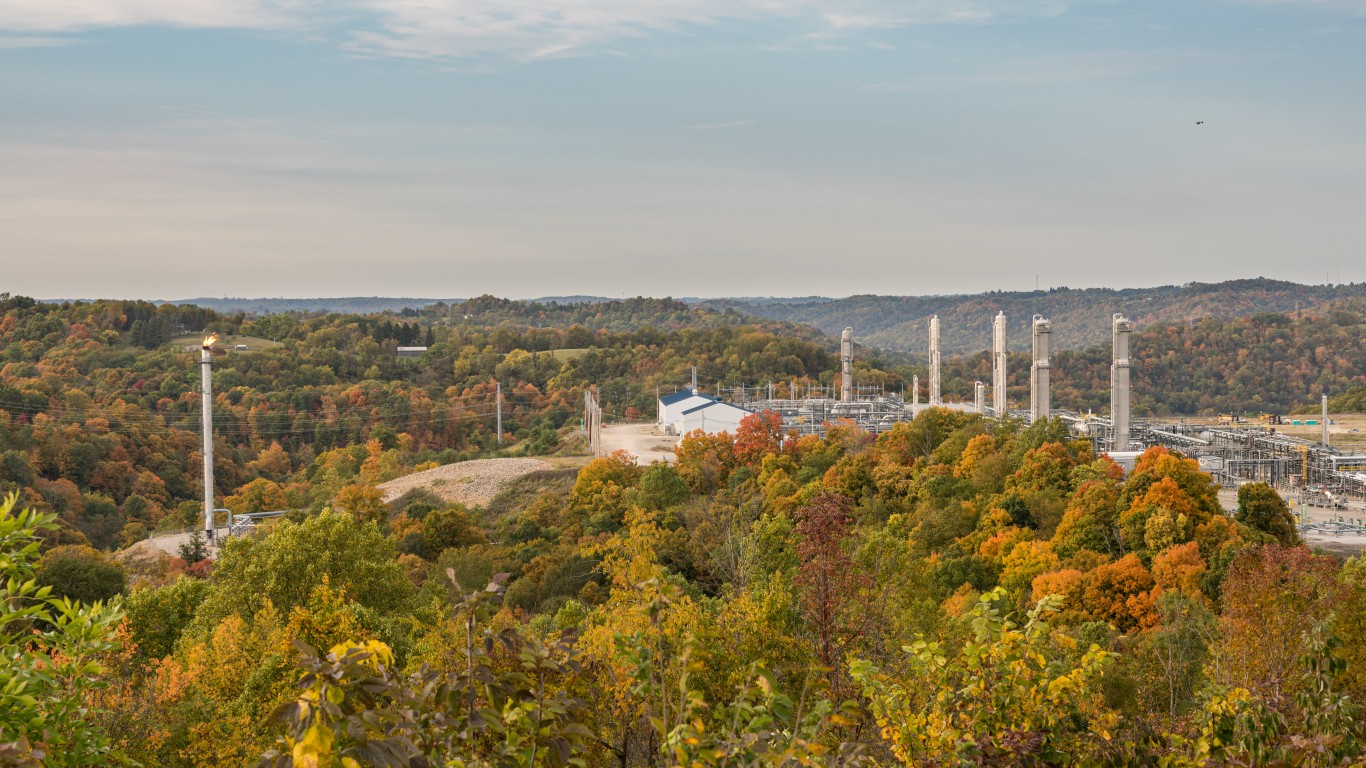
EQT Corporation (NYSE:EQT | EQT Price Prediction) has been a standout energy performer this year, gaining 6.58% over the past week, 10.44% over the past month and 26.88% year-to-date. Over the trailing q2 months, shares have advanced nearly 30%, with the stock recently touching a 52-week high of $68.24.
The Street consensus target sits at just $67.11, barely above where shares trade today, but BMO Capital analyst Phillip Jungwirth raised his price target on EQT to $76 from $68, maintaining an Outperform rating. That target represents significant upside from the current price of $66.86 and sits well above the consensus of $67.11. Jefferies independently carries the same $76 target, while J.P. Morgan’s Arun Jayaram maintains a Buy with a $72 target.
Phillip Jungwirth’s $76 EQT Prediction
Jungwirth’s conviction centers on two reinforcing dynamics: outsized free cash flow generation driven by EQT’s integrated midstream platform and marketing capabilities to capture pricing dislocations, and continued momentum around in-basin demand and takeaway projects that support optionality around growth and improved differentials. The Q1 2026 setup is particularly compelling. CFO Jeremy Knop noted that “January and February performance already exceeds consensus Q1 free cash flow expectations by more than 30%”, driven by EQT selling approximately 98% of its production at first-of-month pricing, which settled at $7.22 per MMBtu for M2 and $7.46 per MMBtu for Henry Hub.
Key Drivers of EQT Stock Performance
- Free cash flow compounding: EQT generated $2.5 billion of free cash flow attributable to EQT in 2025, up from $684 million in FY 2024, with ~$3.5 billion projected in 2026. CEO Toby Rice projects “cumulative free cash flow attributable to EQT over the next 5 years totaling more than $16 billion.” That sustained cash generation funds debt reduction and shareholder returns simultaneously.
- Structural cost advantages from vertical integration: The Equitrans merger slashed gathering costs from $0.60/Mcfe to $0.08/Mcfe, and average well costs per lateral foot came in 13% lower year-over-year. These reductions expand margins at any gas price level.
- In-basin demand momentum: EQT estimates 6 to 7 Bcf per day of in-basin demand building this decade, anchored by approximately 45 gigawatts of data center capacity currently under construction, including 12 gigawatts in EQT’s core operating footprint. LNG offtake agreements totaling 4.5 mtpa with Sempra, NextDecade, and Commonwealth LNG starting 2030-2031 lock in long-duration demand.
What Will It Take for EQT to Reach $76?
With 624.27 million shares outstanding, a $76 price would imply a meaningful increase in market capitalization versus today’s $41,738,959,640 $41.74 billion. The conditions required: natural gas strip pricing holding near current levels to support the ~$3.5 billion 2026 free cash flow outlook; continued debt reduction toward the ~$4.7 billion net debt exit target; and in-basin demand projects advancing on schedule.
The primary risk is commodity price volatility, with Henry Hub currently trading near $2.94/MMBtu after normalizing from the January 2026 spike to $30.72. With 25% hedge coverage at a weighted average floor of $3.94/MMBtu and structural demand growth accelerating, BMO’s $76 target reflects a credible, fundamentals-backed case for meaningful appreciation.










 Top Gaining Stocks
 Top Losing Stocks