HP Shares Are Down 31% Over the Past Year Despite a Revenue Beat

Photo of David Beren
By David Beren Published

Quick Read

  • HP (HPQ) beat Q1 FY2026 revenue estimates at $14.44B (+6.9% YoY) and non-GAAP EPS of $0.81 versus $0.77 estimate, with AI PCs now representing more than 35% of PC shipments and Personal Systems revenue up 11% to $10.25B, yet gross profit fell 0.18% and operating income declined 10.18% as RAM costs now represent 35% of bill of materials. Dell (DELL) faces identical memory cost headwinds and AI PC transition pressures, with HP’s finance chief warning that memory volatility will persist into next year.

  • HP’s AI PC momentum cannot offset elevated memory costs and declining printing revenue, forcing the company to manage simultaneous margin compression from component inflation and a double-digit decline in PC unit shipments guidance for 2026.

This post may contain links from our sponsors and affiliates, and Flywheel Publishing may receive compensation for actions taken through them.
HP Shares Are Down 31% Over the Past Year Despite a Revenue Beat

© Ken Wolter / Shutterstock.com

HP Inc (NYSE:HPQ | HPQ Price Prediction) beat Q1 FY2026 estimates on both the top and bottom lines, yet shares have lost 31% over the past year and trade near their 52-week low of $17.56. Meanwhile, Reddit sentiment scores have settled in the 22-28 range, with 70% of records classified as bearish. AI PC momentum is real, but memory costs are absorbing the gains.

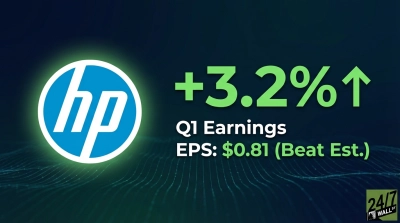
HP posted Q1 revenue of $14.44 billion, up 6.9% year over year, and non-GAAP EPS of $0.81 against a $0.77 estimate. Personal Systems revenue rose 11% to $10.25 billion, with AI PCs now accounting for more than 35% of total PC shipments. Gross profit was essentially flat, down 0.18% year over year, and operating income fell 10.18% despite that revenue growth. Management guided full-year non-GAAP EPS to the low end of $2.90 to $3.20 and flagged a double-digit decline in PC unit shipments for 2026.
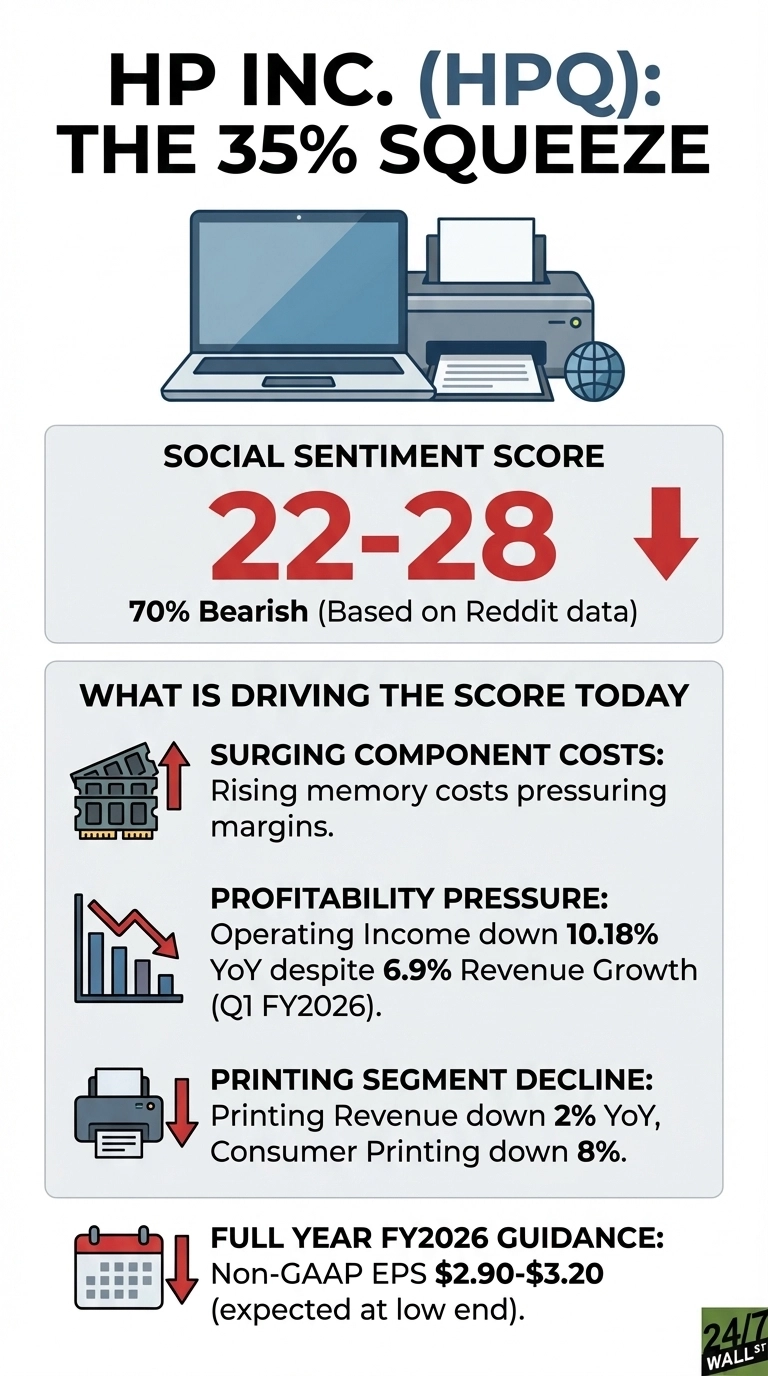
An infographic titled 'HP INC. (HPQ): THE 35% SQUEEZE' with an illustration of a laptop and a printer. It features a 'SOCIAL SENTIMENT SCORE' of '22-28' with a downward arrow, stating '70% Bearish (Based on Reddit data)'. Below, under 'WHAT IS DRIVING THE SCORE TODAY', four sections describe: 'SURGING COMPONENT COSTS' with an upward arrow and RAM sticks, citing 'Rising memory costs pressuring margins.'; 'PROFITABILITY PRESSURE' with a downward arrow and a bar chart, detailing 'Operating Income down 10.18% YoY despite 6.9% Revenue Growth (Q1 FY2026).'; 'PRINTING SEGMENT DECLINE' with a downward arrow and a printer icon, stating 'Printing Revenue down 2% YoY, Consumer Printing down 8%.'; and 'FULL YEAR FY2026 GUIDANCE' with a downward arrow and a calendar icon, showing 'Non-GAAP EPS $2.90-$3.20 (expected at low end).'
24/7 Wall St.
This infographic details HP Inc.’s social sentiment score, which indicates a bearish outlook, along with the key factors driving this sentiment, including component costs, profitability, and the decline of the printing segment. It also provides full-year FY2026 Non-GAAP EPS guidance.

Reddit’s Read on HP’s Memory Cost Problem

Discussion across r/wallstreetbets, r/investing, and r/stocks picked up sharply around the earnings release, with the peak engagement window logging 1,539 upvotes and 418 comments. Users are not dismissing the AI PC story but are focused on whether HP can translate unit growth into margin recovery while memory prices stay elevated. A thread in r/technology captured the concern, with one commenter noting: “It means your RAM is less stringently quality tested, which is bad. They also reduced shipping costs, which is good. I call it frogurt.”

RAM now represents 35 percent of bill of materials for HP…
by u/Gioware in r/technology

The bearish case centers on three issues:

  • HP’s finance chief warned that memory cost volatility is expected to persist even into next year, with no near-term relief for a cost that now dominates the bill of materials.
  • Printing revenue fell 2% year over year in Q1, with consumer printing down 8%, removing a historically stable margin contributor.
  • Management guided PC unit shipments to a double-digit percentage decline for 2026, meaning AI PC mix gains must offset both volume pressure and cost inflation simultaneously.

HP at $19: What the Numbers Actually Say

As it stands today, HP trades at a trailing P/E of 7x and yields roughly 6.3%, with insider activity trending toward net buying across 14 recent transactions. Analysts are split: 3 buys, 8 holds, and 3 underperforms, with a consensus target near $19.43. Dell (NYSE:DELL) faces the same memory cost headwinds and AI PC transition dynamics, framing the margin pressure as an industry-wide constraint. Q2 FY2026 results will be the next test, with HP guiding non-GAAP EPS of $0.70 to $0.76, a sequential step down from Q1.


Photo of David Beren
About the Author David Beren →

David Beren has been a Flywheel Publishing contributor since 2022. Writing for 24/7 Wall St. since 2023, David loves to write about topics of all shapes and sizes. As a technology expert, David focuses heavily on consumer electronics brands, automobiles, and general technology. He has previously written for LifeWire, formerly About.com. As a part-time freelance writer, David’s “day job” has been working on and leading social media for multiple Fortune 100 brands. David loves the flexibility of this field and its ability to reach customers exactly where they like to spend their time. Additionally, David previously published his own blog, TmoNews.com, which reached 3 million readers in its first year. In addition to freelance and social media work, David loves to spend time with his family and children and relive the glory days of video game consoles by playing any retro game console he can get his hands on.

Featured Reads

Our top personal finance-related articles today. Your wallet will thank you later.

Continue Reading

Top Gaining Stocks

CBOE Vol: 1,568,143
PSKY Vol: 12,285,993
STX Vol: 7,378,346
ORCL Vol: 26,317,675
DDOG Vol: 6,247,779

Top Losing Stocks

LKQ
LKQ Vol: 4,367,433
CLX Vol: 13,260,523
SYK Vol: 4,519,455
MHK Vol: 1,859,865
AMGN Vol: 3,818,618