


Palantir Technologies Inc. (NASDAQ:PLTR | PLTR Price Prediction) has been one of the most talked-about AI stocks of the past three years, delivering a 524% gain over five years.
Palantir has already given back more than 10% year-to-date, sitting some 28% below its 52-week high near $207. The stock trades at a trailing P/E of 232x earnings and a price-to-sales ratio of 78x trailing revenue. At that multiple, the stock price is built entirely on faith in future growth.
Two Companies, One Playbook: Very Different Price Tags
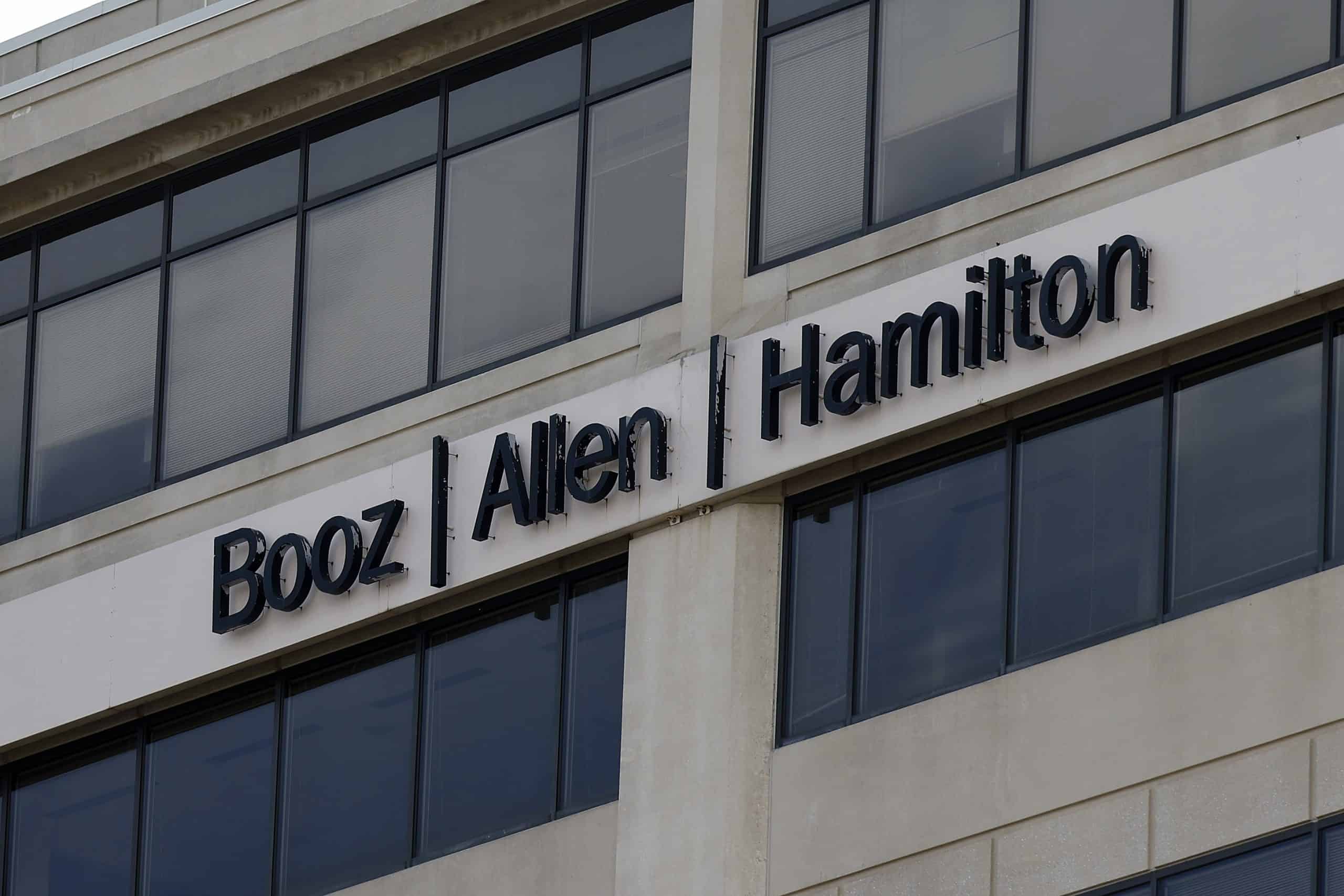
Booz Allen Hamilton Holding (NYSE:BAH) does not get the Reddit threads. What it does have is a $40 billion backlog, a growing dividend, and a market cap of roughly $10 billion against $11.98 billion in FY2025 revenue. You are buying this business at less than 1x sales. Palantir trades at 77x trailing revenue on a $358 billion market cap.
Both companies sell AI-powered analytics to the U.S. government. Both have deep intelligence and defense relationships. And both are positioning themselves as essential infrastructure for the modern national security state. Palantir gets treated like a tech unicorn; Booz Allen gets treated like a utility. That valuation gap is what makes the comparison worth examining.
The Headwinds Are Real, But Temporary
Booz Allen’s stock has fallen about 23% over the past year, and the near-term numbers look rough. Revenue fell 10.2% year-over-year in Q3 FY2026, driven almost entirely by a government shutdown, the company estimates cost $50 million in unperformed work, with another $60 million pushed into Q4. The civil segment took the hardest hit, dropping from $1.01 billion to $732 million year-over-year.
Look past the headline. Net income still grew 7% to $200 million that quarter. Free cash flow nearly doubled, rising 85% to $248 million. A company posting those cash flow numbers during a government shutdown is absorbing a temporary disruption while its core defense and intelligence work holds firm. Defense segment revenue came in at $1.45 billion, essentially flat despite the chaos around it.
The AI and Defense Pipeline Is Being Underpriced
Booz Allen was named Andreessen Horowitz’s first-ever Technology Acceleration Partner for Governments, with a $400 million capital commitment attached to that designation. It has made a strategic investment in Shield AI, which builds autonomous solutions for the U.S. military, and upsized its Booz Allen Ventures commitment to $300 million. CEO Horacio Rozanski has described the business as one that is “winning work that enables us to bring tech into the administration’s mission priorities” across AI, cyber, space, and warfighting technologies.
Palantir’s FY2026 guidance calls for roughly 61% revenue growth, which is genuinely impressive. But that growth is already priced in at 113x forward earnings. You are paying for future growth upfront, in full, with no margin for error.
Backlog, Buybacks, and a Dividend
Booz Allen raised its quarterly dividend by 7% year-over-year to $0.59 per share and deployed $125 million in share buybacks in Q3 alone, adding a $500 million increase to its repurchase authorization. Palantir pays no dividend and burns $684 million annually in stock-based compensation, quietly diluting shareholders even as headline numbers look strong.
The forward demand picture is equally compelling. Booz Allen’s backlog hit a record $40.19 billion in Q2 FY2026, with a book-to-bill ratio of 1.7x that same quarter. A 1.7x book-to-bill means the company is signing new work nearly twice as fast as it is recognizing revenue. That is a business whose stock price has not caught up with its contract wins.
Palantir is a genuinely good business trading at a valuation that demands perfection for years to come. Booz Allen is a profitable, cash-generating, dividend-paying defense AI firm trading near 1x revenue with a forward P/E of 13x. For AI exposure tied to the U.S. government’s highest-priority missions, Booz Allen trades at a fraction of Palantir’s valuation while serving the same core customer.










 Top Gaining Stocks
 Top Losing Stocks