


It’s quite obvious now that military stocks are not going to tumble significantly anytime soon. The forever wars will pause, only to be followed up with another conflict down the line, and the First Trust Indxx Aerospace & Defense ETF (NYSEARCA:MISL) benefits greatly from that. This one gives you exposure to everything that is in hot demand today.
But before we dive deeper into this ETF, it’s a good idea to refresh why exactly defense stocks can perform well. Investors who are taking profits and pulling out due to a ceasefire will likely kick themselves when defense ETFs keep outperforming long-term. Other catalysts are also in play, such as a looming conflict with Cuba. Trump himself has said that Cuba could be next after Iran. However, that doesn’t need to happen for this ETF to surge.
MISL can surge even without wars
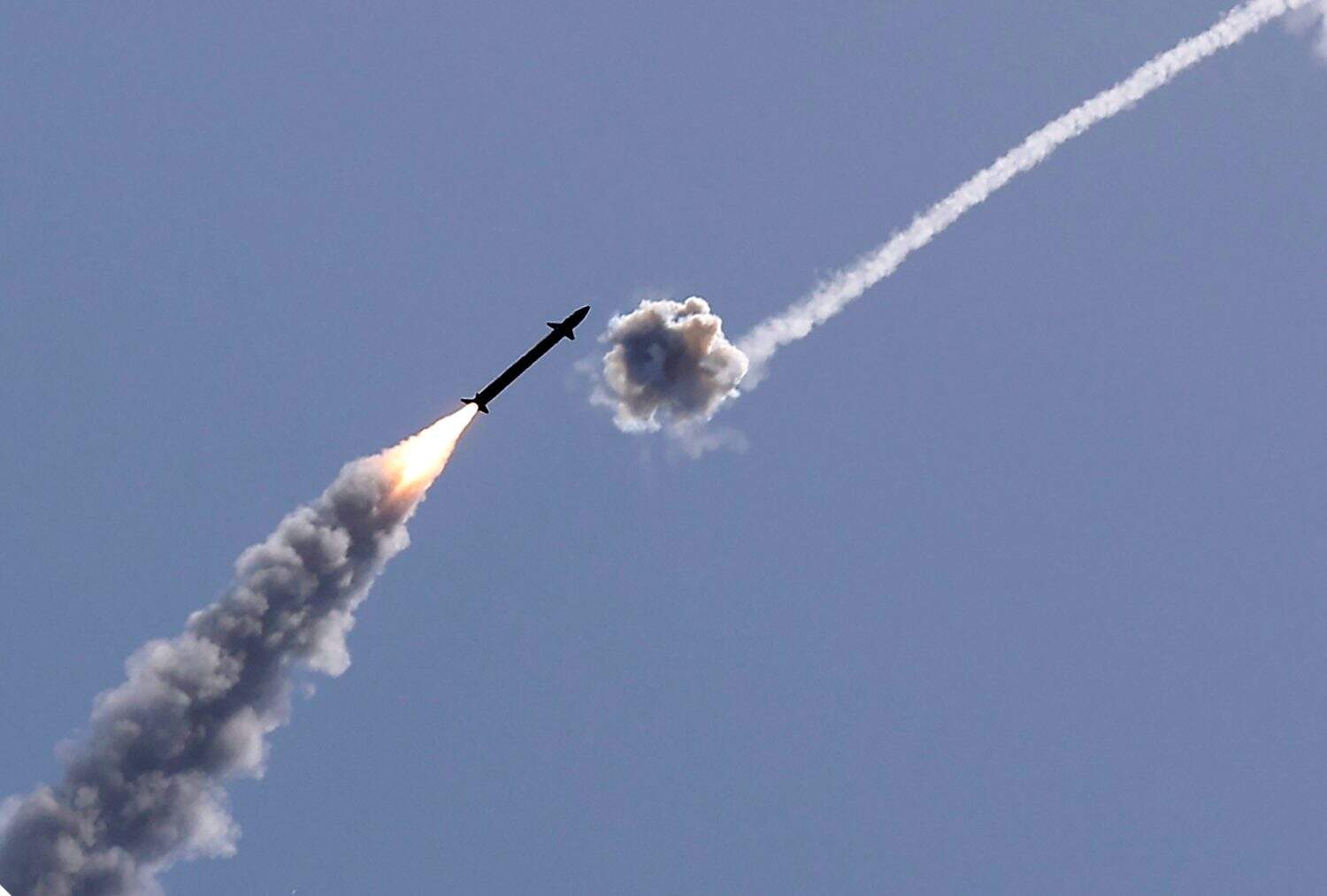
The U.S. and its allies have expended a great deal of their arsenal in the past few years. It simply does not matter if there’s a peace deal tomorrow, because those weapons must be stockpiled again and then some. The military industrial complex is looking at sustained demand for well over a decade, because the confrontation with Iran has exposed that modern conflicts need far more interceptors and munitions than what the military has on hand.
You can say that the U.S. and allies did not run out of munitions or interceptors during the latest conflict, but that’s beside the point. What you truly need to take into account is whether or not there’s enough to take on a future conflict in the Pacific. If Iran was enough to deplete 30-40% of the interceptor stockpile, the military needs a much more massive stockpile if it wishes to stay prepared in the Pacific too.
Why I’d buy the MISL ETF
This ETF is flat in the past six months and is only up 40.6% in the past year. It has done poorly compared to European defense ETFs and many other more aggressive names in the defense industry. However, I see a long-term outperformance potential due to the concentration of stocks that are at the heart of where DoD demand is going next.
Lockheed Martin (NYSE:LMT | LMT Price Prediction) is the top holding, followed by RTX (NYSE:RTX), General Dynamics (NYSE:GD), General Electric (NYSE:GE), and Boeing (NYSE:BA).
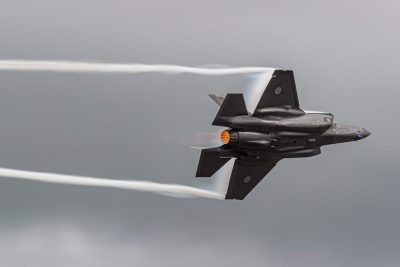
These five defense stocks constitute ~40% of the ETF. They are the industrial backbone of the U.S. defense sector, with Lockheed Martin having a monopoly over 5th gen jets and other companies being duopolies or near-monopolies in munitions, interceptors, engines, and air defenses.
On one end, Lockheed Martin and RTX make weapons systems where the U.S. military has no Plan B. The Pentagon cannot build a Patriot battery or a PAC-3 missile without them. In the middle, General Dynamics makes heavy metal that takes decades to replace. GE provides engines and industrial capacity that would be catastrophically hard to reconstitute if lost. And Boeing, despite its struggles, remains too big and too embedded in fighter and rotorcraft programs to be allowed to fail. I wouldn’t question long-term demand for any of these companies.
A $1.5 trillion budget would be the cherry on top, but it is optional
Trump floated the idea of increasing the defense budget to $1.5 billion. The Pentagon then unveiled its $1.5 trillion defense budget request for fiscal year 2027, split between a $1.15 trillion base and a $350 billion supplemental moving through congressional reconciliation. The increase alone is nearly the size of the combined defense budgets of China, Russia, and the United Kingdom.
You don’t even need that for these defense stocks to surge significantly. The center of gravity for military spending is moving from North America to Europe as European companies are increasing their spending to 5% of GDP. I’d pair that increased European spending with increased from Gulf allies too, plus a U.S. defense budget above $1 trillion at the minimum.
Even a $900 billion budget was a pipe dream for defense companies just a few months back. Now the Pentagon is asking for a $1.15 trillion base.
Thus, MISL looks well-positioned to keep delivering solid gains.











 Top Gaining Stocks
 Top Losing Stocks