



Shares of Exxon Mobil (NYSE:XOM | XOM Price Prediction) and Chevron (NYSE:CVX) are sliding again midday Friday, extending a month-long cooldown for the two energy heavyweights. XOM stock is trading at $147, down 2% on the session, while CVX stock is at $184.34, also off 2%.
The pullback looks modest on its own. Zoom out, though, and it tells a bigger story. Both names are still up sharply year to date, with Exxon higher by 22% and Chevron higher by 21%, even as recent momentum has clearly cooled.
That split between strong year-to-date (YTD) gains and a fading one-month tape is what has traders asking whether the long oil trade in Exxon and Chevron is finally stalling out. The short answer: the geopolitical premium that drove the rally is fading, and the rotation story around it is changing fast.
Geopolitical Premium Fades as Brent Unwinds
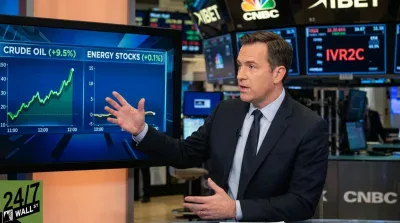
The setup earlier this year was simple. Brent crude oil ripped from around $62 per barrel on January 2 to a peak of $138.21 on April 7 as the Iran and Middle East conflict drove a massive risk premium into the barrel. Exxon and Chevron, already leaning on record 2025 production, rode that wave straight into 20%+ YTD territory.
That premium is now unwinding. Brent crude oil fell to $103.40 by April 20, a sharp drop in just two weeks. The Exxon rally simply can’t hold its shape when the underlying commodity gives back that much, that quickly.
Retail sentiment has tracked the move. Reddit chatter on Exxon flipped from bullish readings of 72 in late March to bearish prints of 38 by April 10, with users openly questioning the decoupling between oil prices and the stocks.
Rotation Into AI Infrastructure Is Draining the Trade
The second pressure point for Exxon and Chevron is flow. Mega-cap tech names are flagging higher energy costs as a Q1 2026 headwind, which revives the old demand-destruction worry and gives portfolio managers a reason to trim oil exposure. Capital is rotating toward semiconductors and AI infrastructure plays that have led the 2026 tape.
Chevron’s fundamentals haven’t cracked. The company posted record worldwide production of 3,723 MBOED in 2025, hit the $1 billion Hess synergy target, and returned $27.1 billion to shareholders. Chevron CEO Mike Wirth framed it as “industry-leading free cash flow growth and superior shareholder returns, despite declining oil prices.”
Yet, the earnings math tells you why the stocks are vulnerable. Chevron’s full-year EPS of $6.63 missed the $7.23 consensus, and net income fell to $12.3 billion from $17.6 billion in 2024. Production growth isn’t fully offsetting lower realizations.
The Bull Case That’s Still Intact
Still, the structural story hasn’t changed. Exxon put up a $1.71 adjusted EPS beat in Q4, logged record upstream production of 4.7 million oil-equivalent barrels per day, and plans a $20 billion buyback through 2026. CEO Darren Woods called it a “fundamentally stronger company” with a longer runway into 2030.
Chevron’s dividend engine is also humming. The Q1 2026 payout was lifted 4% to $1.78, marking a 39th consecutive annual increase, and management is targeting $3 to $4 billion in structural cost cuts by the end of the year. For income investors, that’s a reason to stay, as our energy sector coverage indicates.
What to Watch Next
The near-term tape on Exxon and Chevron shares will be dictated by three things. Watch for whether Brent crude oil stabilizes above $100, monitor the OPEC+ posture on production quotas, and consider the Middle East de-escalation timeline that inflated the premium in the first place.
Q1 2026 results are the next hard catalyst. Exxon reports around its February 20 cadence update, and Chevron typically follows in early May. If realizations slipped further this quarter, the shareholder-return story has to carry the load by itself.
For now, Exxon and Chevron shares look less like momentum trades and more like value compounders digesting a big run. That’s a different crowd of buyers, and it rarely shows up in a hurry.










 Top Gaining Stocks
 Top Losing Stocks