


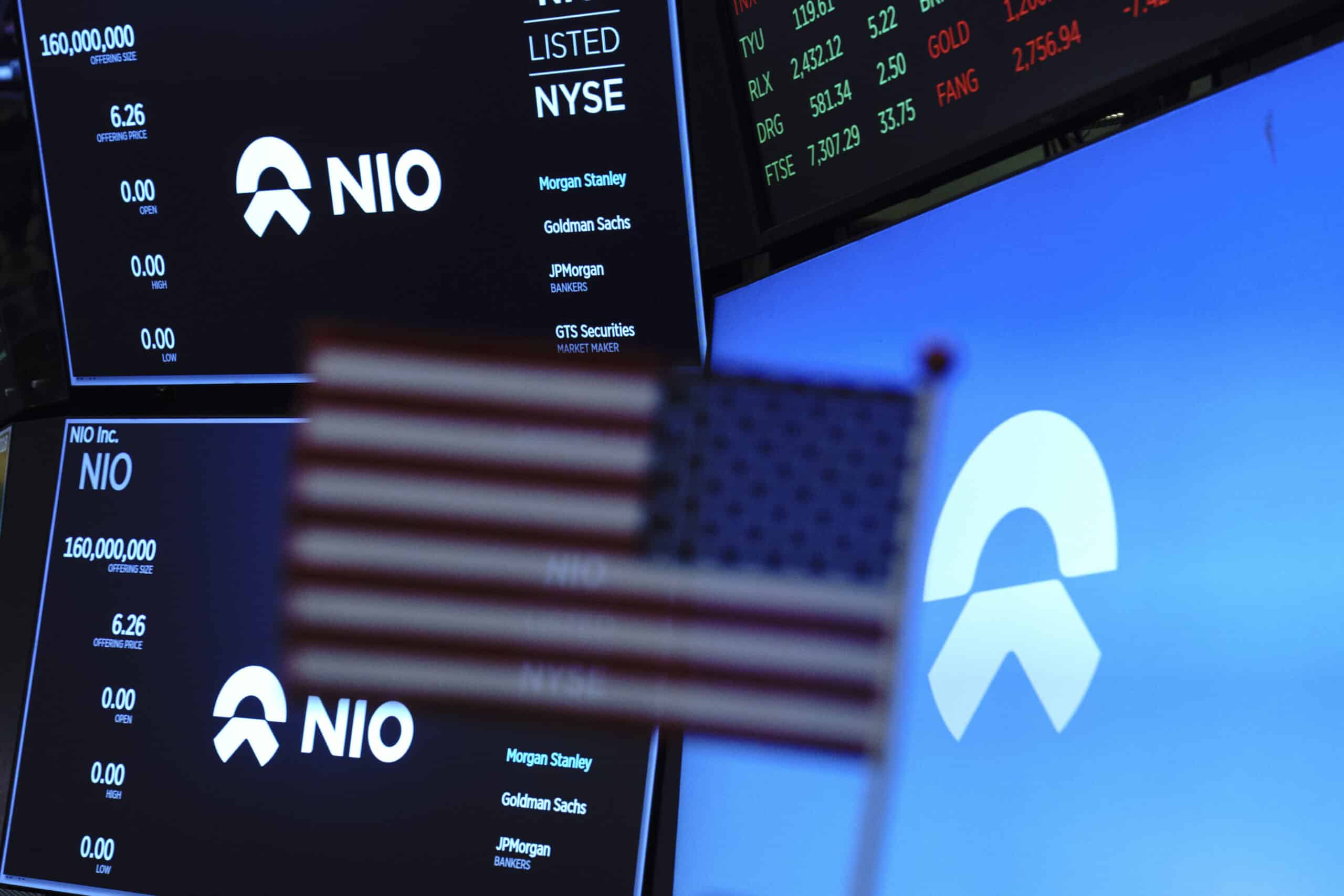
I can’t stop buying NIO (NYSE:NIO | NIO Price Prediction), and the Strait of Hormuz is the reason I keep clicking buy.
When Iran shut Hormuz earlier this month, agreed to a two-week ceasefire, then walked out of the Islamabad talks while Trump parked a naval blockade off its coast, WTI crude ripped to $114.58 on April 7, 2026. It has since cooled to $91.06 as of April 20, which still sits in the 89.3rd percentile of the trailing twelve months and far above the $55.44 low set on December 16, 2025.
Moreover, spot prices are not retracing to where they were, and every finance minister in Asia and Europe just received an unsigned memo that reads “electrify or beg.” EVs and clean energy stopped being a virtue trade and became a sovereignty trade. I keep buying NIO into that shift, and I plan to keep buying.
Three reasons hold the thesis together.
Reason one, the Q4 turn finally showed up
NIO delivered 124,807 vehicles in Q4 2025, up 71.7% year-over-year. It swung to a net profit of RMB282.7 million from a net loss of RMB7.11 billion, or from $40.4 million profit to a ~$1.02 billion loss. Revenue printed $4.95 billion, vehicle margin climbed to 18.1% from 13.1%, and gross margin expanded to 17.5% from 11.7%. R&D fell 44.3% year over year and SG&A fell 27.5%. That is the textbook definition of operating leverage that investors waited five years to see. Full-year 2025 deliveries hit 326,028 units, up 46.9%. CEO William Bin Li framed it directly, calling out “our accelerating growth trajectory” in the print.
Reason two, the Q1 guide is borderline absurd
Management telegraphed Q1 2026 deliveries of 80,000 to 83,000 vehicles, between +90.1% and +97.2% year over year, with revenue of $3.50 billion to $3.60 billion, +103.4% to +109.2%. Companies guiding to triple-digit revenue growth at this scale are rare, and they almost never trade this low. The three-brand stack is pulling its weight. The flagship ES8 sells above RMB400,000, the ONVO L90 was the best-selling large BEV SUV in 2025, and FIREFLY owns the premium small-car niche. Three at-bats, all connecting.
Reason three, the moat people still misprice
NIO owns its battery-swap network, runs twelve full-stack core technologies, and just put RMB2.257 billion into its Shenji intelligent-driving chip subsidiary. It also lifted equity in NIO China to 92.9%. Battery swap is infrastructure that an upstart cannot rebuild inside of a decade, and it gets more valuable every time the grid wobbles or oil rips.
That said, management flagged going concern considerations tied to a full-year 2025 net loss of RMB14.9 billion, with current liabilities exceeding current assets as of December 31, 2025. That hasn’t shaken the thesis, because Q4’s GAAP profit, the 17.5% gross margin, and the positive operating cash flow first reached in Q3 2025 say the unit economics already cleared the bar. The balance-sheet drag is a 2024 problem showing up on a 2025 form.
Shares are up 21.76% year to date and 48.56% over the trailing twelve months, with 16 buy ratings versus 2 sells and a $6.66 consensus target against a $6.22 print. That target looks lazy. With Hormuz keeping oil bid, Europe and Southeast Asia rewriting EV procurement policy on national security grounds, and a Q1 print landing in weeks that should double revenue, the right anchor is the 52-week high of $8.02, then well past it. I expect triple-digit gains within three years, and I’ll keep adding on every red day until the tape stops treating a profitable, hyper-growing EV maker like a 2023 distressed asset.












 Top Gaining Stocks
 Top Losing Stocks